


Japan and South Korea Stocks Soar: Nikkei 225 Reclaims 70,000, KOSPI Jumps 5%, SK Hynix and Kioxia Both Surge Over 10%



AI Podcast


Asian stock markets rebounded sharply on June 25, led by Japanese and South Korean semiconductor firms. Robust AI demand signals from NVIDIA and strong earnings guidance from Micron alleviated market concerns regarding an AI memory bubble. SK Hynix and Samsung Electronics drove the KOSPI’s 5% surge, while the Nikkei 225 reclaimed the 70,000 level amid renewed foreign capital inflows. Improving geopolitical stability and cooling energy prices provided further macroeconomic support. This synchronized rally indicates that the regional technology bull market remains intact, supported by resilient demand for AI-related components and sustained confidence from international investors.
TradingKey - NVIDIA and Micron dispel chip panic, boosting sharp rallies in Japanese and South Korean stock markets, with AI stocks such as Kioxia, SK Hynix, and Samsung Electronics leading the gains.
During the Asian trading session on June 25, Japanese and South Korean stock markets opened higher and continued to climb. South Korea's KOSPI index surged over 5%, nearing 9,000 points, temporarily trading at 8,936.79. The Nikkei 225, which had fallen for two consecutive days, opened 2.66% higher, breaking through 70,000 points to temporarily trade at 71,011.76.
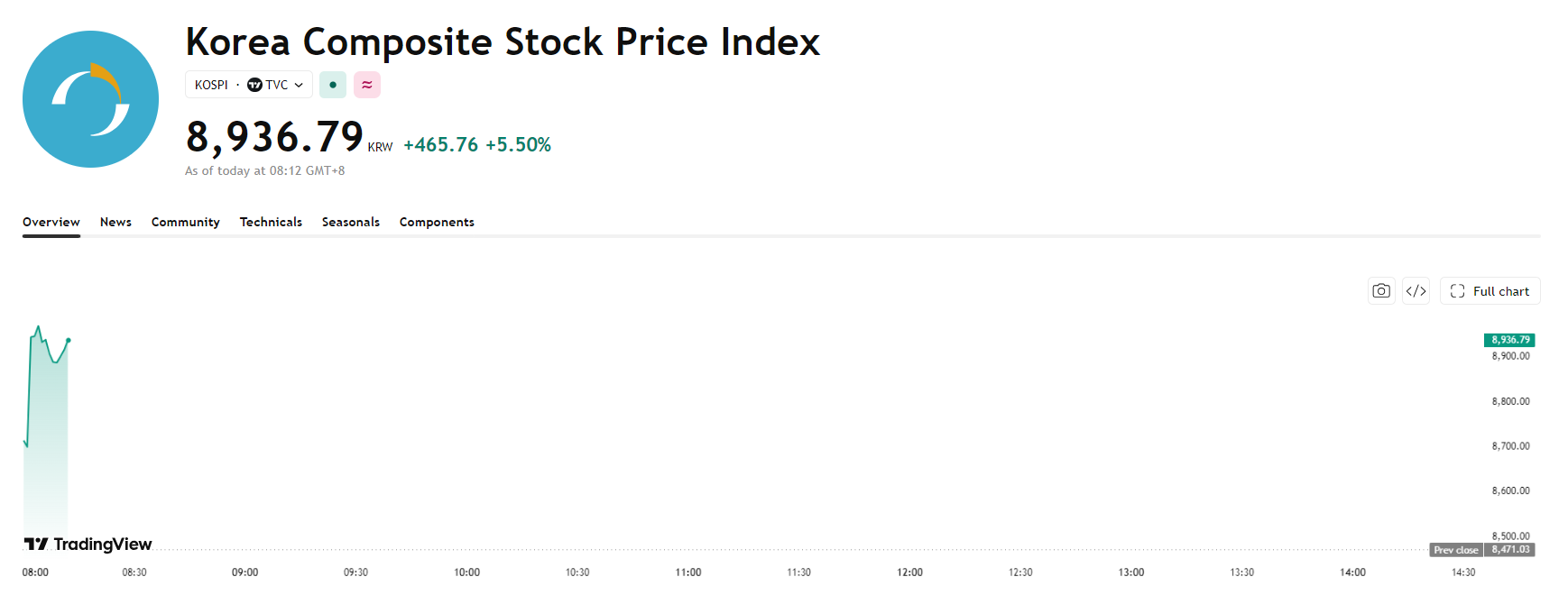 KOSPI Index Chart, Source: TradingView
In individual stocks, SK Hynix skyrocketed nearly 11% to 2,843,000 Korean won; Samsung Electronics rose nearly 5% to temporarily trade at 357,000 Korean won; Kioxia surged 13% to break through 100,000 yen, trading at 104,600 yen. SoftBank fell nearly 1% to 6,538 yen.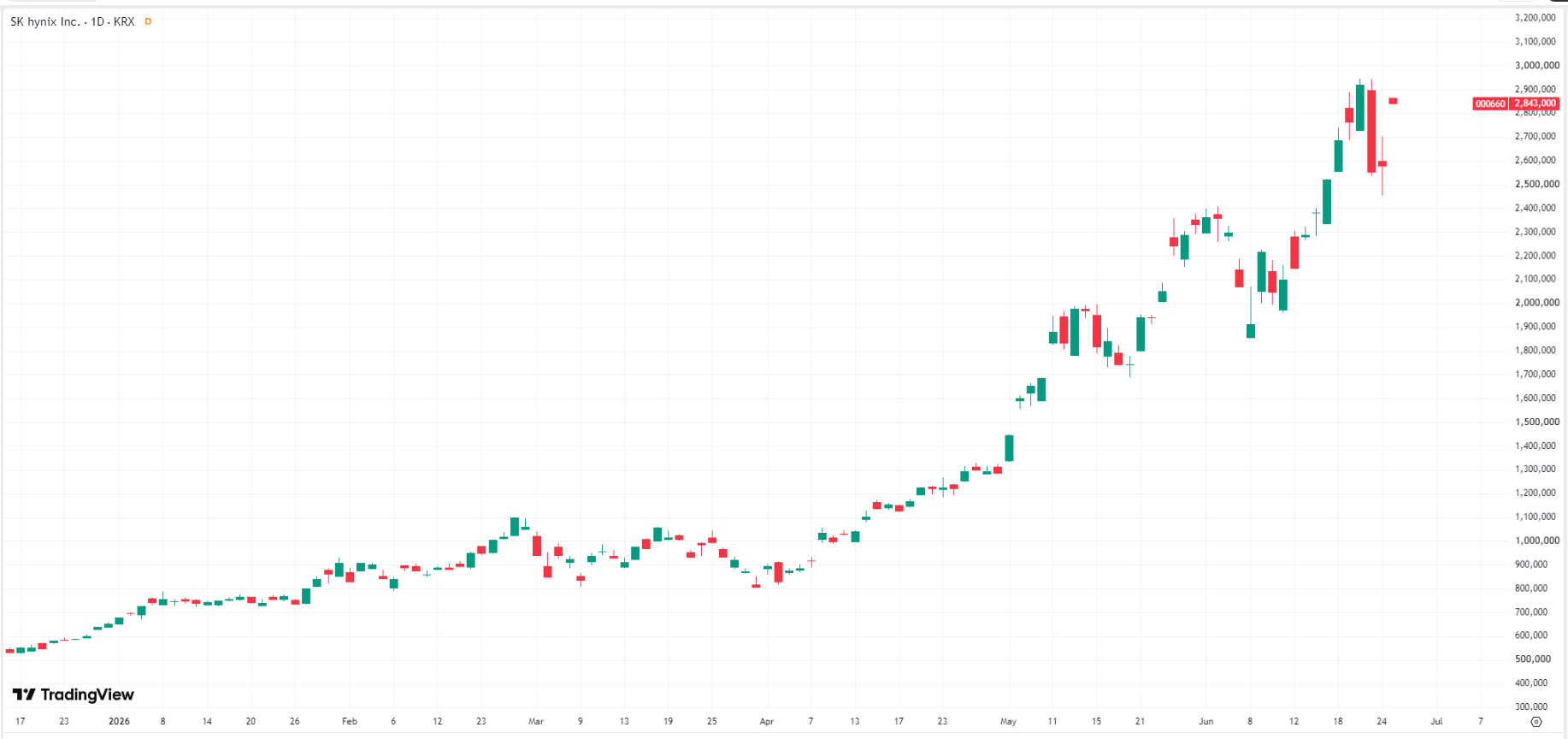 SK Hynix Price Chart, Source: TradingView
Following the previous deleveraging storm and volatility, stock markets in both Japan and South Korea staged a strong synchronized breakout once again. The core reason is that the panic over AI chips has largely subsided. NVIDIA ( NVDA )'s annual shareholder meeting sent a strong and clear signal on AI demand, and Micron ( MU )'s post-market earnings guidance exceeded expectations, shattering market fears of a bursting AI memory bubble. This triggered a 'dual-engine short squeeze' in early trading by South Korea's top two semiconductor giants, Samsung Electronics and SK Hynix, further driving up the KOSPI index.
Japanese stocks were primarily driven by a turnaround in foreign buying data and cooling geopolitical crude oil risks. The latest weekly capital flow data released by Japan's Ministry of Finance showed that foreign investors made a massive weekly net purchase of 479.4 billion yen in Japanese stocks (with the previous figure heavily revised from negative to positive). This proved to the market that the Nikkei's previous drop below 70,000 points was merely a healthy correction driven by bulls' fear of heights and a brief rotation of capital to US IPOs, showing that foreign capital has not abandoned Japan's semiconductor and technology sectors.
Furthermore, the sharp drop in international oil prices and the pullback in US gasoline prices have significantly eased energy inflation pressures on Asian manufacturing and electronics industries. This cleared macroeconomic hurdles for the surges in both Japanese and South Korean industrial and semiconductor indices, signaling to global capital that the bull market for the Asian technology supply chain may not be over yet.
This content was translated using AI and reviewed for clarity. It is for informational purposes only.
Recommended Articles









Comments (0)
Click the $ button, enter the symbol, and select to link a stock, ETF, or other ticker.