


Japan and South Korea Stocks Both Close Higher, Memory Chip Stocks Rally Sharply: SK Hynix Rises Nearly 16%, Kioxia Rises Over 6%



AI Podcast


Asian stock markets, particularly in Japan and South Korea, experienced a significant rebound on Tuesday following a sharp sell-off. This recovery was driven by a strong performance in U.S. semiconductor stocks and the influx of bottom-fishing capital. Key indices like the KOSPI and Nikkei 225 saw substantial gains, with heavyweight chip manufacturers such as Samsung Electronics and SK Hynix leading the ascent. Positive external factors, including easing Middle East tensions and optimistic statements from NVIDIA's CEO regarding AI's future, bolstered market sentiment. This rebound is viewed as a technical correction, with sustained confidence in long-term AI hardware demand. Investors are advised to maintain or selectively increase holdings. U.S. CPI data will be crucial for the next market phase.
TradingKey - During the Asian trading session on June 9, Japanese and South Korean stock markets opened higher and trended upward across the board on Tuesday after the violent sell-off of "Black Monday." The overnight rebound in U.S. semiconductor stocks and the accelerated entry of bottom-fishing capital fueled a strong recovery in the Asia-Pacific tech sector.
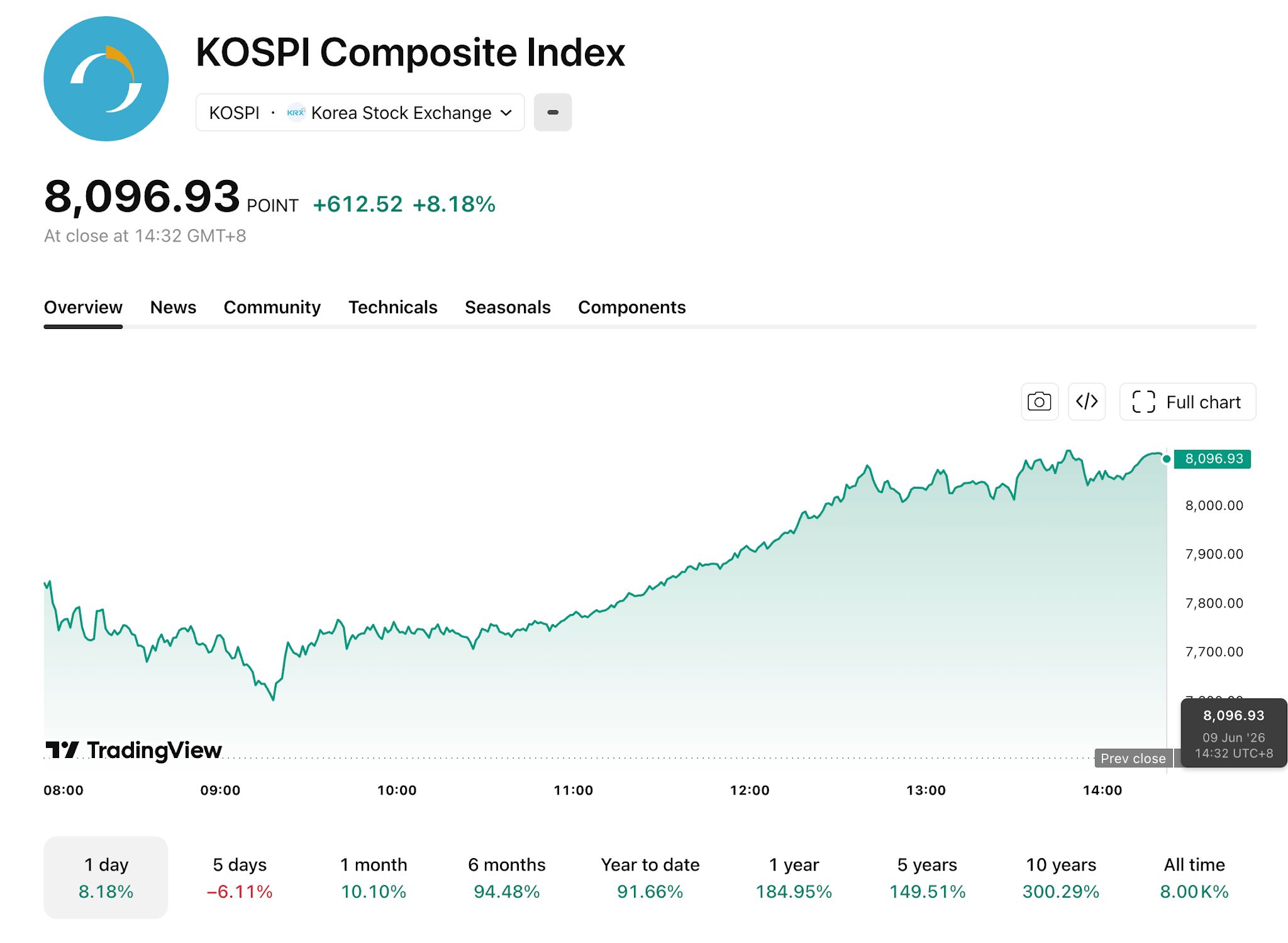
In South Korea, the KOSPI index closed at 8,096.93 points, rising 8.18% and fully reclaiming the 8,000-point mark. Heavyweight chip stocks were the primary drivers of the rebound, with Samsung Electronics closing up approximately 8.97% at 322,000 KRW and SK Hynix closing up 15.97% at 2,215,000 KRW.
[Source: TradingView]
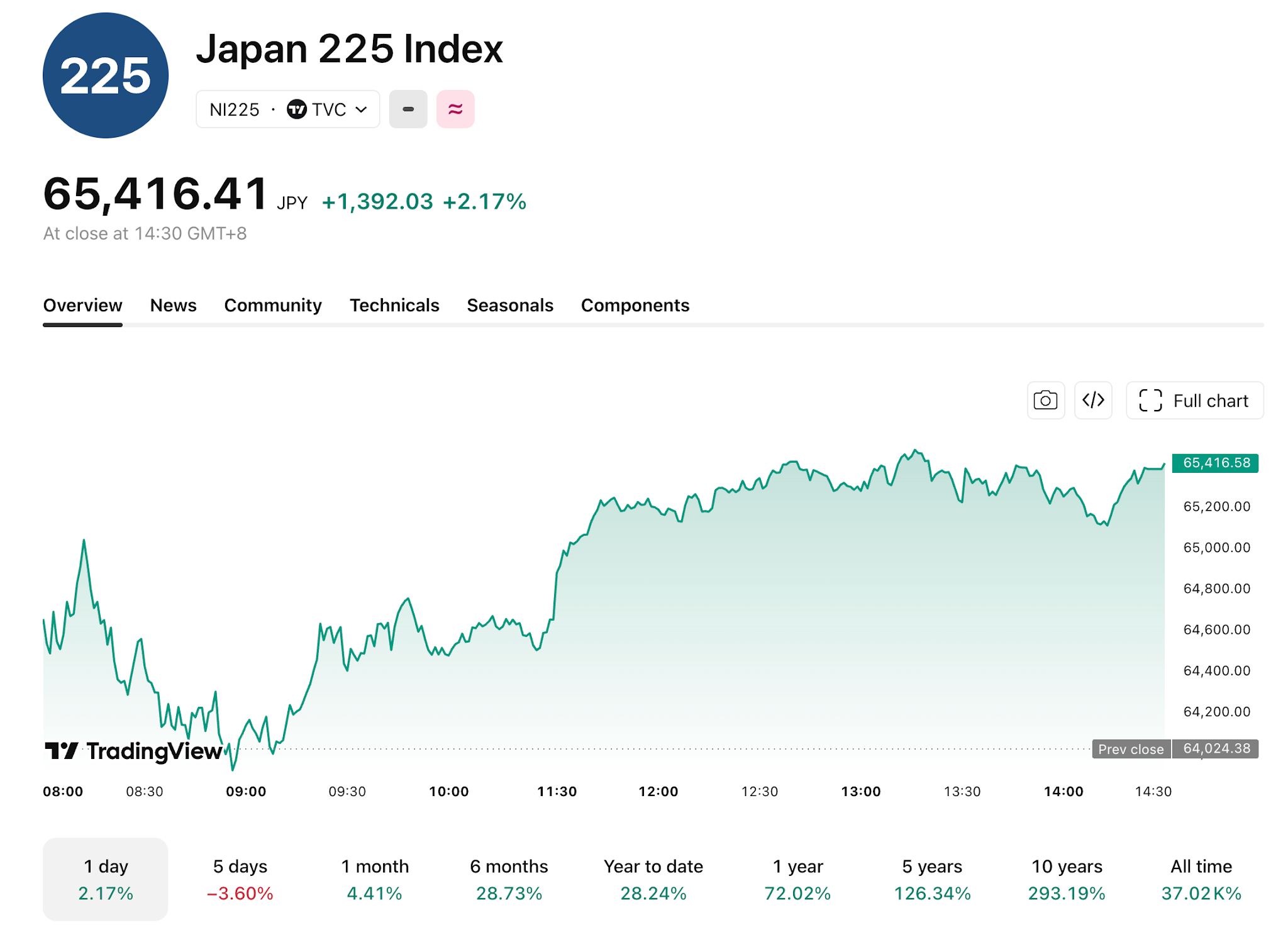
In Japan, the Nikkei 225 index closed up 2.17% at 65,416.41 points. The electronics sector led the gains, with Tokyo Electron rising about 8.91%, Kioxia up 6.36%, and Panasonic rising 9.79%. On the news front, Panasonic announced the dissolution of its traditional home appliance subsidiary to focus on AI data centers, with transformation expectations driving its stock price higher.
[Source: TradingView]
This rebound in Japanese and South Korean stocks was primarily due to positive changes in the external environment, with the Philadelphia Semiconductor Index rebounding sharply by 5.6% overnight as chip stocks broadly recovered. Signs of easing tensions in the Middle East caused energy prices to retreat from their highs, alleviating market concerns over persistently rising inflation.
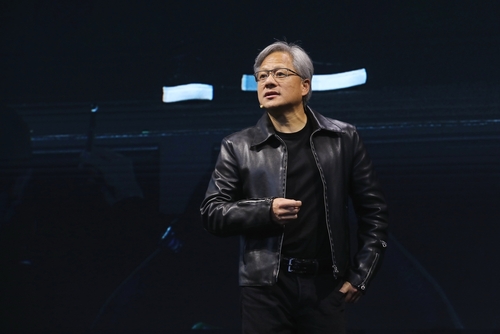
NVIDIA ( NVDA) CEO Jensen Huang's previous public remarks became a key variable in boosting confidence. At a press conference in Seoul on Monday, Huang explicitly stated: "The future of AI is incredibly bright, and we are just getting started. No matter what happens in the stock market, you should be happy because you can now buy at a discount."
Furthermore, South Korea's Ministry of Science and ICT announced on the same day that it will invest 2.08 trillion KRW by 2026 to procure 9,704 GPUs, covering the latest AI chip platform released by Jensen Huang. Huang responded by saying he would actively consider hosting an NVIDIA GTC conference in South Korea.
Institutions generally characterized this rebound as a technical correction. Samsung Securities analyst Lee Jongwook stated: "Volatility has become significant, but this is due to changes in market structure rather than a shift in cyclical direction." He also advised investors to maintain existing positions or selectively increase holdings following the sell-off.
In the short term, the collective rebound of chip stocks reflects sustained capital confidence in long-term demand for AI hardware. The upcoming U.S. CPI data on Wednesday will be a key variable for the direction of global tech stocks in the next phase.
This content was translated using AI and reviewed for clarity. It is for informational purposes only.
Recommended Articles










Comments (0)
Click the $ button, enter the symbol, and select to link a stock, ETF, or other ticker.