


Trump Calls for Signing on 14th, but Iran Throws Cold Water? What Variables Are Hidden in Strait of Hormuz Navigation?



AI Podcast


Conflicting signals emerged regarding a U.S.-Iran ceasefire memorandum. President Trump announced an agreement signing for Sunday, with immediate reopening of the Strait of Hormuz and Iran abandoning nuclear ambitions. Pakistan confirmed consensus on a peace framework. However, Iran's Foreign Ministry denied a Sunday signing, stating completion within days was possible. Key issues include Strait of Hormuz navigation fees and disposal of enriched uranium, with Iran insisting on dilution within its borders. Analysts view an MOU as a first step towards regional stability, but future negotiations remain uncertain.
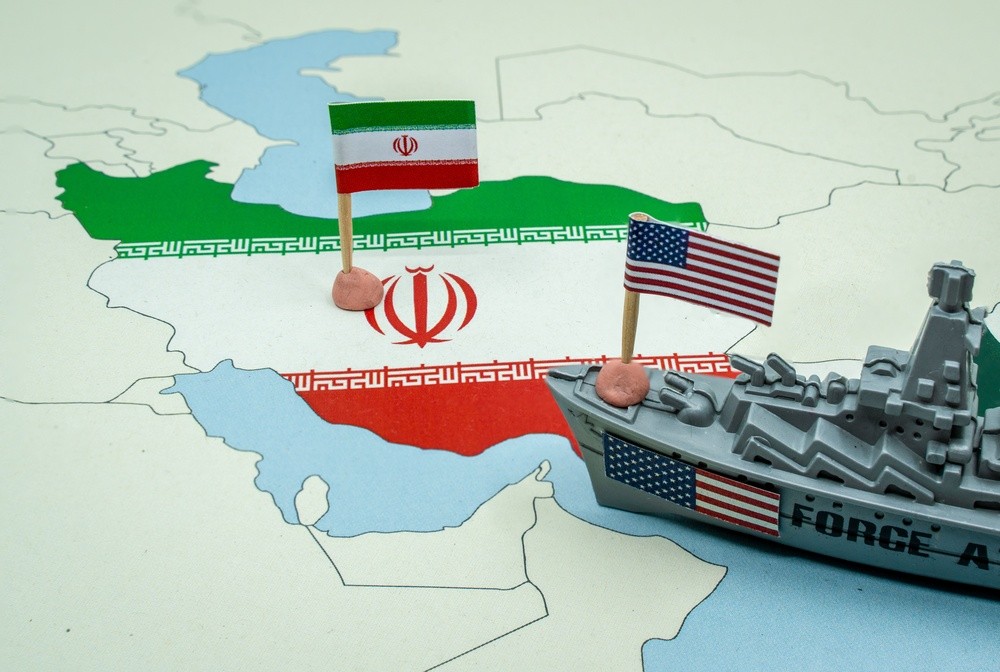
TradingKey - Washington, Islamabad, and Tehran sent conflicting signals Saturday regarding the timing of a U.S.-Iran ceasefire memorandum, injecting a classic 'last-minute' suspense into a diplomatic standoff that holds the world's energy lifelines in the balance.
U.S. President Trump announced on his social media platform Saturday that the agreement would be officially signed on Sunday; once signed, the Strait of Hormuz—blockaded for three and a half months—will immediately reopen to free navigation.
Around the same time, Pakistan, acting as a mediator, offered positive confirmation. Prime Minister Shehbaz Sharif stated that both sides had reached a consensus on a peace framework; Islamabad is preparing for a virtual signing ceremony on Sunday, while technical consultations will be postponed until next week.
However, Iranian Foreign Ministry spokesperson Esmaeil Baghaei explicitly denied the possibility of a signing on the 14th, stating only that a completion within the coming days remains possible.
Trump Announces US-Iran Agreement to be Signed on the 14th, Immediate Reopening of the Strait of Hormuz
U.S. President Trump announced on social media on June 13, local time, that Washington and Tehran "plan to sign an agreement tomorrow," and once finalized, the Strait of Hormuz will immediately reopen to navigation for all nations.
He further clarified in the post that Iran has pledged to abandon its nuclear ambitions and will not acquire nuclear weapons through procurement, indigenous development, or any other channel. Once the situation stabilizes, the U.S. will enter Iran at an appropriate time to extract nuclear material hidden deep within solid granite mountains for dilution and destruction; this work may be completed within Iran or transferred to the U.S. mainland.
Trump specifically added: "I hope this process can be completed quickly, easily, and smoothly," but then pivoted to warn that if developments do not proceed as expected, "we still have an ultimate alternative, which I hope will never need to be used again."
Over the past three and a half months, the Strait of Hormuz has effectively been paralyzed; the closure of this waterway, a vital artery for global energy transport, has directly driven up international energy prices.
Since the start of this week, diplomatic mediation and sporadic conflicts have alternated, and Trump’s stance on reaching a swift deal has fluctuated several times; on Thursday, he briefly announced a military strike against Iran before ultimately calling it off. His Saturday announcement represents the closest both sides have come to peace since the U.S. and Israel launched strikes against Iran in late February.
Iran denies signing on the 14th.
However, Iranian Foreign Ministry spokesperson Esmaeil Baghaei stated clearly on the 13th that the memorandum of understanding focused on ending hostilities would not be signed on the 14th, though he did not rule out the possibility entirely, adding that it could be finalized in the coming days.
Baghaei explained, "The possibility of a signing in the coming days cannot be ruled out. However, given the other party's hesitation, we must remain cautious in any comments regarding this process."
Naboyan, deputy chairman of Iran’s National Security Council, disclosed further details about the text, stating that he had reviewed the memorandum and that the current version is "better than the previous one." The 14-article document is a framework agreement, and the end of military operations will be announced immediately upon its signing.
First Step Toward Ceasefire: Strait Tolls and Enriched Uranium Disposal in Focus
As the countdown to the signing of the U.S.-Iran Memorandum of Understanding (MOU) begins, information regarding this 14-point framework is being released in rapid succession. Statements from Washington, Tehran, and Islamabad reveal distinct divergences on several key issues, offering a glimpse into how this three-and-a-half-month Middle East conflict might finally see a "pause button" pressed.
The navigation mechanism for the Strait of Hormuz is the first major hurdle on the table. Judging from the statements of both sides, the broad direction is clear: Iran will reopen the strait after the MOU is signed, and the U.S. will simultaneously lift its maritime blockade. However, "how it opens" is far more complex than "whether it opens."
Reports suggest the MOU requires Iran to open the strait free of charge; however, Iranian Foreign Minister Abbas Araghchi stated clearly on the 12th that sovereignty over the Strait of Hormuz belongs to Iran and Oman. He noted that the two countries have long provided maritime security and services, and that the future management mechanism will be adjusted rather than returning to the pre-war model, with corresponding fees charged for shipping services.
The disposal of highly enriched uranium is the most technically sensitive issue in the MOU and a key variable determining whether the subsequent 60 days of negotiations can proceed smoothly.
Trump announced on social media that the U.S. would dilute and destroy Iran's enriched uranium, with disposal possibly occurring within Iran or being transported back to the U.S. mainland; he pointedly used the term "nuclear dust" to downplay military sensitivity.
However, Araghchi's response was equally unambiguous. The Iranian side insists that if existing stockpiles of highly enriched uranium must be processed, the only acceptable method is "dilution" within Iran, and nuclear materials will absolutely not be allowed to be transferred abroad.
Behind this stance is Iran's rigid demand for sovereignty and dignity—shipping enriched uranium out of the country would be tantamount to admitting it lacks the capacity to properly manage nuclear materials, which is nearly unacceptable in Iran's domestic political context.
Analysts generally believe that if the U.S. and Iran can sign the MOU, it will be the first step toward regional stability. However, the subsequent 60 days of negotiations remain full of variables, and it is still difficult to predict whether a final agreement can be reached.
This content was translated using AI and reviewed for clarity. It is for informational purposes only.
Recommended Articles









Comments (0)
Click the $ button, enter the symbol, and select to link a stock, ETF, or other ticker.