


WTI Crude Falls Below $70; Iraq Pressures OPEC With "Retreat to Advance," Collapse Risk Surges



On June 25, Eastern Time, Iraq pressured OPEC for higher production quotas to address its severe financial crisis, threatening potential withdrawal. This geopolitical uncertainty, coupled with supply concerns, drove WTI and Brent crude to their lowest levels since February 28. While analysts suggest the market sell-off is overdone given supply constraints, an Iraqi exit could trigger a production surge and destabilize OPEC’s price dominance. Experts view Iraq’s stance primarily as a bargaining chip ahead of upcoming diplomatic visits, though the organization faces mounting risks as it attempts to retain members and maintain output discipline.

TradingKey - On June 25, Eastern Time, senior Iraqi oil officials pressured OPEC to significantly raise the country's production quota, warning they would otherwise be "forced to consider all available options." Sources revealed that Iraqi officials had seriously considered leaving OPEC, but the current plan is to remain in the organization and push for a higher quota.
As of press time, hit by expectations of increasing global supply, WTI crude oil futures broke below $69 per barrel, trading at $68.93 per barrel; Brent crude fell below $73, with both hitting their lowest levels since February 28.
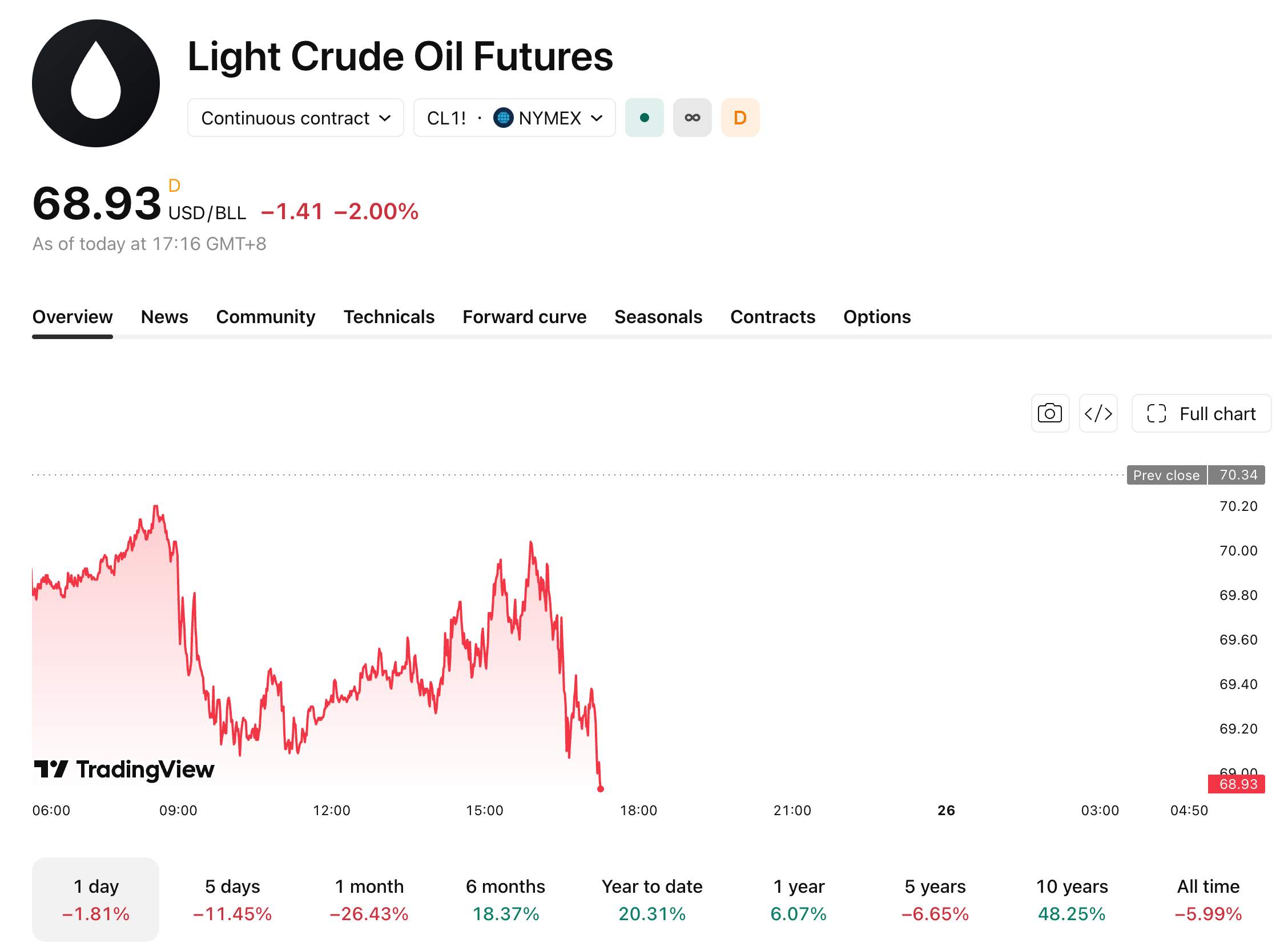
[WTI Crude Oil Futures Trend, Source: TradingView]
ING analysts Warren Patterson and Ewa Manthey pointed out that although the number of passing vessels has recently increased, it remains below pre-war levels. Currently, the volume of oil passing through the strait is about 6 to 7 million barrels per day, far below the pre-war level of approximately 20 million barrels per day. The two believe that given the tightening market and the limited recovery of oil flows through the strait, the recent sell-off in crude oil may be overdone.
According to the Iraqi News Agency, the Iraqi Prime Minister expressed hope that OPEC would adjust quotas based on the actual oil production capacity and population size of each member state.
Iraq is OPEC's second-largest oil producer, with normal crude exports of around 3.6 million barrels per day, and about 3.4 million barrels flowing through the Basra terminal before the war. Since the closure of the Strait of Hormuz, production has been cut by more than 60%, with April oil export revenues at about $1.087 billion, far below the $6.8 billion in February. Oil revenues account for 90% of government revenue.
ANZ expects third-quarter production could recover to 2 million to 3.5 million barrels per day. Once capacity recovers, existing quotas will severely constrain its revenue-generating capacity. Iraqi oil officials admitted that the country is facing a severe financial crisis triggered by a sharp decline in oil exports caused by the war involving Iran.
Since the outbreak of the US-Iraq War, OPEC+ has raised production quotas for four consecutive months. At its June 7 meeting, it decided to raise the July target by another 188,000 barrels per day, with Iraq's quota increasing by 26,000 barrels per day.
The UAE withdrew from OPEC on May 1. Homayoun Falakshahi, head of crude analysis at Kpler, said that if Iraq also withdraws, OPEC+ could face its demise. Saudi Arabia stated it would do everything in its power to prevent other countries from leaving, possibly by offering more flexible quotas or lowering penalties for overproduction.
If Iraq withdraws from OPEC, the oil market will remain under pressure. First, free from quota restrictions, Iraq is bound to significantly increase production, exacerbating the oversupply; second, OPEC+ faces the risk of disbanding. Once it loses dominance over oil prices, producing countries like Saudi Arabia may be forced to follow suit and increase production, triggering a market share war and driving oil prices further down. In the short term, it will take time for Iraq's capacity to recover, and Saudi Arabia will also make every effort to persuade it to stay.
Analysts believe Iraq's threat is more likely a bargaining chip. Iraqi Prime Minister Ali Al-Zaidi plans to visit Washington in mid-July, and the market is watching whether this visit will affect Iraq's stance within OPEC.
This content was translated using AI and reviewed for clarity. It is for informational purposes only.
Recommended Articles









Comments (0)
Click the $ button, enter the symbol, and select to link a stock, ETF, or other ticker.