


WTI Crude Falls Below $70 Mark; Trump Says Strait of Hormuz Won't Charge Fees, Two Major Crude Futures Plunge Nearly 5% Again



AI Podcast


Crude oil prices fell sharply on June 24, with WTI dropping below $70 and Brent below $75, as geopolitical tensions eased following President Trump’s comments regarding the Strait of Hormuz. Increased tanker traffic signals restored shipping confidence, while a U.S. Senate resolution further constrained military action. The market narrative has shifted from supply-disruption panic to a validation phase balancing supply recovery against demand resilience. Future price volatility will hinge on the speed of shipping normalization versus potential geopolitical setbacks and existing low inventory levels, as investors monitor the unwinding of risk premiums.
TradingKey - On June 24, the two major crude oil futures plummeted again after U.S. President Trump stated that no fees would be charged for passage through the Strait of Hormuz.
Trump stated that Iran has not sought or charged any transit fees, insurance premiums, or any other form of fees for vessels passing through the Strait of Hormuz. If this information is untrue, negotiations will be terminated immediately!
He also stated that the U.S. has not provided any funds to Iran, nor has it released any funds to them. We will release a portion of the funds completely under our control to be used for our farmers and ranchers to purchase products such as corn, wheat, and soybeans.
Currently, there is no indication that the U.S. has initiated formal communications with regional countries regarding the proposed fee concept. Many Middle Eastern nations have maintained a delicate balance between the U.S. and Iran during the conflict.
Driven by the news, the tail risk for crude oil has been further alleviated. As of press time, WTI crude oil futures fell 4.67% to $69.79, breaking below the $70 mark; Brent crude oil futures dropped 4.71% to $73.5, also breaking below the $75 mark.
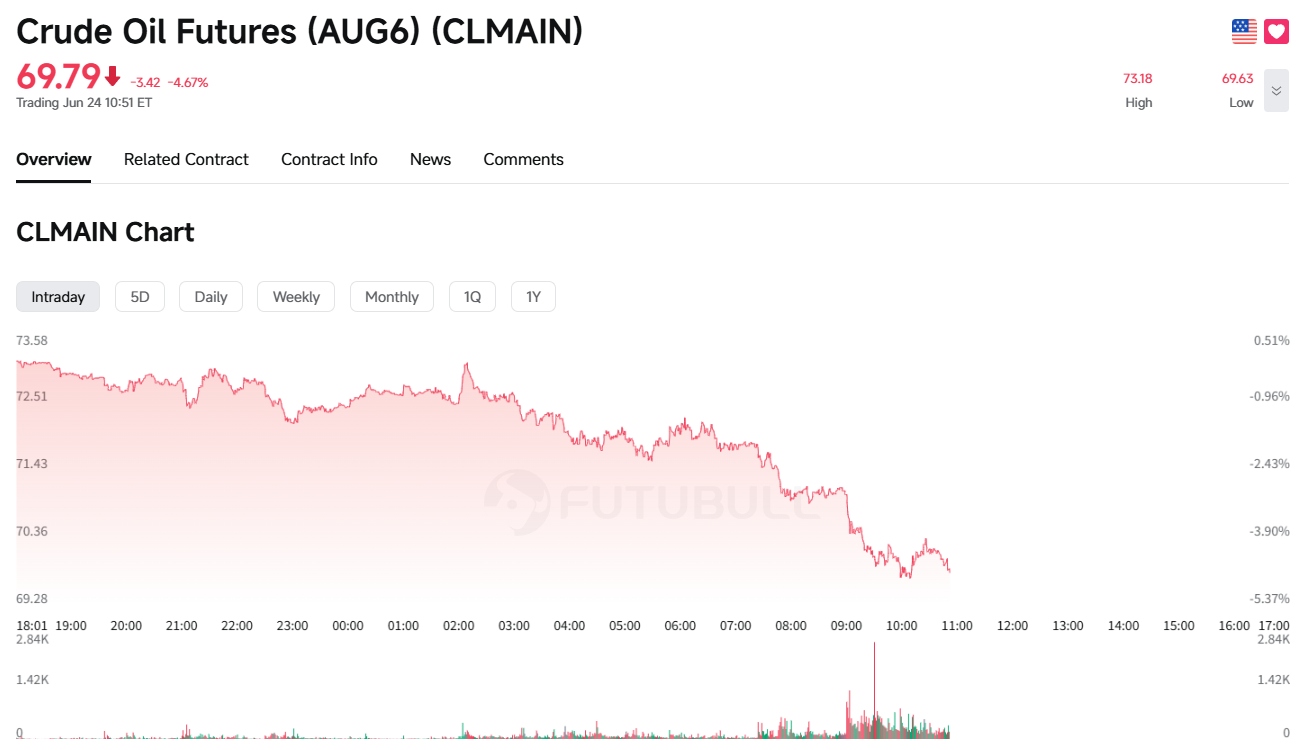
[Source: FutuBull]
On the other hand, VLCCs have continued to traverse the Strait of Hormuz over the past few days with their satellite signals turned on, indicating that shipowners' confidence is growing.
According to data from Kpler and LSEG, three stranded tankers carrying 5 million barrels of crude oil began their journey out of the strait on Wednesday. Among them, the South Korean-flagged VLCC 'VL Breeze', carrying 2 million barrels of Qatari condensate and Abu Dhabi crude, is heading to Daesan Port in South Korea. The VLCC 'Plata Carrier', chartered by Indian Oil Corporation, is also heading to India carrying 2 million barrels of Saudi crude.
Meanwhile, the Republican-controlled U.S. Senate passed a resolution on Tuesday to limit the president's war powers, requiring President Trump to end military operations against Iran and obtain congressional authorization before taking any future military action against the country. The resolution had previously been passed by the House of Representatives.
Facing upcoming midterm elections, Trump also focused on U.S. inflation. In a social media post, he stated that he has ordered the Department of Justice to investigate why gasoline prices have not fallen faster as crude oil prices decline.
Overall, the primary narrative for crude oil pricing has shifted, officially moving from the previous panic trading over supply disruptions into a two-way validation period focused on the pace of supply recovery and the resilience of end-user demand.
If the recovery rate of shipping channels outpaces the slope of demand recovery, oil prices will continue the process of unwinding previous geopolitical risk premiums; if crude oil inventories remain at low levels, or if regional geopolitical negotiations experience setbacks, the center of oil price volatility will remain elevated.
This content was translated using AI and reviewed for clarity. It is for informational purposes only.
Recommended Articles










Comments (0)
Click the $ button, enter the symbol, and select to link a stock, ETF, or other ticker.