


Has Gold Hit Bottom? Barclays, Citi Both Bullish on Gold, Gold Price Will Return to $5,000 Next Year.



AI Podcast


Gold has corrected over 20% from its January peak, yet Barclays and Citi maintain bullish long-term outlooks. Citi identifies the US-Iran memorandum and subsequent crude oil price normalization as catalysts for shifting Federal Reserve policy, potentially lowering real interest rates to benefit gold. Barclays notes that prices have returned to fair value, identifying US CPI, equity performance, and central bank demand as core drivers. With central banks resuming net purchases in April and long-term inflationary hedges remaining relevant, the current decline is viewed as a price reset rather than a structural reversal.
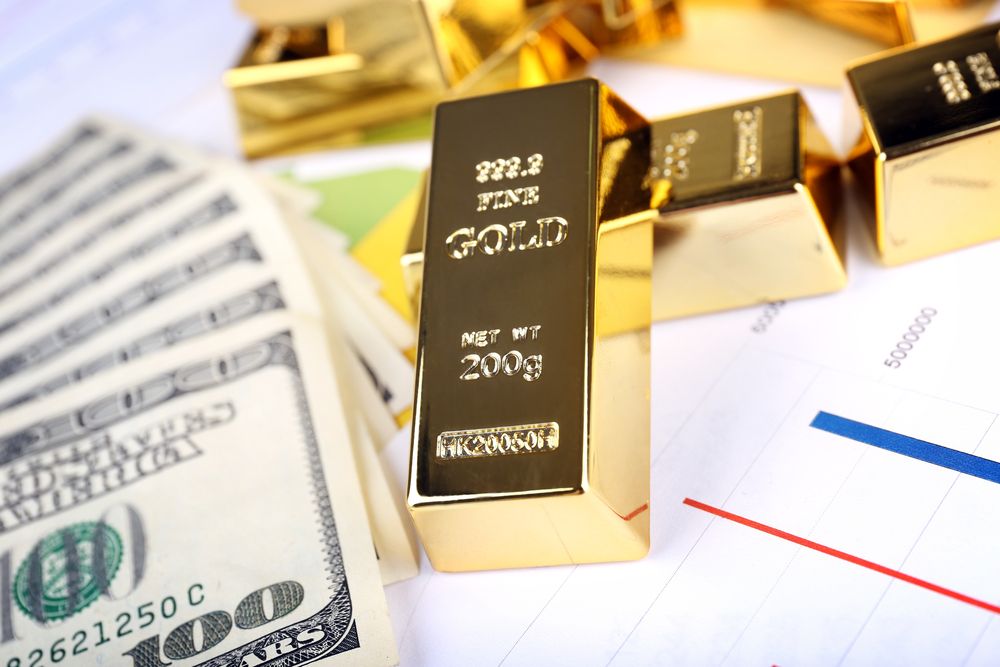
TradingKey - Since 2026, gold has erased almost all of its gains and has fallen more than 20% from its record high of $5,595 set at the end of January. Has gold bottomed out? Is now the time to add to gold holdings?
On June 15, both Barclays and Citi expressed bullish outlooks. Citi raised its 3-month gold price target to $4,500, after having cut it to $4,000 in early June, while maintaining its bullish forecast of $5,000 per ounce over a 6-to-12-month horizon. Barclays, meanwhile, believes this round of decline is a price reset rather than the end of the bull market.
US and Iran Sign Memorandum, Strait of Hormuz Reopens: Will the Gold Bull Market Return?
On the news front, the US and Iran announced they will formally sign a Memorandum of Understanding (MoU) this Friday, at which point the Strait of Hormuz will reopen, serving as the catalyst for the investment bank's adjustment to its gold price target. Citi pointed out that the breakthrough in US-Iran negotiations is one of the most important commodity market events of the year.
Regarding recent oil prices, Citi noted that the market has already priced in the news of the US-Iran agreement, but has not yet fully priced in a scenario where Strait of Hormuz flows continue to recover in the medium term. Otherwise, current crude oil prices should be lower, about $10-$15/bbl below current levels, meaning there is still further downside for oil prices in the short term.
In its report, Citi's base case scenario is that the US and Iran will continue to advance negotiations after signing the MoU, at which point crude oil supply will continue to recover. By 2027, the oil market will see a surplus of approximately 4 million barrels per day (bpd), and oil prices will fall below $70/bbl. Citi forecasts a 60% probability for this scenario.
Currently, Citi has lowered its Brent crude price forecasts for the third and fourth quarters of 2026, as well as the full year of 2027, to $75, $70, and $65/bbl, respectively, down from previous forecasts of $110, $90, and $80/bbl.
Citi believes that the sharp drop in gold since late January this year was mainly due to the energy inflation shock brought by the Middle East conflict. If this factor is removed in the future, it will relieve the pressure forcing the Fed to maintain a hawkish stance, driving real interest rates down and potentially opening an upward channel for gold prices.
Long-term inflation and central bank gold purchases will push up gold prices.
Barclays believes that gold prices have now returned to the fair value range estimated by its model, which identifies US CPI, the S&P 500, the US Dollar Index, and central bank gold demand as the four core drivers of gold prices. According to this model, both the US dollar and US equities have strengthened this year, while central bank gold purchase demand was temporarily suppressed and even turned to net selling at one point. These factors have all exerted downward pressure on gold's upward momentum, explaining its decline so far this year.
According to the model, Barclays believes that US inflation will dominate the medium-to-long-term trend of gold: for every 1 percentage point increase in US CPI, gold prices rise by approximately 5%. At first glance, this may seem at odds with the fact that gold prices plummeted despite surging inflation following the onset of the US-Iran war. However, in the long run, because interest rate hikes cannot continue indefinitely, whereas the decline in purchasing power and fiat currency depreciation caused by high inflation will continue to accumulate, this will ultimately benefit gold given its inflation-hedging properties.
In addition, the pace of central bank gold purchases has resumed. A report released by the World Gold Council on June 3 showed that central banks resumed increasing their gold holdings in April, with net purchases of approximately 17 tons, following a net sell-off of nearly 30 tons in March. In the first quarter of 2026, central bank gold purchases (measured in ounces) grew by 17% quarter-on-quarter. The primary buyers in the first quarter were the central banks of Poland and Uzbekistan. Tether, the world's largest stablecoin issuer, also continued to build its position, purchasing 12.6 tons in the first quarter, bringing its total reserves to 154 tons. This purchase volume ranked fourth globally, exceeding most major central banks. Barclays believes that as geopolitical tensions stabilize, emerging market central banks that previously sold gold reserves are expected to resume increasing their holdings.
This content was translated using AI and reviewed for clarity. It is for informational purposes only.
Recommended Articles








Comments (0)
Click the $ button, enter the symbol, and select to link a stock, ETF, or other ticker.