


GBP/USD (GBPUSD) Is up 0.51% on Oct 16: What Is Behind the Currency Move?



GBP/USD (GBPUSD) is up 0.51% at Oct 16 06:15(ET), now at $1.33412, with a 7-day up of 0.87%.
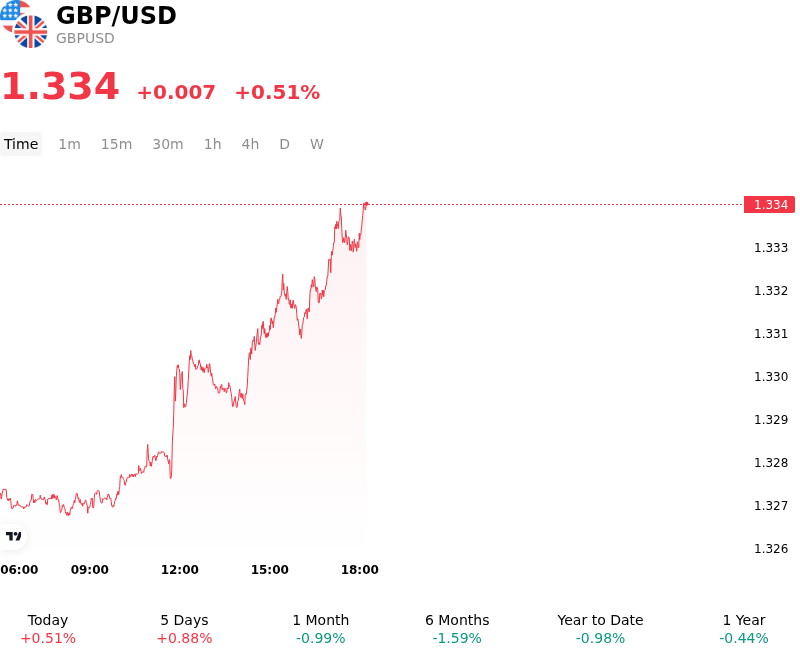
What is driving GBP/USD (GBPUSD)’s stock price up today?
The advance in GBPUSD was primarily driven by a widening short-term interest rate differential in favor of the British pound, supported by resilient UK macroeconomic data and hawkish monetary policy expectations relative to a softening US dollar. Market participants adjusted their outlook following stronger-than-expected UK gross domestic product data, which confirmed domestic economic resilience despite ongoing headwinds from elevated energy costs. The positive growth print reinforced expectations that the Bank of England may deliver an interest rate increase at its upcoming November policy meeting to combat persistent inflation pressures.
Hawkish commentary from Bank of England officials further bolstered sterling sentiment. With UK headline inflation hovering well above the central bank's target and government bond yields remaining elevated, financial markets continued to reprice a tighter monetary path for the United Kingdom. Although policymakers remain mindful of weak consumer purchasing power, the risk of sticky price dynamics and secondary inflation effects has kept the Bank of England among the more hawkish major central banks, underpinning capital flows into sterling-denominated assets.
On the US side of the currency pair, the greenback encountered selling pressure as a recent rally stalled, prompting position unwinding across major foreign exchange pairs. While headline US inflation and retail sales numbers showed surface-level strength, underlying consumer demand metrics—excluding volatile energy expenditures—pointed to slowing momentum in the domestic economy. Furthermore, a pullback in US Treasury yields and measured guidance from Federal Reserve leadership tempered aggressive policy expectations, eroding the US dollar's yield advantage and allowing GBPUSD to extend its recovery from recent lows.
Looking forward, the near-term trajectory of GBPUSD will depend heavily on whether incoming UK inflation and wage data continue to justify high Bank of England interest rate expectations relative to the Federal Reserve. Key risks monitored by institutional investors include upcoming fiscal announcements in the UK, potential shifts in global energy volatility, and broader changes in cross-asset risk appetite.
Technical Analysis of GBP/USD (GBPUSD)
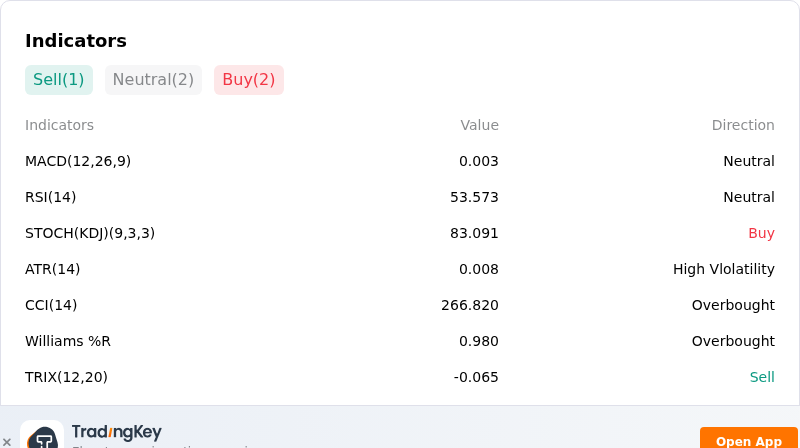
Technically, GBP/USD (GBPUSD) shows a MACD (12,26,9) value of 0.003, indicating a neutral signal. The RSI at 53.573 suggests neutral condition and the Williams %R at 0.980 suggests overbought condition. Please monitor closely.
More details about GBP/USD (GBPUSD)
Recent Events and Risks:
- Dovish Bank of England Policy Signals: Recent comments from Bank of England Governor Andrew Bailey indicating limited second-round inflation pass-through have tempered expectations for aggressive near-term rate hikes, leaving Sterling vulnerable to dovish repricing ahead of upcoming UK wage and CPI releases.
- UK Fiscal Shortfall Ahead of Autumn Budget: Intensifying concerns over UK public finances—amplified by think-tank warnings of a £35 billion funding deficit—have elevated sovereign fiscal risk premia, putting sustained downward pressure on Gilt yields and capping GBP/USD upside.
- Fed-BoE Rate Divergence and Yield Spread Pressure: Firm US economic resilience alongside cautious Federal Reserve policy guidance has kept US Treasury yields elevated relative to UK Gilts, widening cross-currency yield spreads in favor of the US Dollar.
- Technical Vulnerability and Downside Momentum: Despite brief intraday bounces, GBP/USD remains technical capped below its 100-day Simple Moving Average after recently falling to multi-month lows around 1.3137, maintaining a bearish bias that risks triggering automated stop-loss selling toward the 1.3100 handle.
This article may include AI-generated content that is human-reviewed, which is for reference and general information purposes only and does not constitute investment advice.
Recommended Articles









Comments (0)
Click the $ button, enter the symbol, and select to link a stock, ETF, or other ticker.