


Sugar (SUGAR) Is down 2.28% on Oct 16: Is the Market Repricing It?



Sugar (SUGAR) is down 2.28% at Oct 16 05:05(ET), now at $0.206, with a 7-day up of 1.78%.
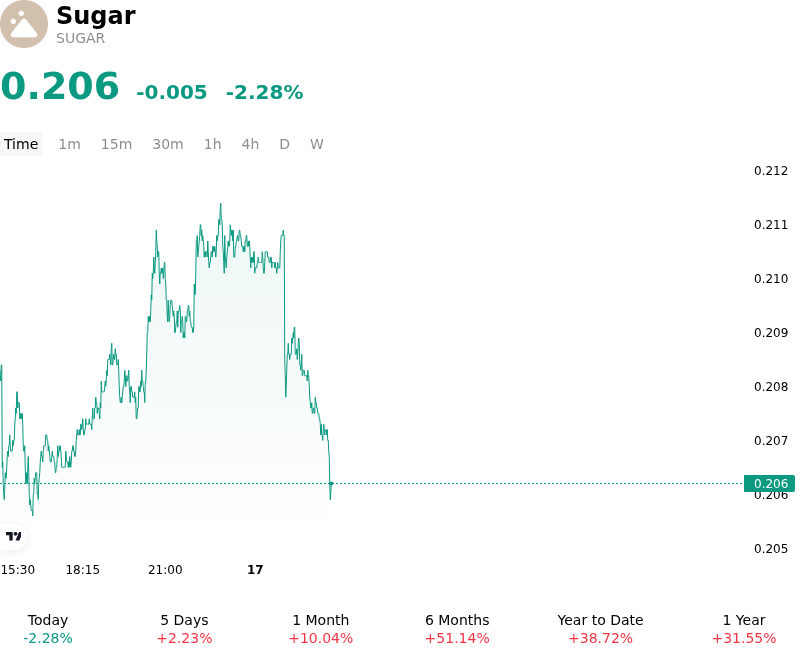
What is driving Sugar (SUGAR)’s stock price down today?
Raw sugar futures experienced a corrective decline as market participants engaged in profit-taking following a sharp multi-week rally that had pushed prices to multi-month highs. The pull-back was primarily driven by long liquidation from institutional funds after prices reached elevated technical resistance levels. Traders re-evaluated near-term risk premiums that had been built into the market due to weather-driven production disruptions in key growing regions, leading to a temporary breather in speculative buying.
The immediate downward pressure was further amplified by seasonal supply dynamics. The commencement of the new crushing season across major Northern Hemisphere producers, including key regions in India and East Asia, introduced expected physical supply into domestic supply chains. As crushing operations got underway in mid-October, sugar mills stepped up commercial hedging activity to lock in elevated pricing, increasing short side liquidity across front-month futures contracts. Concurrently, high old-crop carryover inventories in several consuming markets encouraged destocking by mills seeking to clear warehouse capacity ahead of new-crop arrivals.
While the broader medium-term balance sheet remains constrained by previous harvest delays in Brazil's Center-South and lower global production forecasts due to El Niño weather patterns, market sentiment shifted toward distinguishing between potential risk premiums and actual realized output losses. Improved weather windows in parts of southern Brazil allowed some mills to resume field operations and crushing, easing acute short-term logistics bottlenecks. Additional macro headwinds stemmed from a firmer U.S. dollar, which diminished purchasing power for foreign buyers and prompted broader position squaring across soft commodities.
Despite the pullback, the overarching market balance reflects a tight global supply-demand outlook. Institutional investors continue to monitor upcoming fortnightly crushing data from Brazil's industry association UNICA alongside initial harvest yields from India and Thailand to assess whether the move represents a temporary tactical correction within a broader structural repricing or the start of a extended consolidation phase. Key monitorables include shifts in sugar-to-ethanol crushing allocations, crude oil price movements, and potential adjustments to national export quotas.
Technical Analysis of Sugar (SUGAR)
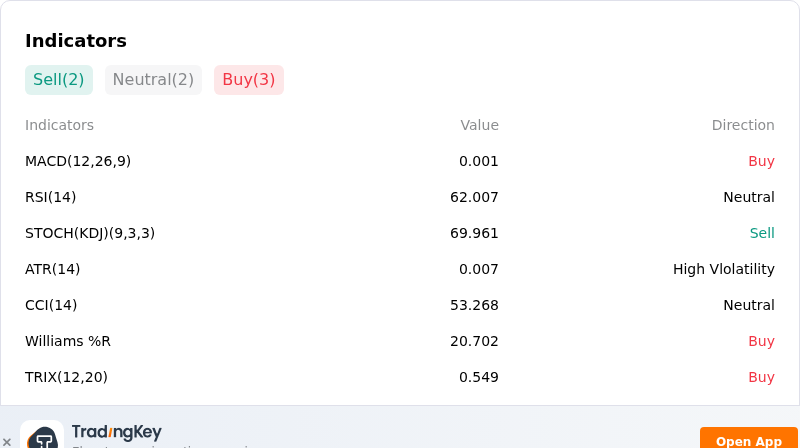
Technically, Sugar (SUGAR) shows a MACD (12,26,9) value of 0.001, indicating a buy signal. The RSI at 62.007 suggests neutral condition and the Williams %R at 20.702 suggests buy condition. Please monitor closely.
More details about Sugar (SUGAR)
Recent Events and Risks:
- Extreme Managed Money Long Positioning and Liquidation Risk: CFTC Commitment of Traders reports show commodity funds holding over 212,000 net-long contracts in NY raw sugar futures near multi-year highs, leaving intraday prices highly vulnerable to sharp long-liquidation selloffs whenever the U.S. dollar rallies or macro risk-off sentiment emerges.
- Potential Brazil Harvest Acceleration and Sucrose Recovery: Although recent rain interrupted cane crushing in Brazil’s Center-South, dry weather breaks enable mills to quickly harvest uncrushed standing cane and recover sucrose content, creating immediate downside pressure on futures as seaborne export volume rebounds.
- Shift in Brazilian Mill Crushing Mix Toward Sugar: Changes in domestic fuel tax policies, ethanol price adjustments, or easing crude oil prices risk making biofuel production less lucrative, incentivizing Brazilian sugar mills to allocate a higher percentage of sugarcane toward raw sugar production and dumping additional supply into global markets.
- High-Price Industrial Demand Destruction and Substitution: Sustained elevated spot and white sugar prices are accelerating industrial demand rationing in major importing regions across Asia and Europe, forcing food and beverage processors to reduce import purchases, draw down existing stocks, or substitute with corn syrup and alternative sweeteners.
This article may include AI-generated content that is human-reviewed, which is for reference and general information purposes only and does not constitute investment advice.
Recommended Articles










Comments (0)
Click the $ button, enter the symbol, and select to link a stock, ETF, or other ticker.