


Advanced Micro Devices Inc Stock (AMD) Moved Down by 5.94% on Oct 15: What Signal Does It Send?



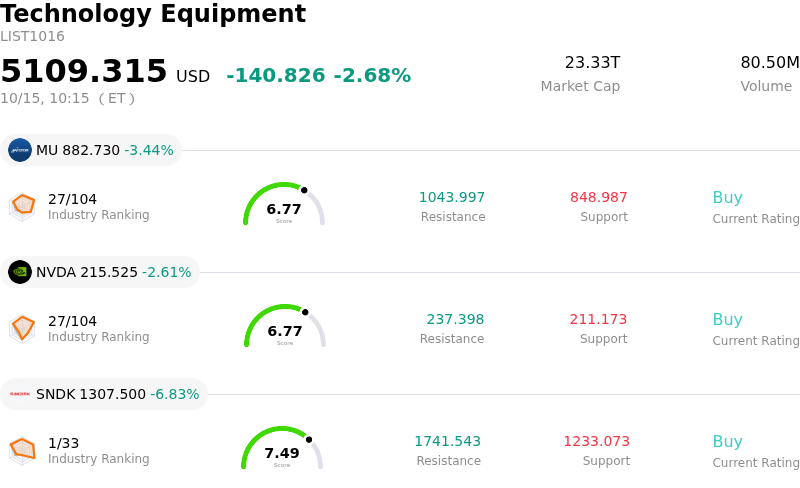
Advanced Micro Devices Inc (AMD) moved down by 5.94%. The Technology Equipment sector is down by 2.68%. The company underperformed the industry. Top 3 stocks by turnover in the sector: Micron Technology Inc (MU) down 3.66%; NVIDIA Corp (NVDA) down 2.61%; SanDisk Corporation (SNDK) down 7.01%.
What is driving Advanced Micro Devices Inc (AMD)’s stock price down today?
Advanced Micro Devices experienced sharp downward volatility as a broad sell-off across the semiconductor and artificial intelligence sectors weighed on high-beta technology equities. The primary macroeconomic catalyst was a hotter-than-expected Consumer Price Index report, which pushed Treasury yields higher and heightened market expectations of prolonged elevated interest rates by the Federal Reserve. This macroeconomic shift triggered risk-off sentiment across growth-oriented tech stocks, leading institutional investors to pare back exposure to high-valuation semiconductor names ahead of upcoming corporate earnings releases.
Compounding sector-wide pressure, growing skepticism around the financial sustainability of massive artificial intelligence infrastructure investments dampened demand expectations for hardware suppliers. Market participants expressed concern over rising financing costs and heavy leverage among cloud service providers and data center operators, highlighted by surging bond yields across key infrastructure builders. Financial stress and elevated borrowing rates across debt-reliant customers raise risks that future capital expenditure commitments for hardware, including advanced AI accelerators and data center processors, could decelerate if end-market enterprise software monetization fails to keep pace with capital intensity.
Company-specific sentiment was further impacted by recent revenue recalibrations and ecosystem disclosures from key industry partners, prompting market participants to re-evaluate the near-term adoption curve for large-scale GPU deployments. Additionally, after experiencing substantial valuation expansion following strong fundamental rallies, the stock remained vulnerable to profit-taking and multiple compression. Elevated price-to-earnings multiples combined with ongoing insider selling disclosures created an overhead headwind, driving tactical de-risking across institutional portfolios despite long-term secular opportunities in high-performance computing.
Technical Analysis of Advanced Micro Devices Inc (AMD)
Technically, Advanced Micro Devices Inc (AMD) shows a MACD (12,26,9) value of -25.132, indicating a neutral signal. The RSI at 39.649 suggests neutral condition and the Williams %R at 94.276 suggests oversold condition. Please monitor closely.
Media Coverage of Advanced Micro Devices Inc (AMD)
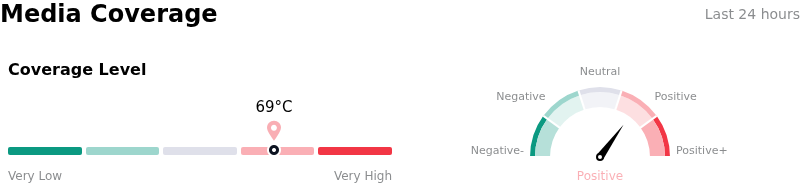
In terms of media coverage, Advanced Micro Devices Inc (AMD) shows a coverage score of 69, indicating a high level of media attention. The overall market sentiment index is currently in bullish zone.
Fundamental Analysis of Advanced Micro Devices Inc (AMD)
Advanced Micro Devices Inc (AMD) is in the Technology Equipment industry. Its latest annual revenue is $34.64B, ranking 9 in the industry. The net profit is $4.33B, ranking 12 in the industry. Company Profile
Over the past month, multiple analysts have rated the company as Buy, with an average price target of $625.57, a high of $1250.00, and a low of $320.00.
More details about Advanced Micro Devices Inc (AMD)
Company Specific Risks:
- Valuation Compression and Earnings Sensitivity: Advanced Micro Devices faces heightened downside volatility due to stretched forward earnings multiples, prompting institutional investors to de-risk high-beta semiconductor holdings ahead of upcoming earnings reports.
- Gross Margin Pressure from Competitive Offensives: Wall Street analysts highlight structural headwinds limiting gross margin expansion, driven by Intel narrowing the performance gap in server CPUs and NVIDIA maintaining market dominance in AI infrastructure hardware.
- Foundry Allocation Vulnerabilities: AMD's reliance on TSMC for advanced manufacturing nodes exposes the business to potential supply bottlenecks, as larger semiconductor peers receive priority capacity allocation for leading-edge silicon.
- Share Dilution and Integration Friction: SEC Form 8-K filings detailing all-stock acquisition agreements have introduced immediate equity dilution concerns alongside operational execution risks surrounding technology integration.
This article may include AI-generated content that is human-reviewed, which is for reference and general information purposes only and does not constitute investment advice.
Recommended Articles










Comments (0)
Click the $ button, enter the symbol, and select to link a stock, ETF, or other ticker.