


GBP/USD (GBPUSD) Drops 0.50% on Oct 7: What You Need to Watch



GBP/USD (GBPUSD) is down 0.50% at Oct 7 07:40(ET), now at $1.32058, with a 7-day down of 0.41%.
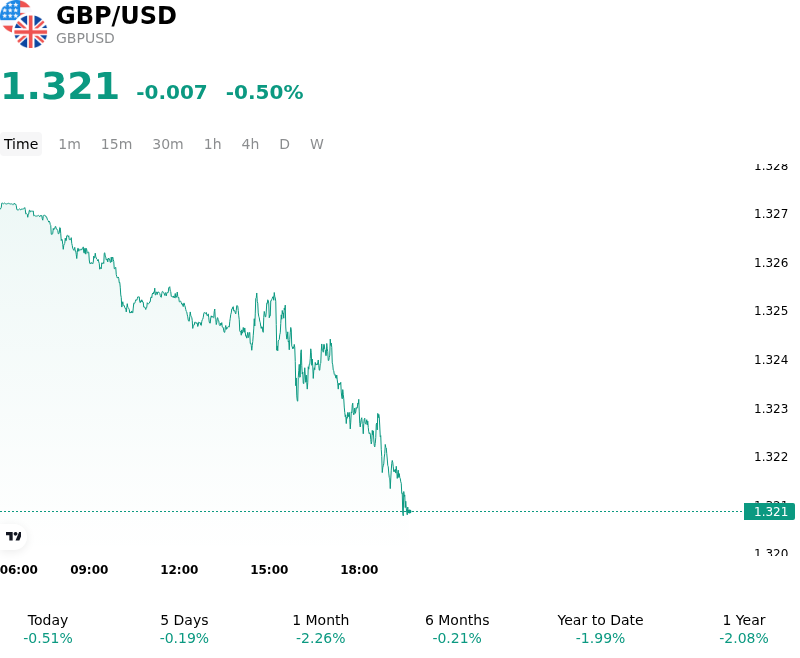
What is driving GBP/USD (GBPUSD)’s stock price down today?
The decline in GBP/USD was primarily driven by a resurgence in broad U.S. dollar demand, bolstered by rising energy prices and firming Federal Reserve policy expectations ahead of the release of the latest FOMC meeting minutes. A rebound in global crude oil prices revived market concerns regarding lingering inflationary pressures, leading fixed-income markets to reprice U.S. interest rate trajectories higher. U.S. Treasury yields advanced across short- and intermediate-dated tenors, widening nominal yield differentials in favor of the greenback and prompting institutional capital reallocations out of sterling into U.S. dollar-denominated assets.
Geopolitical friction in the Middle East and energy supply vulnerabilities further reinforced safe-haven flows into the U.S. dollar while dampening broader risk appetite across global markets. Although recent U.S. economic data pointed to a moderate cooling in the labor market, investors continued to price in a relatively high probability of sustained Federal Reserve policy restrictiveness. The anticipation of higher-for-longer borrowing costs in the U.S. reinforced dollar momentum, effective counteracting previous support sterling enjoyed from Bank of England rate expectations.
From the British pound perspective, elevated energy input costs and rising UK gilt yields have intensified market fears of stagflationary pressures on the UK economy. While Bank of England policymakers continue to warn that domestic inflation risks remain entrenched near target-exceeding levels, higher borrowing costs and energy shocks threaten to weigh heavily on UK economic activity and domestic growth prospects. Additionally, persistent investor caution regarding the UK fiscal outlook and upcoming budget decisions has capped buying interest in sterling, leaving the currency sensitive to global terms-of-trade deterioration.
From a technical standpoint, GBP/USD failed to sustain momentum above key moving average resistance levels near the upper 1.3200 range, triggering technical selling and systematic order execution once short-term support levels were breached. While the intraday weakness was driven by commodity-driven inflation fears and pre-FOMC dollar positioning, the broader structural trend for GBP/USD remains constrained by divergent macroeconomic momentum and risk-off capital flows.
Technical Analysis of GBP/USD (GBPUSD)
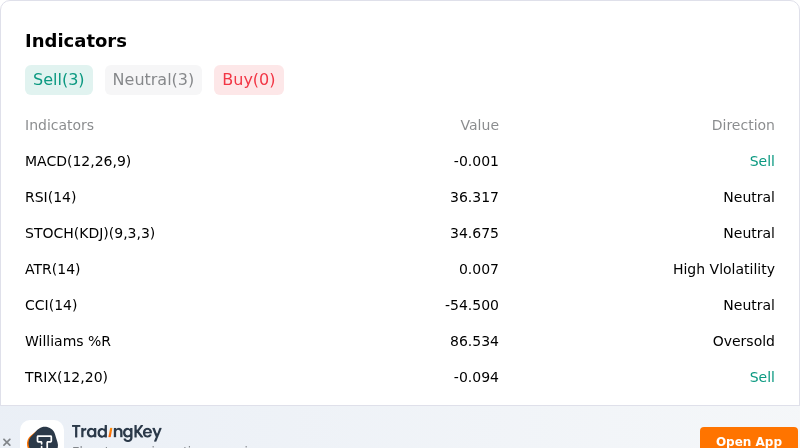
Technically, GBP/USD (GBPUSD) shows a MACD (12,26,9) value of -0.001, indicating a sell signal. The RSI at 36.432 suggests neutral condition and the Williams %R at 85.811 suggests oversold condition. Please monitor closely.
More details about GBP/USD (GBPUSD)
Recent Events and Risks:
- Resurgent US Inflation Fears and Firm Fed Rate Expectations: Global energy price spikes have reignited US inflation concerns, boosting the US Dollar on market expectations of sustained Federal Reserve policy tightness ahead of the upcoming FOMC minutes, capping GBP/USD upside.
- UK Stagflation Pressures and Sovereign Yield Stress: Hawkish Bank of England commentary warning of embedded inflation reaching 4% combined with elevated 10-year UK gilt yields around 5.40% has reinforced stagflation concerns, weighing heavily on Sterling sentiment.
- Safe-Haven Dollar Inflows Amid Geopolitical Risk: Fragile global risk sentiment driven by ongoing Middle East conflicts has accelerated safe-haven demand for the US Dollar, leaving GBP/USD exposed to downside pressure near multi-month lows around 1.3200.
- Widening Macro Divergence and BoE Re-pricing Risk: Institutional FX strategists highlight an accelerating economic divergence between stagnant UK growth and resilient US fundamentals, creating risk of sharp sterling unwinds if high borrowing costs drag the UK economy further into slowdown.
This article may include AI-generated content that is human-reviewed, which is for reference and general information purposes only and does not constitute investment advice.
Recommended Articles








Comments (0)
Click the $ button, enter the symbol, and select to link a stock, ETF, or other ticker.