


USD/JPY (USDJPY) Moved Sharply on Sep 25: Are Central Bank Expectations Shifting?



USD/JPY (USDJPY) is down 0.51% at Sep 25 02:15(ET), now at $158.029, with a 7-day up of 0.74%.
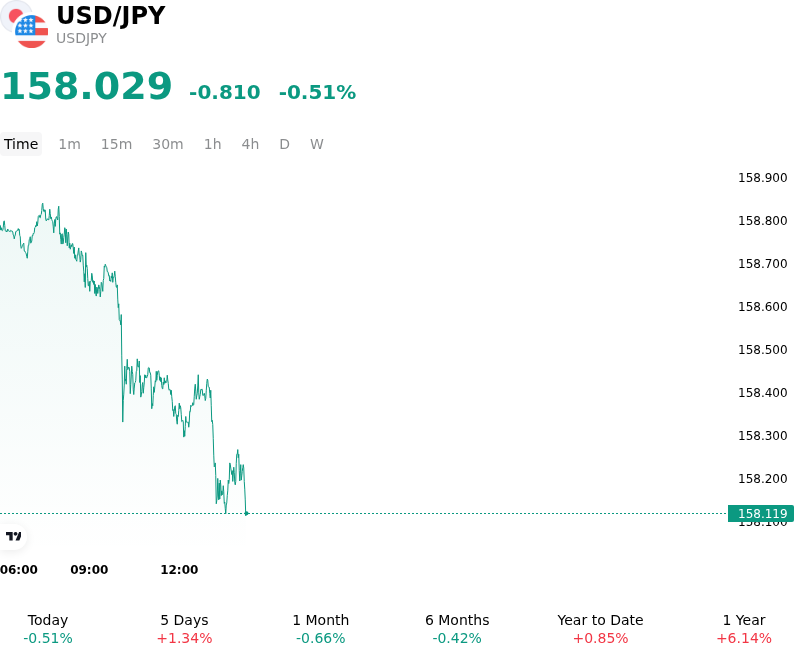
What is driving USD/JPY (USDJPY)’s stock price down today?
The pull-back in USDJPY stems primarily from technical profit-taking and heightened intervention caution as the exchange rate approached the critical psychological resistance zone near 160.00. Institutional market participants turned cautious regarding top-side momentum due to the persistent risk of official currency intervention by Japan's Ministry of Finance, prompting a reduction in long US Dollar exposure. This tactical positioning adjustment coincided with growing recognition of structural Bank of Japan policy normalization, which provided underlying support for the Japanese Yen despite recent upward momentum in US Treasury yields.
Yield spread dynamics and central bank policy expectations played a key role in driving intraday flows. Although front-end US yields remain supported by solid economic activity and expectations of a firm Federal Reserve policy stance, the widening yield differential between US Treasuries and Japanese Government Bonds showed signs of short-term fatigue. Traders locked in gains ahead of impending US inflation data, temporarily stalling dollar demand. Meanwhile, rising domestic yields in Japan and ongoing evidence of broadening domestic inflation reinforced market expectations that the Bank of Japan will maintain a tightening trajectory, narrowing cross-border real rate differentials over a medium-term horizon.
Positioning shifts and institutional capital flows further amplified the movement. Macro hedge funds and systematic strategy desks unwound leveraged short-Yen carry trades to mitigate tail-risk exposure around key technical resistance levels. Increased speculation regarding long-term corporate capital repatriation back into Japan also bolstered demand for the Yen. While higher absolute yield differentials in the United States continue to offer structural support to the US Dollar, the interaction between intervention risks, positioning adjustments, and hawkish Bank of Japan pricing has created a volatile ceiling for the currency pair, keeping investor focus fixed on upcoming macroeconomic catalysts.
Technical Analysis of USD/JPY (USDJPY)
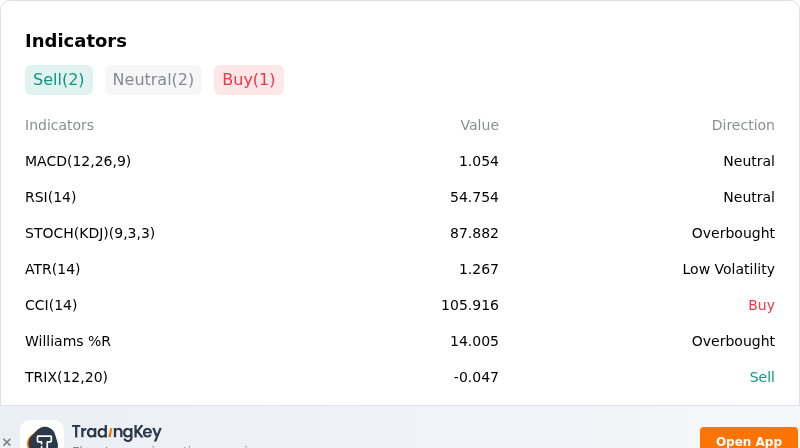
Technically, USD/JPY (USDJPY) shows a MACD (12,26,9) value of 1.054, indicating a neutral signal. The RSI at 54.754 suggests neutral condition and the Williams %R at 14.005 suggests overbought condition. Please monitor closely.
More details about USD/JPY (USDJPY)
Recent Events and Risks:
- Unilateral Foreign Exchange Intervention Threat: As USD/JPY rallies toward the critical 159.00–160.00 threshold, the pair faces intense downside volatility risk from potential physical foreign exchange intervention by Japan's Ministry of Finance, which could trigger sharp intraday liquidity shocks and aggressive yen-buying spikes.
- Bank of Japan Rate Normalization Trajectory: Following the Bank of Japan's rate increase to 1.25%, central bank commentary and elevated Japanese government bond yields reflect a credible, ongoing tightening path toward 2.0%, leaving the dollar vulnerable to abrupt pullbacks if upcoming Japanese inflation data reinforces expectations for another rate hike by October or December.
- US Macroeconomic Data and Yield Spread Sensitivity: Front-end US Treasury yields remain the primary driver of USD/JPY price action, making the pair highly susceptible to sudden downside corrections if imminent US Core PCE inflation or durable goods figures print softer than expected and temper hawkish Federal Reserve rate expectations.
- Structural Carry Unwind and Yield Spread Compression: The US-Japan 10-year nominal yield spread has narrowed substantially from historical peak carry levels as domestic JGB yields hit multi-decade highs, systematically eroding the traditional carry trade buffer and exposing long-USD positioning to sudden capital repatriation unwinds.
This article may include AI-generated content that is human-reviewed, which is for reference and general information purposes only and does not constitute investment advice.
Recommended Articles








Comments (0)
Click the $ button, enter the symbol, and select to link a stock, ETF, or other ticker.