


Citigroup Inc Stock (C) Moved Down by 3.03% on Sep 22: Drivers Behind the Movement



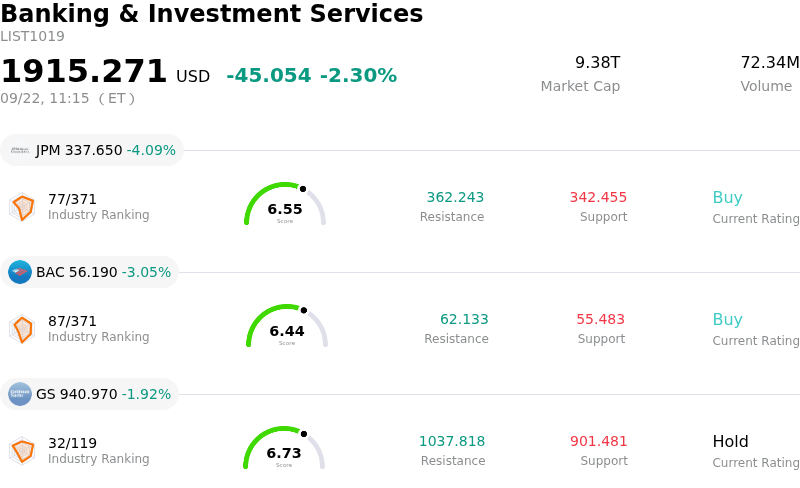
Citigroup Inc (C) moved down by 3.03%. The Banking & Investment Services sector is down by 2.30%. The company underperformed the industry. Top 3 stocks by turnover in the sector: JPMorgan Chase & Co (JPM) down 4.09%; Bank of America Corp (BAC) down 2.92%; Goldman Sachs Group Inc (GS) down 1.92%.
What is driving Citigroup Inc (C)’s stock price down today?
Citigroup experienced heightened intraday volatility and closed lower as broader macroeconomic headwinds and central bank policy expectations weighed heavily on the financial sector. Concerns over persistent inflation have led monetary authorities to maintain a hawkish stance, elevating benchmark borrowing costs and raising the likelihood of prolonged restrictive monetary policy. For major money-center banks, this environment introduces dual challenges: elevated funding costs compress net interest margins, while higher debt service obligations for retail and corporate borrowers threaten to dampen loan origination growth and elevate credit card loss provisions.
Simultaneously, financial sector sentiment has been dampened by intensified regulatory scrutiny from major global banking regulators. Heightened supervision regarding major banks' counterparty risk exposures to private credit funds, prime brokerage trading clients, and non-bank financial intermediaries has forced institutional investors to reassess tail-risk scenarios and operational compliance expenses. As regulatory oversight tightens around risk management and capital buffer requirements, large institutions face pressure on capital deployment flexibility, dampening short-term valuation multiples across the money-center banking cohort.
On a company-specific level, Citigroup continues to execute its comprehensive organizational transformation, focused on simplifying its operating structure, exiting non-core international consumer operations, and redirecting capital toward high-return core franchises. Although management recently upgraded its medium-term return targets and demonstrated efficiency progress from reduced stranded costs, the strategy involves near-term financial tradeoffs. Decision-makers pulled forward non-recurring expenditure for severance packages and strategic technology investments in wealth management and credit card platforms. While intended to accelerate structural profitability, these front-loaded costs, combined with profit-taking following a substantial year-to-date rally, contributed to investor caution and intraday selling pressure.
Technical Analysis of Citigroup Inc (C)
Technically, Citigroup Inc (C) shows a MACD (12,26,9) value of -1.021, indicating a neutral signal. The RSI at 41.345 suggests neutral condition and the Williams %R at 95.666 suggests oversold condition. Please monitor closely.
Media Coverage of Citigroup Inc (C)
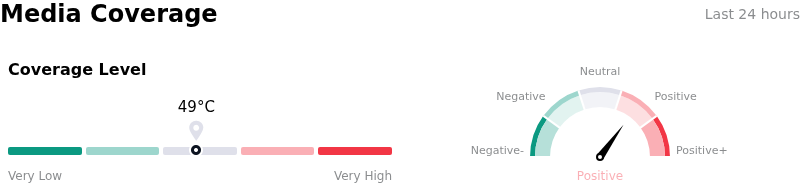
In terms of media coverage, Citigroup Inc (C) shows a coverage score of 49, indicating a moderate level of media attention. The overall market sentiment index is currently in bullish zone.
Fundamental Analysis of Citigroup Inc (C)
Citigroup Inc (C) is in the Banking & Investment Services industry. Its latest annual revenue is $81.18B, ranking 4 in the industry. The net profit is $13.02B, ranking 3 in the industry. Company Profile
Over the past month, multiple analysts have rated the company as Buy, with an average price target of $155.14, a high of $176.00, and a low of $131.69.
More details about Citigroup Inc (C)
Company Specific Risks:
- Regulatory Compliance and Enforcement Liabilities: Recent enforcement actions, including an Office of Financial Sanctions Implementation (OFSI) penalty for sanctions violations alongside lingering Federal Reserve and OCC consent order mandates, underscore persistent internal control and data governance deficiencies that create recurring compliance liabilities and operational drag.
- Funding Cost Expansion and Margin Pressure: Following Citibank's benchmark base rate increase to 7.00%, elevated interest rates and high deposit betas continue to pressure wholesale funding costs, risking net interest margin compression if commercial loan growth decelerates.
- Credit Quality Deficiencies in Corporate Portfolios: Sustained elevated interest rates and persistent liquidity strains among middle-market and corporate borrowers increase default risks across commercial lending segments, elevating potential provisions for credit losses and asset quality degradation.
- Institutional Position Trimming and Valuation Resistance: Cautious institutional sentiment—reflected by top fund managers trimming holdings amid valuation multiples expanding above intrinsic book value estimates—creates structural overhead supply and drives heightened intraday equity volatility.
This article may include AI-generated content that is human-reviewed, which is for reference and general information purposes only and does not constitute investment advice.
Recommended Articles







Comments (0)
Click the $ button, enter the symbol, and select to link a stock, ETF, or other ticker.