


USD/JPY (USDJPY) Drops 0.58% on Sep 3: What You Need to Watch



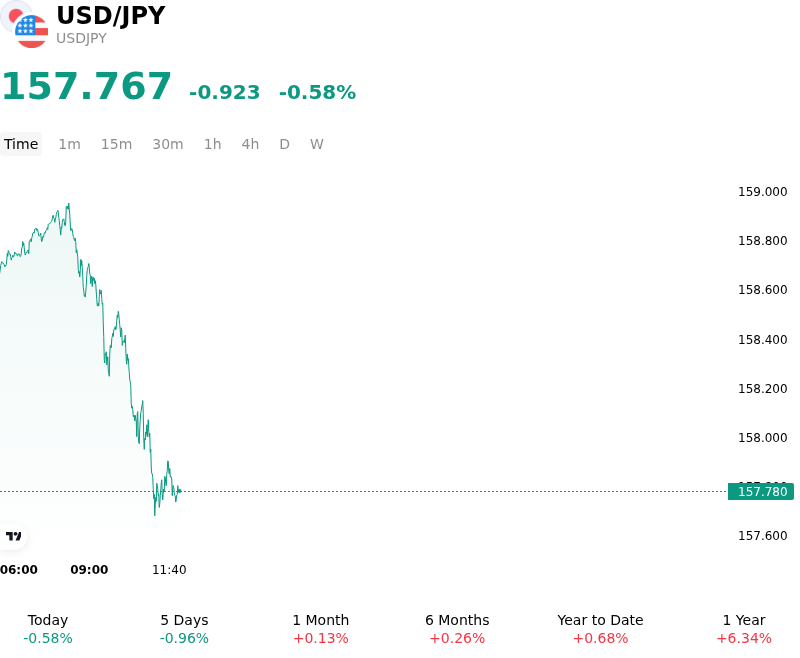
USD/JPY (USDJPY) is down 0.58% at Sep 3 00:00(ET), now at $157.767, with a 7-day down of 1.01%.
What is driving USD/JPY (USDJPY)’s stock price down today?
The decline in USD/JPY was primarily driven by a sharp hawkish repricing of Bank of Japan policy expectations, alongside heightened caution surrounding official currency intervention near key technical resistance levels. Sentiments shifted decisively following explicit remarks from Bank of Japan Governor Kazuo Ueda indicating that the central bank will debate an interest rate hike at its upcoming September policy meeting to address rising domestic inflation risks. Hawkish commentary from board members favoring a more flexible and accelerated tightening pace further propelled short-term Japanese Government Bond yields to multi-decade highs. With overnight index swaps rapidly moving to price in a rate hike for September, short-term interest rate differentials narrowed in favor of the Japanese yen, prompting a systematic unwind of yen-funded carry trades.
Reinforcing the downward pressure on the pair was the intense market sensitivity to the psychological 160 exchange rate threshold. As USD/JPY probed above this level, trader anxiety over potential currency intervention by Japanese authorities surged, backed by market speculation surrounding official rate checks. This policy vigilance was bolstered by comments from U.S. Treasury Secretary Scott Bessent following high-level discussions with Japanese officials, emphasizing the necessity of decisive monetary actions to address excessive yen depreciation. The implied policy alignment between Washington and Tokyo heightened the perceived risk of holding long dollar positions against the yen at elevated valuations.
On the U.S. side of the pair, a modest easing in U.S. Treasury yields provided additional downside momentum for USD/JPY. Lower-than-expected U.S. private employment data and nuanced comments from Federal Reserve officials prompted market participants to trim near-term dollar exposure ahead of the upcoming Nonfarm Payrolls report. The pullback in long-end U.S. benchmark yields reduced the yield advantage of the dollar, allowing the yen to gain traction across major crosses.
While the immediate move reflects a sharp positioning squeeze and intervention-driven de-risking, the broader outlook for USD/JPY hinges on whether incoming U.S. labor market data confirms economic moderation and whether the Bank of Japan delivers on its hawkish signals at its September meeting. A sustained break lower would require persistent tightening from the Bank of Japan alongside cooling U.S. growth dynamics to permanently compress the structural yield gap between the two economies.
Technical Analysis of USD/JPY (USDJPY)
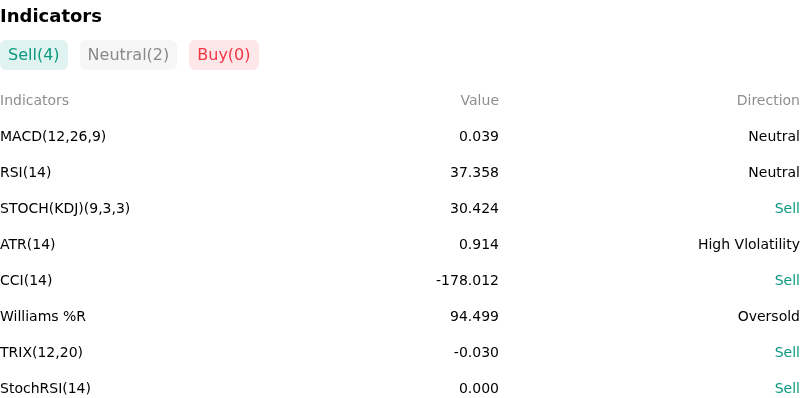
Technically, USD/JPY (USDJPY) shows a MACD (12,26,9) value of 0.039, indicating a neutral signal. The RSI at 37.358 suggests neutral condition and the Williams %R at 94.499 suggests oversold condition. Please monitor closely.
More details about USD/JPY (USDJPY)
Recent Events and Risks:
- BoJ Hawkish Policy Repricing: Hawkish comments from Governor Kazuo Ueda and Bank of Japan officials, combined with US Treasury Secretary Scott Bessent calling for decisive monetary steps, have driven overnight index swaps to heavily price in a September rate hike. This hawkish shift poses acute downside risk to USD/JPY through aggressive short-covering in the yen.
- Direct FX Intervention Threat near 160.00: As USD/JPY tests levels around the 160.00 threshold, the threat of unannounced physical currency intervention by the Japanese Ministry of Finance has escalated significantly. Given previous multi-billion dollar interventions at these key resistance levels, the risk of sudden, violent intraday pullbacks remains high.
- US Labor Market Event Risk: Imminent US macroeconomic data releases, including Nonfarm Payrolls and unemployment figures, introduce substantial event-driven volatility. Any cooler-than-expected employment data would depress US Treasury yields and accelerate Federal Reserve rate cut expectations, triggering sharp downside momentum in USD/JPY.
- JGB Yield Compression and Carry Trade Unwinds: Front-end Japanese Government Bond yields pushing to multi-decade highs have started narrowing the US-Japan interest rate differential. This spread compression threatens liquidity by increasing the vulnerability of crowded yen-funded carry trade positions to rapid unwinds.
This article may include AI-generated content that is human-reviewed, which is for reference and general information purposes only and does not constitute investment advice.
Recommended Articles








Comments (0)
Click the $ button, enter the symbol, and select to link a stock, ETF, or other ticker.