


BNB (BNBUSD) Is down 1.04% on Aug 10: Key Drivers to Watch



BNB (BNBUSD) is down 1.04% at Aug 10 00:45(ET), now at $599.7, with a 7-day up of 1.80%.
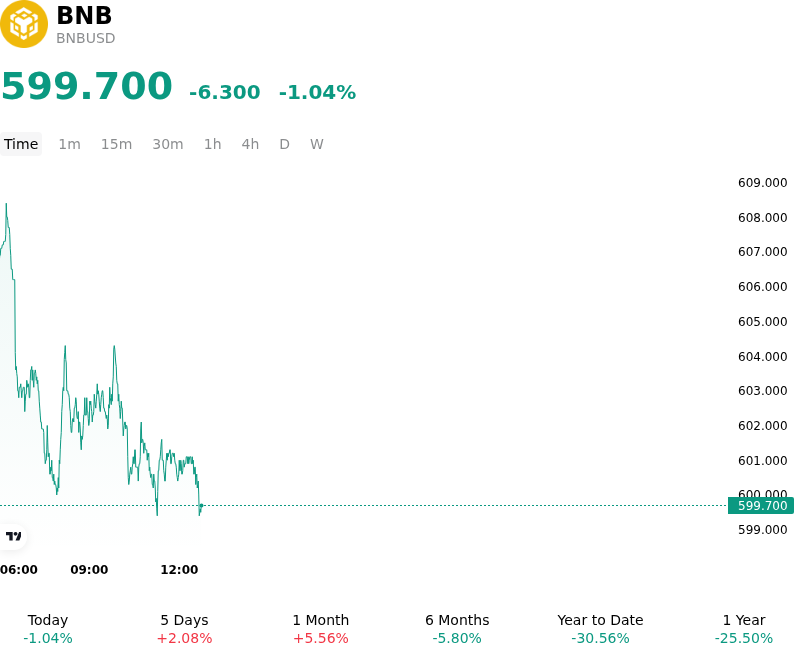
What is driving BNB (BNBUSD)’s stock price down today?
The decline in BNB reflects a broader cautious stance among institutional participants as global macro liquidity conditions tighten ahead of upcoming mid-month economic data. With the US Dollar Index showing resilience and Treasury yields consolidating at higher levels, risk-weighted assets across the digital asset spectrum are facing significant headwinds. For BNB specifically, this macro-driven pressure is compounded by a temporary lull in ecosystem-driven demand, as capital rotates toward primary layer-one alternatives or remains sidelined in anticipation of clearer directional signals from the Federal Reserve regarding its late-third-quarter policy trajectory.
Investor sentiment has also been tempered by persistent regulatory monitoring of centralized exchange operations and the evolving legal landscape for platform-native tokens. While the underlying ecosystem has made significant strides in compliance infrastructure, any perceived increase in jurisdictional oversight continues to serve as a friction point for institutional long-term positioning. This cautiousness is visible in the derivatives market, where a slight uptick in the hedging of long exposures suggests that tactical traders are preparing for potential downside volatility, leading to a contraction in spot liquidity as market makers adjust their risk parameters.
On-chain metrics for the BNB Chain indicate a stabilization of decentralized finance activity, though the absence of a high-impact Launchpool event or a major protocol upgrade has reduced the immediate transactional utility of the token. Typically, BNB experiences significant buy-side support during periods of active token distribution events; in the absence of these catalysts, the asset becomes more susceptible to general market outflows and profit-taking. Furthermore, a minor reduction in total value locked within key ecosystem protocols suggests that capital is being selectively reallocated toward yield-bearing assets in other emerging networks, exerting downward pressure on the relative valuation of the asset.
From a liquidity perspective, the intraday weakness was exacerbated by a concentration of sell orders near key psychological levels, which triggered localized liquidations of leveraged long positions. As institutional desks rebalance portfolios for the middle of the quarter, the current price action suggests a period of consolidation rather than a fundamental breakdown of the long-term utility narrative. Investors continue to monitor the potential for renewed burn mechanisms and future corporate treasury integrations, but for the immediate term, the lack of an idiosyncratic bullish catalyst and a strengthening dollar remain the primary drivers of the downward trajectory.
Technical Analysis of BNB (BNBUSD)
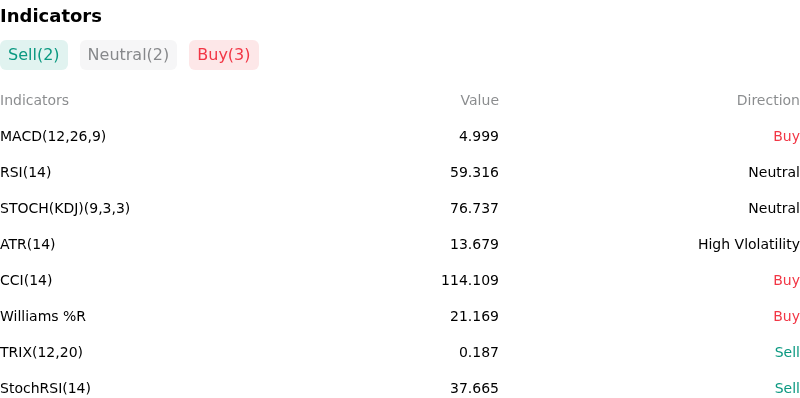
Technically, BNB (BNBUSD) shows a MACD (12,26,9) value of 4.999, indicating a buy signal. The RSI at 59.316 suggests neutral condition and the Williams %R at 21.169 suggests buy condition. Please monitor closely.
More details about BNB (BNBUSD)
Recent Events and Risks:
- Persistent Regulatory Litigation: Ongoing legal friction between the SEC and Binance regarding the classification of BNB as a security remains a primary headwind, as recent procedural developments in the case maintain uncertainty over the token's long-term status and accessibility on regulated platforms.
- Ecosystem Stagnation and Competition: BNB Chain has experienced a relative decline in network activity and developer engagement over the past 72 hours compared to high-growth competitors like Solana, raising concerns about a sustained reduction in organic demand for BNB to settle transaction fees.
- Exchange-Specific Counterparty Risk: BNB’s price action remains intrinsically linked to the operational health and global regulatory standing of the Binance exchange, where any negative news regarding platform outflows or new compliance mandates in major markets triggers immediate downside volatility.
- Market Structure and Leverage Vulnerability: Increased funding rates and a buildup of long positions in BNB perpetual futures over the last 48 hours have created a "long-squeeze" risk, where a sudden price dip could trigger a cascade of forced liquidations and rapid price depreciation.
This article may include AI-generated content that is human-reviewed, which is for reference and general information purposes only and does not constitute investment advice.
Recommended Articles








Comments (0)
Click the $ button, enter the symbol, and select to link a stock, ETF, or other ticker.