


USD/CHF (USDCHF) Volatility Intensified on Aug 3: Factors to Watch



USD/CHF (USDCHF) is up 0.50% at Aug 3 11:05(ET), now at $0.81088, with a 7-day down of 0.90%.
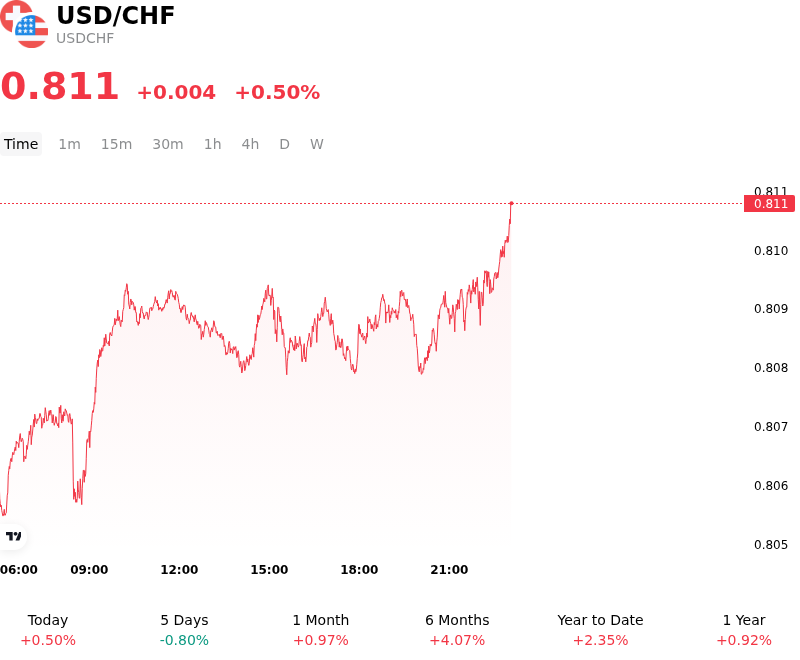
What is driving USD/CHF (USDCHF)’s stock price up today?
The appreciation of the U.S. dollar against the Swiss franc was primarily catalyzed by stronger-than-expected manufacturing data from the United States, which forced a hawkish recalibration of Federal Reserve interest-rate expectations. The release of the ISM Manufacturing PMI indicated a robust expansion in industrial activity, challenging the narrative of an imminent economic slowdown. Consequently, U.S. Treasury yields climbed sharply across the maturity spectrum as investors priced out the probability of aggressive rate cuts in the coming months, bolstering the greenback’s yield advantage.
The Swiss franc faced additional downward pressure due to the persistent divergence in monetary policy paths between the Federal Reserve and the Swiss National Bank. While the Fed remains focused on managing lingering inflationary pressures in a resilient economy, the SNB has signaled a greater comfort with current price levels, leading markets to anticipate a more accommodative stance in Zurich. This widening interest-rate differential makes the franc an attractive funding currency for carry trades, particularly as global risk sentiment turned positive following the U.S. economic data surprise.
Institutional capital flows also reflected a rotation out of safe-haven assets. As the U.S. economic outlook remains relatively superior to that of continental Europe, the franc lost its appeal as a defensive hedge. The lack of immediate geopolitical catalysts further reduced the necessity for safe-haven positioning, allowing the dollar to dominate the pair. The move was reinforced by the breaking of key technical psychological levels, which invited momentum-based buying from quantitative funds and institutional desks.
Looking forward, the sustainability of this move will depend on whether upcoming employment data confirms the strength seen in the manufacturing sector. For now, the combination of superior U.S. growth prospects and a widening yield gap provides a fundamental floor for the dollar. Unless the SNB shifts toward a more hawkish rhetoric or global volatility spikes unexpectedly, the Swiss franc is expected to remain the laggard in this pair as investors prioritize the higher carry and growth potential offered by the U.S. currency.
Technical Analysis of USD/CHF (USDCHF)
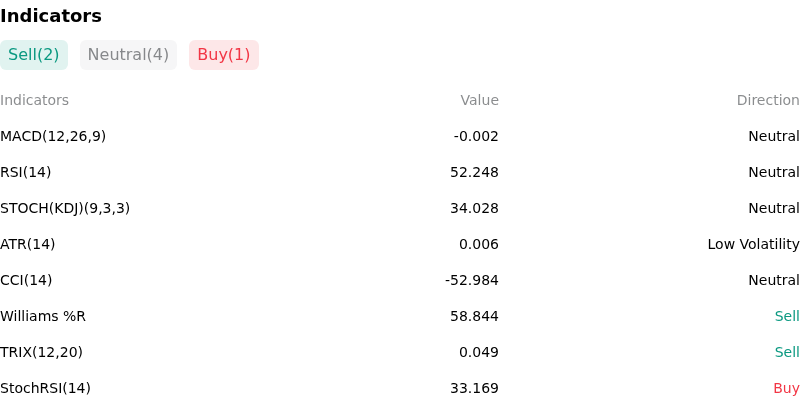
Technically, USD/CHF (USDCHF) shows a MACD (12,26,9) value of -0.002, indicating a neutral signal. The RSI at 52.248 suggests neutral condition and the Williams %R at 58.844 suggests sell condition. Please monitor closely.
More details about USD/CHF (USDCHF)
Recent Events and Risks:
- US Treasury Yield Compression: Recent soft US manufacturing data and cooling labor market indicators have led to a sharp contraction in 10-year Treasury yields, narrowing the interest rate differential in favor of the Swiss Franc and exerting downward pressure on USDCHF.
- Geopolitical Safe-Haven Demand: Escalating regional tensions in the Middle East over the last 72 hours have triggered a flight to safety, fueling demand for the Swiss Franc as a premier defensive asset and increasing the risk of a break below key technical support levels.
- Carry Trade Unwinding: Increased volatility in global equity markets has forced a rapid unwinding of carry trade positions, where the Swiss Franc is being aggressively repurchased to cover shorts, creating significant downside volatility for the pair.
- Dovish Federal Reserve Expectations: Heightened speculation of an imminent and aggressive rate cut cycle by the Federal Reserve, following disappointing domestic economic prints, has weakened the Greenback's appeal relative to the SNB's more cautious approach to further monetary easing.
This article may include AI-generated content that is human-reviewed, which is for reference and general information purposes only and does not constitute investment advice.
Recommended Articles









Comments (0)
Click the $ button, enter the symbol, and select to link a stock, ETF, or other ticker.