


USD/JPY (USDJPY) Is down 1.43% on Jul 30: Why It Happened



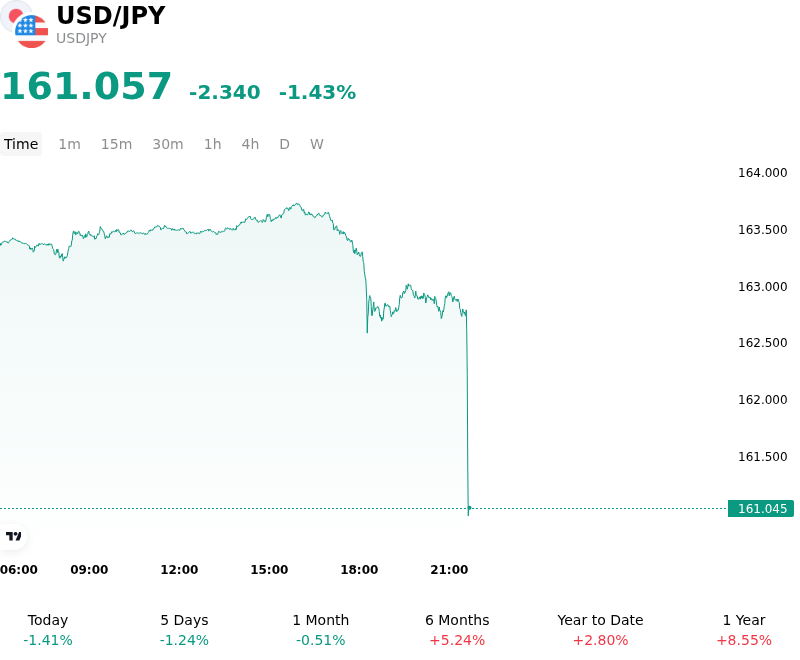
USD/JPY (USDJPY) is down 1.43% at Jul 30 09:40(ET), now at $161.057, with a 7-day down of 1.69%.
What is driving USD/JPY (USDJPY)’s stock price down today?
The sharp appreciation of the Japanese yen against the U.S. dollar is primarily driven by a decisive hawkish shift from the Bank of Japan during its July policy meeting. By raising its short-term policy rate and outlining a more aggressive quantitative tightening schedule for Japanese Government Bond purchases, the BoJ has signaled a definitive exit from its long-standing accommodative stance. This move caught a segment of the market off-guard, triggering a rapid unwinding of yen-funded carry trades as the cost of borrowing in yen rises and the currency’s historical low-volatility regime dissipates.
Simultaneously, the U.S. dollar is facing significant downward pressure following recent macroeconomic data that suggests a cooling of the American economy. Softer-than-anticipated labor market figures and a decelerating inflation trend have reinforced expectations that the Federal Reserve is nearing a transition toward a more accommodative stance. As market participants price in a more front-loaded easing cycle from the Fed, the narrowing of the U.S.-Japan interest-rate differential is fundamentally realigning capital flows in favor of the yen.
The move is further amplified by a sharp decline in U.S. Treasury yields, which has removed a critical pillar of support for the dollar. Long-term institutional investors are increasingly repositioning as the yield spread between 10-year Treasuries and 10-year JGBs shrinks to levels not seen in several months. This technical breakdown of the dollar’s multi-year uptrend against the yen has activated stop-loss orders and exacerbated the downside momentum, reflecting a broader shift in global macro sentiment toward a Japanese policy normalization theme.
Market participants remain focused on the sustainability of this yen strength, particularly regarding the BoJ’s guidance on future terminal rates and the Fed’s sensitivity to downside growth risks. While the initial volatility is driven by the immediate policy surprise, the underlying trend appears increasingly supported by the convergence of global interest rates. Safe-haven demand and a general reduction in risk appetite have also contributed to yen buying, as investors hedge against the potential for higher global borrowing costs and a slowdown in the world’s largest economy.
Technical Analysis of USD/JPY (USDJPY)
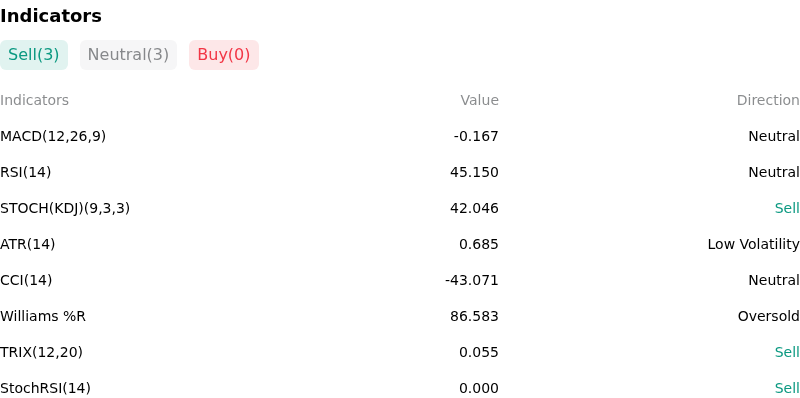
Technically, USD/JPY (USDJPY) shows a MACD (12,26,9) value of -0.167, indicating a neutral signal. The RSI at 45.150 suggests neutral condition and the Williams %R at 86.583 suggests oversold condition. Please monitor closely.
More details about USD/JPY (USDJPY)
Recent Events and Risks:
- Bank of Japan Monetary Normalization: Heightened speculation following Governor Ueda’s recent hawkish commentary suggests an imminent reduction in JGB purchases and a potential rate hike, creating significant downside pressure on USDJPY as markets price in a narrowing yield differential.
- U.S. Labor Market Cooling: Recent jobless claims and private payroll data coming in below consensus have reinforced the narrative of a slowing U.S. economy, dragging 10-year Treasury yields lower and stripping away the primary fundamental support for the Dollar against the Yen.
- Ministry of Finance Intervention Risk: Increased verbal warnings from Japanese officials regarding "one-sided" and "speculative" currency moves have put traders on high alert for physical yen-buying intervention, leading to sharp intraday deleveraging of long USDJPY positions near psychological resistance levels.
- Carry Trade Unwind Sentiment: A sudden spike in global risk aversion, triggered by renewed geopolitical tensions and soft manufacturing PMI data, has prompted a rapid exit from yen-funded carry trades, resulting in a liquidity-driven surge in Yen demand.
This article may include AI-generated content that is human-reviewed, which is for reference and general information purposes only and does not constitute investment advice.
Recommended Articles









Comments (0)
Click the $ button, enter the symbol, and select to link a stock, ETF, or other ticker.