


NZD/USD (NZDUSD) Moved Sharply on Jul 30: Are Central Bank Expectations Shifting?



NZD/USD (NZDUSD) is up 0.53% at Jul 30 05:10(ET), now at $0.58246, with a 7-day up of 0.96%.
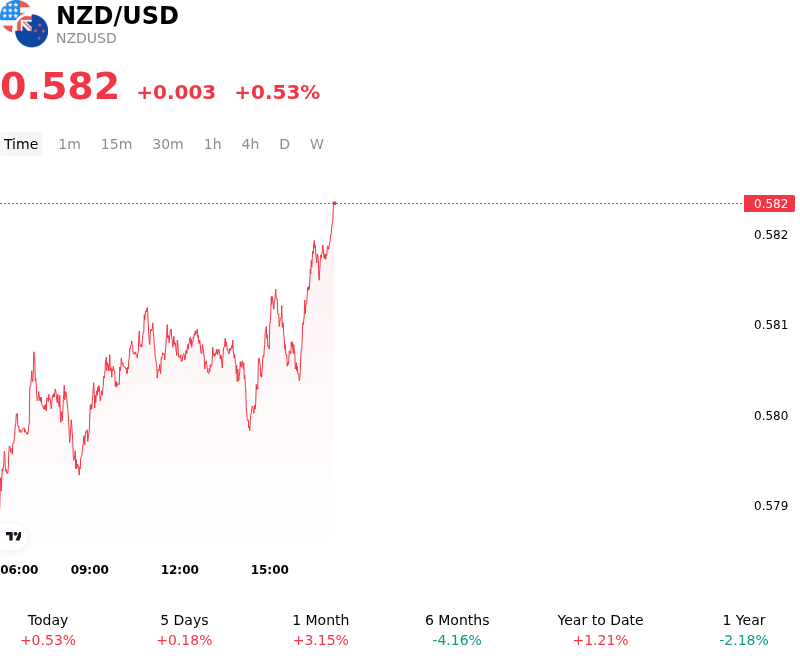
What is driving NZD/USD (NZDUSD)’s stock price up today?
The advance in NZDUSD is primarily driven by a downward repricing of US Treasury yields following the conclusion of the Federal Reserve’s July policy meeting. While the FOMC maintained its target rate, the accompanying statement and press conference suggested a shift toward a more balanced risk assessment, leading markets to pull forward expectations for the start of a policy easing cycle. This dovish tilt has compressed the US-New Zealand yield spread, reducing the greenback’s carry advantage and triggering a rotation into high-beta, commodity-linked currencies.
On the domestic side, the New Zealand Dollar is finding support from resilient front-end yields as the Reserve Bank of New Zealand maintains a cautious stance on domestic services inflation. Despite signs of slowing headline growth, RBNZ officials have refrained from signaling an imminent pivot toward rate cuts, creating a hawkish divergence relative to the shifting narrative at the Federal Reserve. This contrast in policy trajectory is incentivizing institutional capital flows into the Kiwi, particularly as real yield differentials shift in favor of the South Pacific currency.
Broader risk-on sentiment across global markets is further amplifying the move. Improved risk appetite, evidenced by gains in international equity benchmarks and stabilizing commodity prices, typically benefits the New Zealand Dollar given its high sensitivity to global growth cycles. Specifically, renewed optimism regarding regional trade demand and potential stabilization in major Asian economies is providing a structural tailwind for the NZD, as investors price in a recovery in soft commodity exports and dairy pricing.
From a positioning perspective, the breach of key technical resistance levels has triggered stop-loss buying and short-covering from systematic funds that had been positioned for a stronger US Dollar. With the greenback facing broader headwinds from a cooling US labor market and moderating inflation expectations, the path of least resistance for NZDUSD has shifted higher. Market participants are now closely monitoring whether US economic data continue to support the current disinflationary trend, which would provide the necessary fundamental backing for a sustained move in the pair.
Technical Analysis of NZD/USD (NZDUSD)
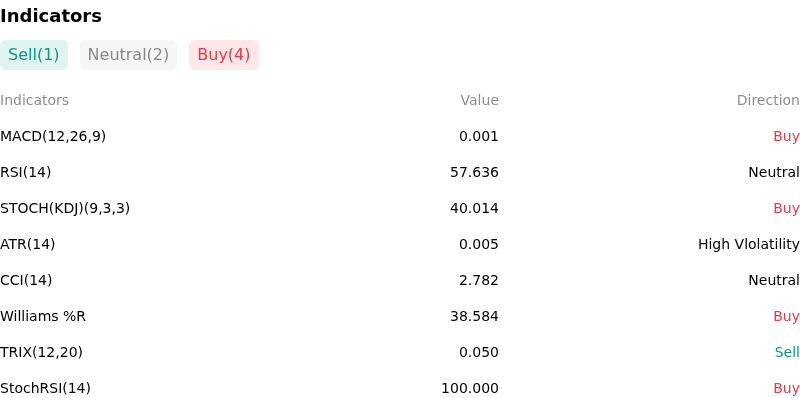
Technically, NZD/USD (NZDUSD) shows a MACD (12,26,9) value of 0.001, indicating a buy signal. The RSI at 57.636 suggests neutral condition and the Williams %R at 38.584 suggests buy condition. Please monitor closely.
More details about NZD/USD (NZDUSD)
Recent Events and Risks:
- RBNZ Dovish Policy Shift: Growing market expectations for a 50-basis point interest rate cut in November, driven by the Reserve Bank of New Zealand’s pivot toward prioritizing growth over inflation, continue to undermine the currency's yield appeal.
- China Economic Uncertainty: Persistent skepticism regarding the effectiveness of Beijing's recent fiscal stimulus measures has dampened demand for the New Zealand Dollar, which serves as a high-beta proxy for Chinese macroeconomic health and commodity demand.
- US Dollar Strength and Yield Divergence: Stronger-than-anticipated US economic data and hawkish rhetoric from Federal Reserve officials have pushed US Treasury yields higher, narrowing the interest rate differential and drawing capital away from the NZD toward the greenback.
- Risk-Off Sentiment and Geopolitical Tensions: Escalating instability in the Middle East and volatility in global equity markets have triggered a flight to safety, disproportionately affecting the NZD as investors unwind carry trades and risk-sensitive positions in favor of liquid safe havens.
This article may include AI-generated content that is human-reviewed, which is for reference and general information purposes only and does not constitute investment advice.
Recommended Articles









Comments (0)
Click the $ button, enter the symbol, and select to link a stock, ETF, or other ticker.