


AUD/USD (AUDUSD) Drops on Jul 29: What Are the Key Reasons?



AUD/USD (AUDUSD) is down 0.57% at Jul 29 10:50(ET), now at $0.69335, with a 7-day down of 0.88%.
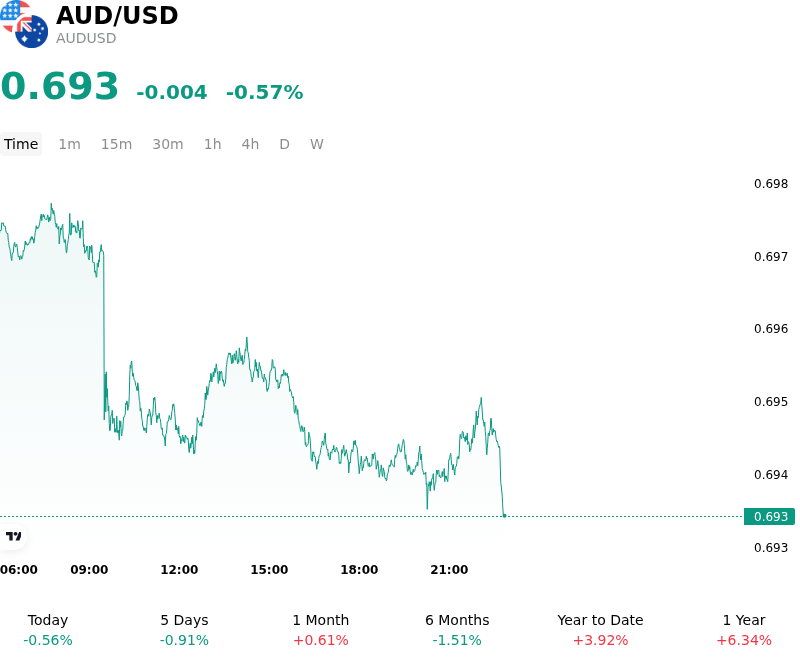
What is driving AUD/USD (AUDUSD)’s stock price down today?
The primary driver behind the downward pressure on the Australian Dollar today was the release of softer-than-anticipated consumer price index data for the second quarter. Headline inflation and, more importantly, the RBA's preferred measure of underlying inflation, the trimmed mean, both decelerated more quickly than market participants had projected. This cooling of price pressures has led to a significant repricing of interest rate expectations, as institutional investors scaled back bets on a potential rate hike at the Reserve Bank of Australia’s upcoming August policy meeting. The perceived narrowing of the interest rate differential between Australia and its G10 peers has stripped away a key support pillar for the currency.
The Australian Dollar’s weakness was compounded by a resurgent US Dollar as markets positioned themselves ahead of the Federal Reserve’s policy announcement. While the Fed is expected to maintain its current stance, a recent string of resilient US economic data has fueled concerns that the central bank may signal a higher-for-longer approach to interest rates compared to other major economies. This divergence in policy outlooks between a potentially more cautious RBA and a still-restrictive Federal Reserve has driven capital flows toward the greenback, pushing US Treasury yields higher and weighing on high-beta currencies like the Aussie.
Global risk sentiment and commodity market dynamics also played a critical role in the pair’s decline. Renewed concerns regarding the pace of industrial recovery in China have weighed heavily on iron ore and base metal prices, which serve as Australia’s primary exports. As the Australian Dollar often functions as a liquid proxy for Chinese growth prospects and global risk appetite, the combination of weakening commodity demand and a broader rotation out of risk-sensitive assets into safe-haven liquidities has exacerbated the intraday sell-off.
Technically, the move reflects a shift in institutional positioning as the pair broke through key psychological support levels. The lack of a hawkish catalyst from the domestic inflation print left the Aussie vulnerable to the strengthening US macro backdrop. Investors are now shifting their focus toward the Fed’s forward guidance to determine if this move represents a temporary retracement or the start of a more sustained trend driven by diverging central bank paths. Until there is a clearer sign of stabilization in Chinese demand or a definitive dovish shift from the Federal Reserve, the Australian Dollar is likely to remain under pressure relative to the US Dollar.
Technical Analysis of AUD/USD (AUDUSD)
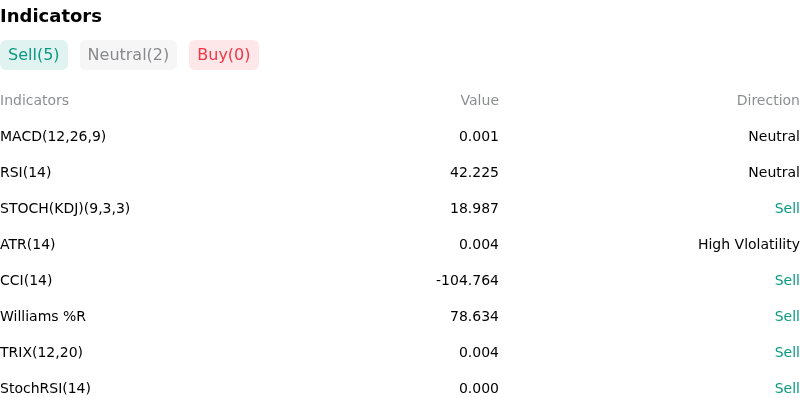
Technically, AUD/USD (AUDUSD) shows a MACD (12,26,9) value of 0.001, indicating a neutral signal. The RSI at 42.225 suggests neutral condition and the Williams %R at 78.634 suggests sell condition. Please monitor closely.
More details about AUD/USD (AUDUSD)
Recent Events and Risks:
- Hawkish FOMC Policy Guidance: Market participants are bracing for the Federal Open Market Committee decision later today, where a refusal to signal imminent rate cuts is expected to bolster US Treasury yields and exacerbate selling pressure on the AUDUSD pair.
- Downside Australian CPI Surprise: Recent quarterly inflation data came in significantly below consensus estimates, leading institutional strategists to pull forward expectations for RBA rate cuts and narrowing the yield advantage that previously supported the Australian Dollar.
- Deteriorating Chinese Macroeconomic Outlook: Disappointing industrial output figures and renewed liquidity concerns within the Chinese property sector released over the last 48 hours have intensified concerns regarding Australia’s primary export markets, triggering a sell-off in commodity-linked currencies.
- Global Risk Aversion and Liquidity Shocks: Heightened volatility in global equity markets and geopolitical tensions have sparked a broad retreat from risk-sensitive assets, resulting in the unwinding of long AUD positions as investors seek shelter in the US Dollar.
This article may include AI-generated content that is human-reviewed, which is for reference and general information purposes only and does not constitute investment advice.
Recommended Articles








Comments (0)
Click the $ button, enter the symbol, and select to link a stock, ETF, or other ticker.