


WTI (USOIL) Is down 2.12% on Jul 24: Is the Market Repricing It?



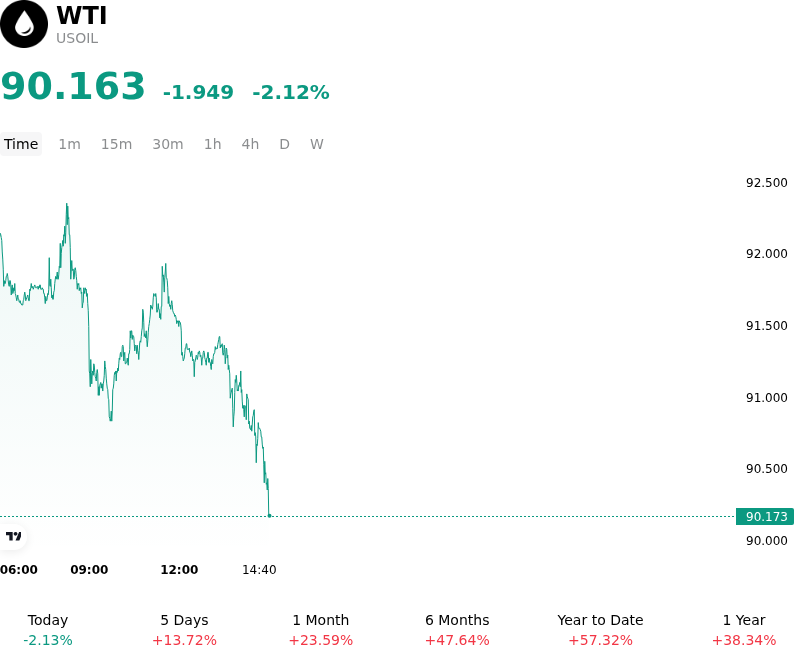
WTI (USOIL) is down 2.12% at Jul 24 03:00(ET), now at $90.163, with a 7-day up of 9.79%.
What is driving WTI (USOIL)’s stock price down today?
The retreat in USOIL is primarily driven by a shift in global supply expectations as market participants digest signs of expanding non-OPEC+ production capacity alongside a potential easing of geopolitical risk premiums. Reports suggesting a de-escalation in regional tensions that previously threatened key transit chokepoints have led to a liquidation of long positions by institutional investors. This loss of a geopolitical premium is coinciding with data showing that production levels in the Americas, particularly from the United States and Guyana, continue to exceed previous forecasts, effectively offsetting the supply discipline maintained by OPEC+.
Demand-side concerns are also weighing heavily on price action. Despite being at the height of the northern hemisphere summer driving season, recent inventory data indicates a surprising accumulation in gasoline and distillate stocks. This suggests that the seasonal peak in consumption is underperforming relative to historical norms. Furthermore, lackluster manufacturing and industrial output figures from major Asian economies are fueling fears that the global crude demand recovery for the second half of the year may be more muted than previously anticipated. The combination of high refinery runs and tepid end-user demand is squeezing crack spreads, reducing the incentive for refiners to maintain aggressive crude purchasing programs.
From a macroeconomic perspective, the strengthening of the US dollar has added downward pressure on dollar-denominated commodities. Hawkish rhetoric from central bank officials regarding the persistence of core inflation has led markets to price in a higher-for-longer interest rate environment. This outlook not only increases the cost of carrying physical inventories but also raises the risk of a broader economic slowdown, which would further erode global energy consumption. The price movement also reflects a technical breakdown as USOIL slipped below key support levels, triggering automated sell orders and a reduction in net-long exposure among hedge funds and money managers.
Looking ahead, the market balance remains sensitive to the pace of OPEC+ production adjustments. Investors are closely monitoring whether the group will proceed with the planned unwinding of voluntary cuts in the face of a softening price environment. While structural supply constraints and limited global spare capacity provide a theoretical floor, the immediate focus has shifted toward the risk of an oversupplied market in the coming quarters. Until there is a clearer signal of a demand rebound or a renewed commitment to supply restraint, market sentiment appears skewed toward the downside as capital flows favor more defensive positioning.
Technical Analysis of WTI (USOIL)
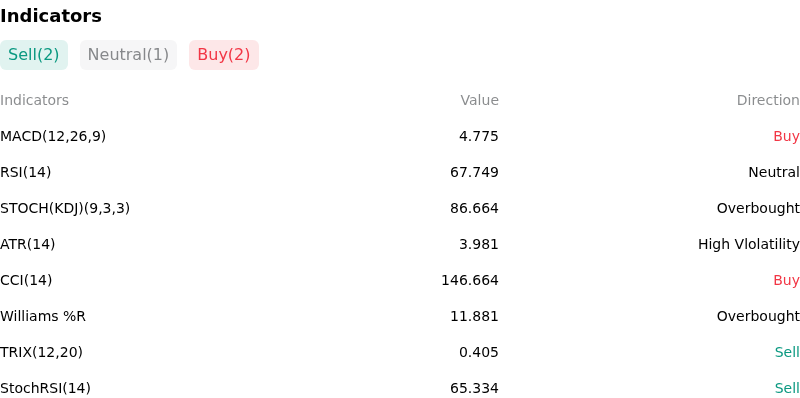
Technically, WTI (USOIL) shows a MACD (12,26,9) value of 4.775, indicating a buy signal. The RSI at 67.749 suggests neutral condition and the Williams %R at 11.881 suggests overbought condition. Please monitor closely.
More details about WTI (USOIL)
Recent Events and Risks:
- Unexpected Inventory Accumulation: Recent EIA data reported a surprise build of 1.8 million barrels in U.S. commercial crude oil inventories, contradicting market expectations for a drawdown and signaling a softening of physical market tightness.
- Hawkish Monetary Policy Outlook: Minutes from the latest Federal Reserve meeting revealed concerns over persistent inflation and a willingness to maintain elevated interest rates, which strengthens the U.S. Dollar and increases the risk of a slowdown in industrial energy demand.
- Underwhelming Seasonal Gasoline Demand: Despite the proximity to the peak summer driving season, U.S. gasoline demand has remained below historical averages, raising concerns that high retail prices and shifting consumer habits are curbing refined product consumption.
- Erosion of Geopolitical Risk Premium: As immediate fears of supply disruptions in the Middle East subside, the removal of the conflict-related price premium is exposing underlying fundamental surpluses, leading to a technical breakdown below key psychological support levels.
This article may include AI-generated content that is human-reviewed, which is for reference and general information purposes only and does not constitute investment advice.
Recommended Articles









Comments (0)
Click the $ button, enter the symbol, and select to link a stock, ETF, or other ticker.