


Equinor ASA Stock (EQNR) Moved Up by 6.09% on Jul 22: Drivers Behind the Movement



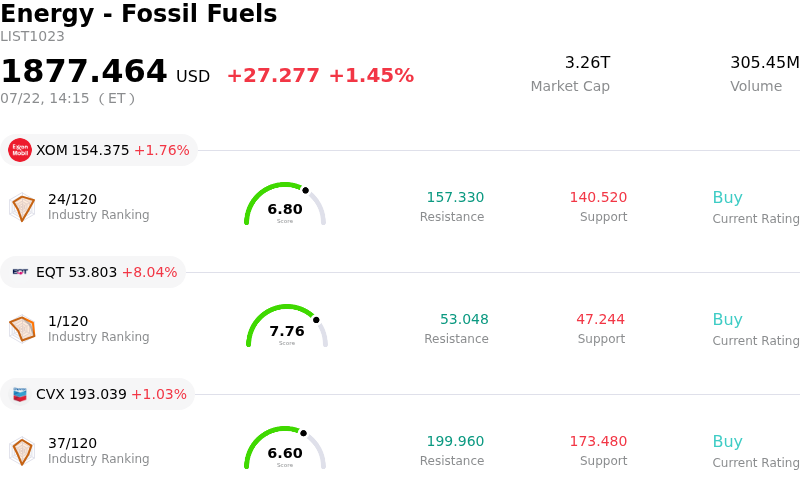
Equinor ASA (EQNR) moved up by 6.09%. The Energy - Fossil Fuels sector is up by 1.45%. The company outperformed the industry. Top 3 stocks by turnover in the sector: Exxon Mobil Corp (XOM) up 1.76%; EQT Corp (EQT) up 8.04%; Chevron Corp (CVX) up 1.03%.
What is driving Equinor ASA (EQNR)’s stock price up today?
The recent upward momentum in Equinor is primarily driven by the company's second-quarter earnings results, which exceeded consensus expectations across several key metrics. The firm demonstrated robust operational efficiency in its Norwegian Continental Shelf assets, leading to a significant beat in adjusted earnings and free cash flow. This financial strength has allowed management to provide an optimistic outlook for the remainder of the fiscal year, reinforcing investor confidence in the company's ability to navigate a volatile global energy landscape.
Complementing the strong financial performance, Equinor announced an enhancement to its capital distribution framework. The board's decision to increase the extraordinary quarterly dividend and expand the scope of its share buyback program has served as a powerful catalyst for the share price. Institutional investors have responded positively to this disciplined approach to capital allocation, which prioritizes shareholder returns while maintaining a solid balance sheet for future energy transition investments.
From a macroeconomic perspective, the rally is supported by a tightening global energy market. Rising natural gas prices in Europe, fueled by lower-than-expected storage builds and geopolitical supply constraints, have directly benefited Equinor's position as a primary supplier to the continent. Additionally, a steady rise in Brent crude prices has provided a favorable tailwind for the company's upstream segment, as market participants weigh potential supply disruptions against resilient global demand.
Furthermore, the market is pricing in the company's strategic progress in its renewable energy portfolio. Recent milestones in large-scale offshore wind projects and advancements in carbon capture and storage initiatives have improved Equinor's profile among sustainability-focused institutional investors. The synergy between high-margin fossil fuel production and a growing low-carbon business continues to differentiate the firm within the integrated oil and gas industry, contributing to the positive sentiment observed in the current trading session.
Technical Analysis of Equinor ASA (EQNR)
Technically, Equinor ASA (EQNR) shows a MACD (12,26,9) value of 1.322, indicating a neutral signal. The RSI at 65.912 suggests neutral condition and the Williams %R at 5.625 suggests overbought condition. Please monitor closely.
Fundamental Analysis of Equinor ASA (EQNR)
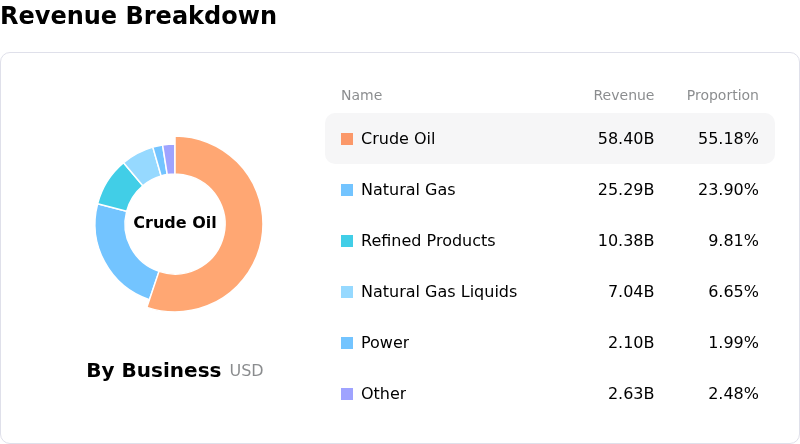
Equinor ASA (EQNR) is in the Energy - Fossil Fuels industry. Its latest annual revenue is $105.83B, ranking 9 in the industry. The net profit is $5.04B, ranking 9 in the industry. Company Profile
Over the past month, multiple analysts have rated the company as Hold, with an average price target of $33.56, a high of $37.00, and a low of $31.57.
More details about Equinor ASA (EQNR)
Company Specific Risks:
- Earnings Underperformance and Margin Compression: Equinor’s Q3 2024 adjusted operating income of $6.89 billion fell short of the $7.08 billion analyst consensus, primarily due to a 13% decline in net profit driven by higher operational expenses and lower realized liquid prices.
- Strategic Capital Allocation Concerns: Massive capital commitments to offshore wind and renewable energy projects continue to face skepticism from institutional analysts, who cite lower internal rates of return (IRR) and high interest-rate sensitivity compared to the company’s core oil and gas segments.
- Commodity Price Sensitivity: A 14% year-over-year drop in realized liquid prices and a softening European natural gas market have directly impaired revenue streams, leaving the stock vulnerable to intraday volatility as global demand forecasts for energy remain uncertain.
- Operating Cost Inflation: The company reported a significant rise in lifting and administrative costs across its international portfolio, signaling a failure to offset inflationary pressures which is currently eroding the profitability of its upstream exploration and production assets.
This article may include AI-generated content that is human-reviewed, which is for reference and general information purposes only and does not constitute investment advice.
Recommended Articles









Comments (0)
Click the $ button, enter the symbol, and select to link a stock, ETF, or other ticker.