


Bitcoin (BTCUSD) Is down 1.02% on Jul 22: Here Is Why



Bitcoin (BTCUSD) is down 1.02% at Jul 22 03:40(ET), now at $65701.27, with a 7-day up of 1.18%.
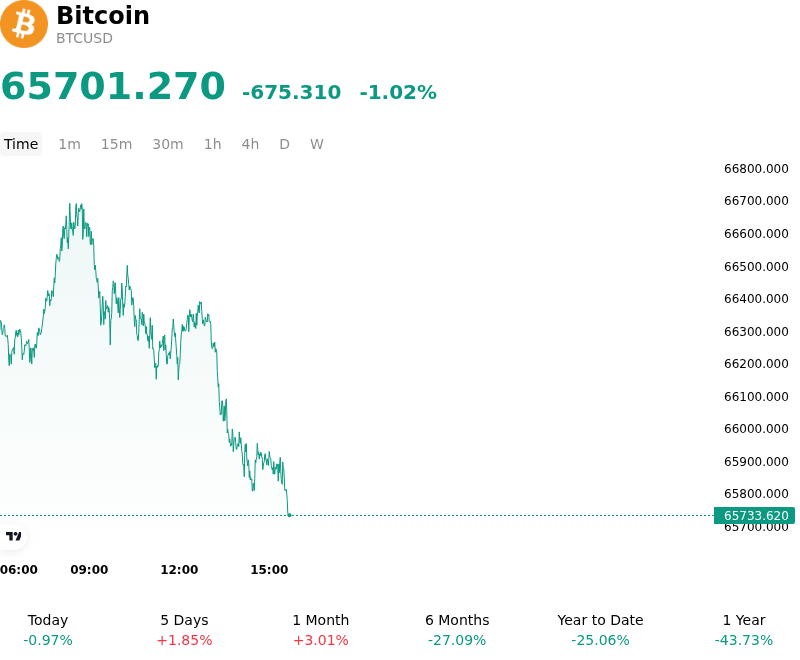
What is driving Bitcoin (BTCUSD)’s stock price down today?
Bitcoin’s intraday retracement is primarily attributed to a hawkish repricing of Federal Reserve policy expectations following stronger-than-anticipated labor market data. The resulting climb in the US 10-year Treasury yield has tightened global liquidity conditions, increasing the opportunity cost of holding non-yielding digital assets. As the US dollar strengthened against a basket of G10 currencies, capital flows shifted toward traditional safe-haven assets, dampening the immediate demand for Bitcoin as a risk-on store of value.
Institutional participation through spot Bitcoin ETFs showed a distinct cooling period during the session. After several weeks of consistent net inflows, recent data suggests a shift toward tactical profit-taking by wealth managers and institutional allocators. This reduction in spot buying pressure has left the market more susceptible to downside volatility, as the liquidity provided by these regulated vehicles remains a primary driver of price discovery in the current market cycle. The absence of aggressive institutional bids at local highs indicates a period of consolidation as participants await clearer signals on the trajectory of real interest rates.
On-chain and derivatives data further suggest that the decline was exacerbated by a wave of long liquidations in the perpetual swap market. Following a failed attempt to consolidate above key psychological resistance levels, a cascade of sell orders was triggered as leveraged positions were forced to close. This technical flushing of the system often occurs when market depth is thinner during the transition between the European and North American trading sessions, leading to an outsized impact on price action relative to the actual volume of spot selling.
Furthermore, the market continues to monitor the potential for increased regulatory scrutiny surrounding digital asset custody and cross-border settlement. While Bitcoin is fundamentally distinct from most alternative assets, it often acts as a liquidity proxy for the wider crypto ecosystem. As investors reduce exposure to higher-beta digital assets in response to regulatory uncertainty, the ensuing flight to cash frequently impacts Bitcoin’s valuation in the short term. Despite this intraday softness, the structural narrative remains focused on the long-term absorption of supply by institutional treasuries, suggesting that current volatility is a function of cyclical liquidity adjustments and macro-driven risk aversion rather than a shift in long-term adoption expectations.
Technical Analysis of Bitcoin (BTCUSD)
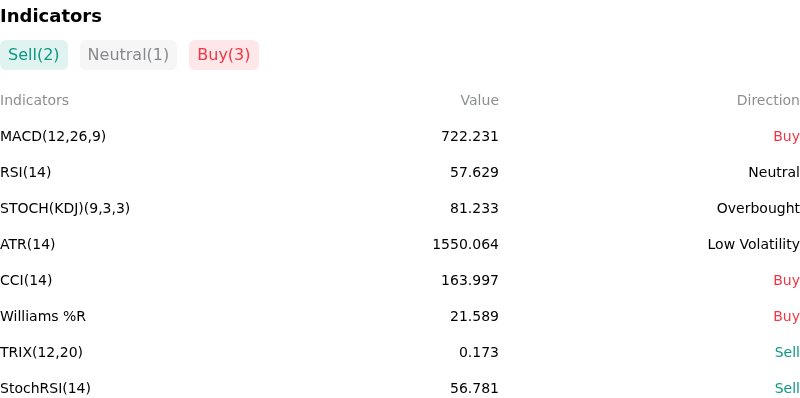
Technically, Bitcoin (BTCUSD) shows a MACD (12,26,9) value of 722.231, indicating a buy signal. The RSI at 57.629 suggests neutral condition and the Williams %R at 21.589 suggests buy condition. Please monitor closely.
More details about Bitcoin (BTCUSD)
Recent Events and Risks:
- Hawkish Federal Reserve Outlook: The June 2024 FOMC meeting resulted in a revised "dot plot" that reduced the projected interest rate cuts for the year from three to just one, fueling a rebound in the U.S. Dollar Index and creating significant macro-driven selling pressure on Bitcoin.
- Sustained Institutional ETF Outflows: U.S. spot Bitcoin ETFs have experienced a sharp reversal in sentiment, with net outflows exceeding $200 million in recent sessions, indicating a cooling of institutional appetite and removing the reliable "buy-side" support that had previously cushioned price drops.
- Post-Halving Miner Capitulation: On-chain data reveals that Bitcoin miner reserves have reached their lowest levels in years as mining firms liquidate holdings to cover increased operational costs following the recent halving, introducing persistent sell-side liquidity into the spot market.
- Mt. Gox Distribution Anxiety: Continued movements of funds from wallets associated with the defunct Mt. Gox exchange have intensified fears of an impending $9 billion supply overhang, as market participants anticipate that long-term creditors may liquidate their holdings upon receipt.
This article may include AI-generated content that is human-reviewed, which is for reference and general information purposes only and does not constitute investment advice.
Recommended Articles










Comments (0)
Click the $ button, enter the symbol, and select to link a stock, ETF, or other ticker.