


Bloom Energy Corp Stock (BE) Moved Down by 5.11% on Jul 20: A Full Analysis



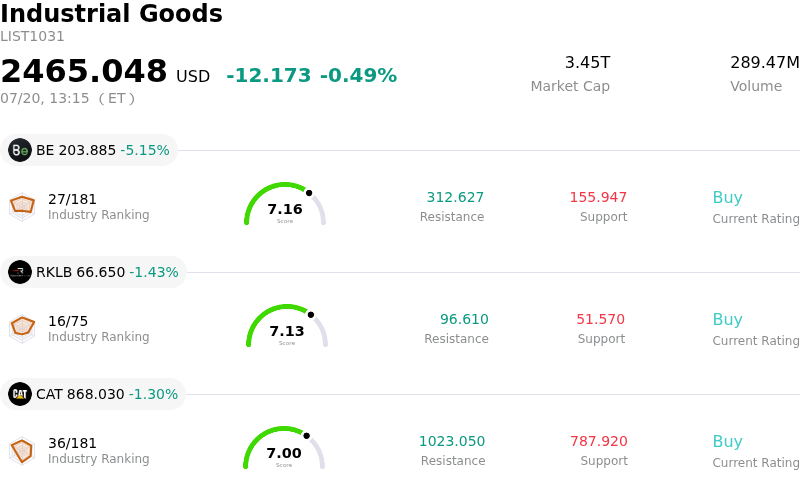
Bloom Energy Corp (BE) moved down by 5.11%. The Industrial Goods sector is down by 0.49%. The company underperformed the industry. Top 3 stocks by turnover in the sector: Bloom Energy Corp (BE) down 5.11%; Rocket Lab USA Inc (RKLB) down 1.43%; Caterpillar Inc (CAT) down 1.30%.
What is driving Bloom Energy Corp (BE)’s stock price down today?
Bloom Energy is currently facing significant downward pressure as the broader renewable energy sector grapples with a recalibration of growth expectations. One primary catalyst for the recent volatility is the persistence of elevated interest rates, which directly impacts capital-intensive energy infrastructure projects. For a company like Bloom Energy, which relies on large-scale deployments of solid oxide fuel cells, the cost of financing remains a critical headwind that can delay final investment decisions for potential customers in the industrial and utility sectors.
Market sentiment has also been dampened by a perceived slowdown in the immediate adoption of hydrogen-based solutions for data centers. While the narrative surrounding artificial intelligence driving massive power demand initially provided a tailwind for the stock, investors are now seeking more concrete evidence of revenue conversion and margin improvement. The recent price action suggests a shift from speculative enthusiasm toward a more cautious valuation of the company's backlog and its ability to achieve sustainable profitability in a competitive power generation landscape.
From an operational standpoint, concerns regarding the supply chain for key materials and the pace of domestic manufacturing incentives have added to the uncertainty. If institutional investors perceive any execution risks or a slower-than-anticipated ramp-up in the commercialization of new electrolyzer technology, they tend to reduce exposure to high-beta stocks in the green energy space. This institutional de-risking often leads to the type of intraday volatility currently observed, particularly when the stock breaks through established technical support levels.
Furthermore, the competitive environment for behind-the-meter power solutions is intensifying. As traditional utilities and alternative clean energy providers advance their own distributed energy strategies, Bloom Energy must continuously prove the cost-effectiveness of its fuel cell technology. Any signs of pricing pressure or a shift in corporate procurement strategies toward alternative baseload power sources, such as small modular reactors or enhanced battery storage, can trigger a defensive reaction from shareholders.
Lastly, the broader macroeconomic environment and fluctuations in natural gas prices continue to influence the relative attractiveness of Bloom’s technology. Since natural gas is a primary feedstock for many of their current installations, volatility in the commodities market can lead to uncertainty regarding the long-term total cost of ownership for their clients. This confluence of high financing costs, evolving data center energy requirements, and competitive risks has resulted in the current bearish trend as the market reassesses the timing of the next growth phase.
Technical Analysis of Bloom Energy Corp (BE)
Technically, Bloom Energy Corp (BE) shows a MACD (12,26,9) value of -15.926, indicating a sell signal. The RSI at 38.915 suggests neutral condition and the Williams %R at 83.764 suggests oversold condition. Please monitor closely.
Fundamental Analysis of Bloom Energy Corp (BE)
Bloom Energy Corp (BE) is in the Industrial Goods industry. Its latest annual revenue is $2.02B, ranking 77 in the industry. The net profit is $-88.43M, ranking 206 in the industry. Company Profile
Over the past month, multiple analysts have rated the company as Buy, with an average price target of $291.59, a high of $390.00, and a low of $100.00.
More details about Bloom Energy Corp (BE)
Company Specific Risks:
- Regulatory Subsidy Uncertainty: Ongoing ambiguity regarding the Treasury Department’s Section 45V Hydrogen Production Tax Credit, specifically the "three pillars" requirements for additionality and hourly matching, poses a direct threat to the economic viability of Bloom’s electrolyzer backlog and long-term revenue projections.
- Financial and Liquidity Constraints: Persistent negative free cash flow and a high debt-to-equity ratio remain primary concerns for institutional analysts, as the company requires significant capital to scale manufacturing while facing elevated interest expenses that delay the timeline for GAAP profitability.
- Execution and Backlog Conversion Risks: Volatility is exacerbated by investor skepticism over the pace of backlog conversion, as utility-scale interconnection bottlenecks and permitting delays for fuel cell installations threaten to push revenue recognition into future fiscal periods.
- Market and Competitive Pressure: Intensifying competition in the hydrogen electrolyzer space from low-cost international manufacturers and diversified industrial giants is creating significant pricing pressure, potentially compressing gross margins and eroding Bloom's market share in the commercial and industrial (C&I) segment.
This article may include AI-generated content that is human-reviewed, which is for reference and general information purposes only and does not constitute investment advice.
Recommended Articles









Comments (0)
Click the $ button, enter the symbol, and select to link a stock, ETF, or other ticker.