


USD/MXN (USDMXN) is down 0.52% on Jul 20: The Reason Has Emerged



USD/MXN (USDMXN) is down 0.52% at Jul 20 11:55(ET), now at $17.44299, with a 7-day down of 0.41%.
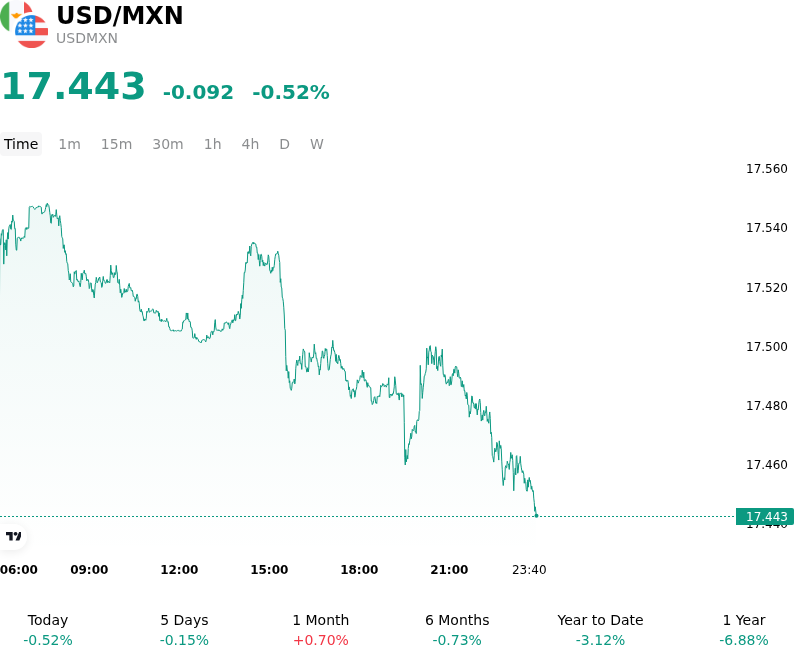
What is driving USD/MXN (USDMXN)’s stock price down today?
The appreciation of the Mexican peso against the U.S. dollar is primarily driven by a widening of the real interest rate differential as market participants recalibrate their expectations for both the Federal Reserve and Banco de Mexico. Recent disinflationary trends in the United States have accelerated, leading to a compression in U.S. Treasury yields, particularly at the front end of the curve. This has diminished the greenback's yield appeal, as investors increasingly price in more aggressive easing from the Fed to counteract cooling labor market conditions and a decelerating manufacturing sector. In contrast, Banco de Mexico has maintained a relatively restrictive policy stance, signaling that while nominal rates may see some adjustments, real rates will remain elevated to ensure headline inflation returns sustainably to its target.
Furthermore, the peso continues to benefit from robust structural capital inflows linked to the ongoing nearshoring trend. Institutional investors are focusing on Mexico’s improved external balance sheets and the steady flow of foreign direct investment, which provides a fundamental floor for the currency. This structural support is being amplified by a positive shift in global risk appetite. As volatility in the G10 space subsides, the carry trade remains highly attractive, with the peso serving as a primary beneficiary due to its high liquidity and the significant carry-to-risk ratio it offers compared to other emerging market peers.
The move is also supported by technical factors and institutional positioning. After a period of consolidation, the break below key support levels has triggered stop-loss selling of the dollar and encouraged fresh long positions in the peso from macro hedge funds. While the outlook remains contingent on U.S. economic growth remaining resilient enough to avoid a hard-landing scenario—which would typically trigger a flight to safety—the current environment of moderating U.S. inflation and steady Mexican domestic demand favors a continued outperformance of the peso. Investors remain watchful of any shifts in trade rhetoric or geopolitical developments that could impact the North American supply chain, but for now, the carry advantage and favorable flow dynamics remain the dominant drivers.
Technical Analysis of USD/MXN (USDMXN)
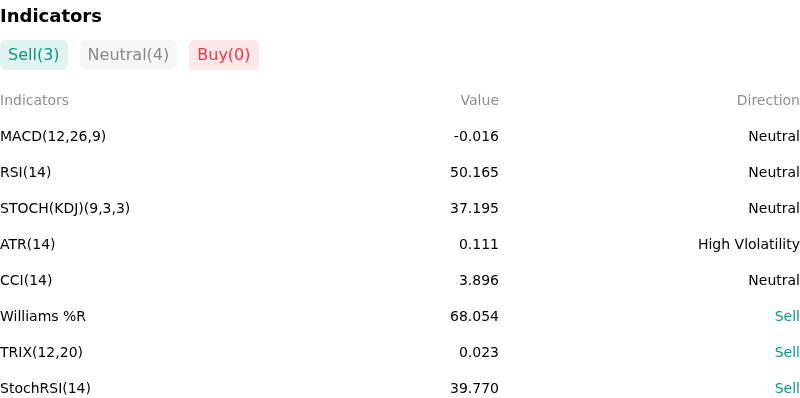
Technically, USD/MXN (USDMXN) shows a MACD (12,26,9) value of -0.016, indicating a neutral signal. The RSI at 50.165 suggests neutral condition and the Williams %R at 68.054 suggests sell condition. Please monitor closely.
More details about USD/MXN (USDMXN)
Recent Events and Risks:
- Constitutional Reform Uncertainty: Market anxiety persists regarding the "Plan C" legislative agenda, specifically the judicial reforms proposed by the ruling Morena party, which institutional investors fear will weaken the rule of law and increase the sovereign risk premium for Mexican assets.
- Carry Trade Unwind Pressures: Heightened global market volatility and a narrowing of the interest rate differential between the U.S. and Mexico have prompted a significant reduction in long-MXN carry trade positions, leading to sharp intraday spikes in USDMXN as liquidity thins.
- Banxico Policy Divergence: Concerns that the Bank of Mexico (Banxico) may prioritize growth over inflation targets or signal a more dovish stance than the Federal Reserve creates downside risk for the Peso, especially if local inflation data remains sticky while the currency depreciates.
- U.S. Fiscal and Trade Rhetoric: Increasing geopolitical tensions and protectionist trade rhetoric ahead of U.S. political cycles are creating volatility for the MXN, as the currency remains highly sensitive to shifts in U.S. trade policy and near-shoring capital flow expectations.
This article may include AI-generated content that is human-reviewed, which is for reference and general information purposes only and does not constitute investment advice.
Recommended Articles










Comments (0)
Click the $ button, enter the symbol, and select to link a stock, ETF, or other ticker.