


Brent (UKOIL) Is up 2.73% on Jul 19: What Is Driving the Move?



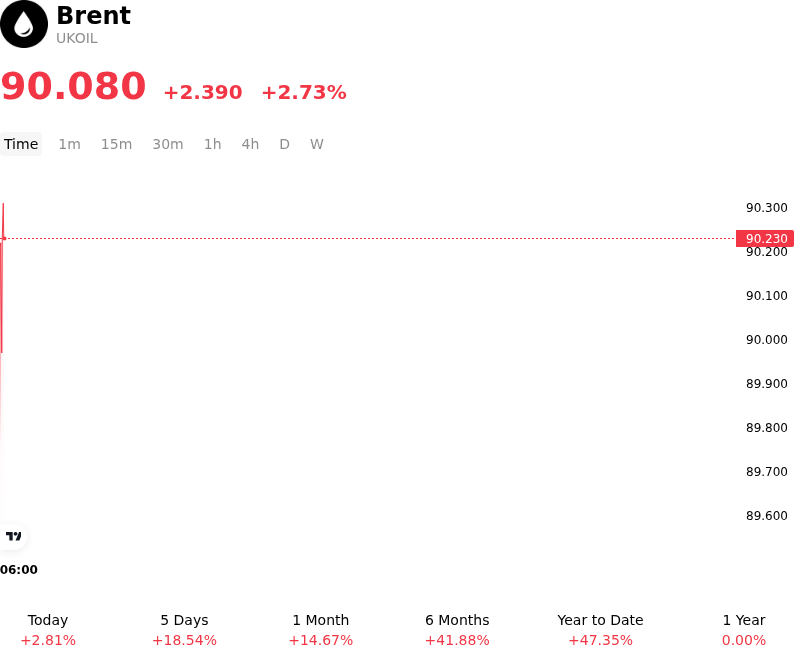
Brent (UKOIL) is up 2.73% at Jul 19 18:10(ET), now at $90.08, with a 7-day up of 18.45%.
What is driving Brent (UKOIL)’s stock price up today?
The upward pressure on Brent crude prices is primarily driven by an escalation in geopolitical tensions in the Middle East, which has reignited concerns over potential supply disruptions through critical maritime corridors. Reports of increased friction involving major regional producers have forced market participants to price in a higher risk premium, fearing that any physical impairment to export infrastructure or transit routes would lead to an immediate deficit in the global market balance. This supply-side anxiety is compounded by evidence of tightening physical markets, as reflected in strengthening prompt spreads and high premiums for immediate delivery.
Market sentiment is further supported by signaling from OPEC+ indicating a firm commitment to maintaining production discipline. Expectations that the alliance will delay the planned tapering of voluntary output cuts have shifted the inventory outlook for the second half of the year. Investors are increasingly anticipating a sustained period of market undersupply, as the group appears prioritized on price stability over regaining market share, particularly as non-OPEC production growth shows signs of plateauing due to capital expenditure constraints in the shale sector.
On the demand side, recent industrial activity data from major emerging economies suggests a more resilient consumption profile than previously forecast. Upward revisions to refinery intake targets in Asia, combined with seasonal peak demand for transportation fuels, are providing a structural floor for prices. Furthermore, a softening US dollar, driven by a shift in Federal Reserve policy expectations toward a more accommodative stance, has enhanced the purchasing power of non-dollar buyers, adding momentum to the rally as dollar-denominated commodities become relatively cheaper.
While technical buying and the covering of short positions have accelerated the intraday advance, the move fundamentally reflects a repricing of scarcity risks. Institutional capital flows are rotating back into the energy complex as the macroeconomic narrative shifts from recession fears to supply-driven tightness. Investors remain focused on upcoming weekly inventory reports and further diplomatic developments in oil-producing regions, as the current market balance leaves little margin for additional supply shocks without necessitating further price appreciation to ration demand.
Technical Analysis of Brent (UKOIL)
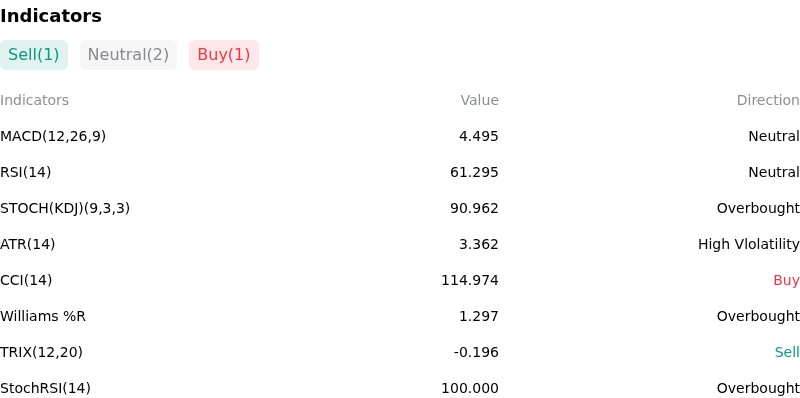
Technically, Brent (UKOIL) shows a MACD (12,26,9) value of 4.495, indicating a neutral signal. The RSI at 61.295 suggests neutral condition and the Williams %R at 1.297 suggests overbought condition. Please monitor closely.
More details about Brent (UKOIL)
Recent Events and Risks:
- Chinese Industrial Demand Deterioration: Recent manufacturing PMI data and sluggish refinery throughput figures from China have intensified concerns over a structural slowdown in the world's largest crude importer, creating immediate downside pressure as traders reassess second-half demand growth projections.
- Ebbing Geopolitical Risk Premium: Progress in diplomatic negotiations regarding regional conflicts in the Middle East has led to a significant unwinding of the "war premium" previously priced into Brent futures, as the immediate threat to maritime transit and production infrastructure appears to be moderating.
- Unexpected Inventory Accumulation: Recent industry reports indicated a surprise build in commercial crude stockpiles, contradicting seasonal expectations for a heavy drawdown during the peak summer driving season and suggesting a temporary misalignment between supply availability and refinery demand.
- Hawkish Monetary Policy and Dollar Strength: Persistent signals from central banks regarding prolonged high interest rates have bolstered the U.S. Dollar, making UKOIL more expensive for holders of other currencies and dampening the broader macro-economic appetite for energy-intensive industrial expansion.
This article may include AI-generated content that is human-reviewed, which is for reference and general information purposes only and does not constitute investment advice.
Recommended Articles










Comments (0)
Click the $ button, enter the symbol, and select to link a stock, ETF, or other ticker.