


Robinhood Markets Inc Stock (HOOD) Closed Down by 5.68% on Jul 17: Key Drivers Unveiled



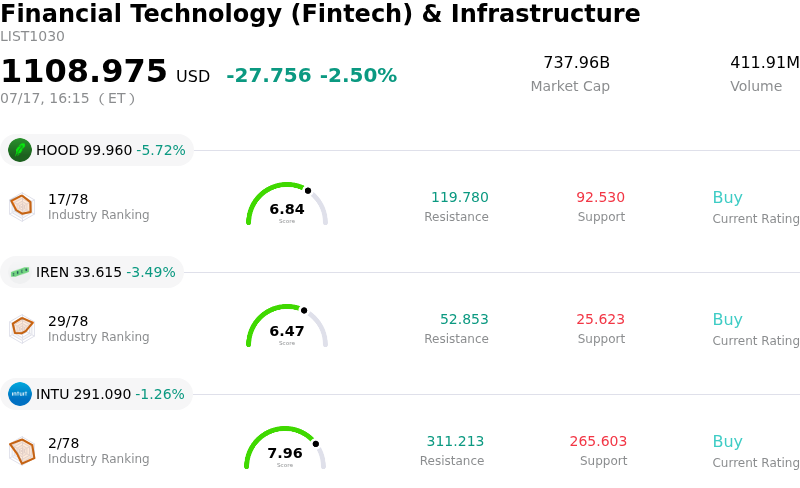
Robinhood Markets Inc (HOOD) closed down by 5.68%. The Financial Technology (Fintech) & Infrastructure sector is down by 2.50%. The company underperformed the industry. Top 3 stocks by turnover in the sector: Robinhood Markets Inc (HOOD) down 5.68%; IREN Ltd (IREN) down 3.49%; Intuit Inc (INTU) down 1.13%.
What is driving Robinhood Markets Inc (HOOD)’s stock price down today?
The downward pressure on Robinhood is primarily driven by a broader retreat in the fintech and retail brokerage sectors as market sentiment shifts toward defensive positioning. A sharp correction in the cryptocurrency market has significantly impacted the platform’s expected transaction-based revenue, as a substantial portion of the company’s growth remains tethered to the volatility and trading volume of digital assets. When crypto sentiment sours, retail engagement typically retreats, leading institutional investors to de-risk their holdings in high-beta brokerage stocks.
Furthermore, recent regulatory signals from the Securities and Exchange Commission have reintroduced uncertainty regarding the long-term viability of payment for order flow and the categorization of certain digital assets offered on the platform. The threat of tightened oversight on margin lending and the gamification of trading interfaces continues to weigh on the company’s valuation multiple. Investors are increasingly concerned that increased compliance costs and potential changes to fee structures will compress profit margins in the coming quarters.
Macroeconomic factors are also playing a critical role in the current selling pressure. As the Federal Reserve moves toward a more accommodative monetary policy, the tailwinds from high interest rates that previously bolstered the company’s net interest income are beginning to fade. The narrowing spread on cash sweeps and margin balances suggests that the period of record interest-based earnings may be peaking. This fundamental shift, combined with institutional portfolio rebalancing, has led to a notable reduction in exposure by major hedge funds and exchange-traded funds.
Finally, analyst sentiment has cooled following a series of downward revisions to user growth forecasts across the industry. Competitors have intensified their efforts to capture the active trader segment with aggressive incentive programs and lower margin rates, raising fears of a price war that Robinhood may struggle to navigate without sacrificing its path to sustained profitability. This competitive pressure, coupled with the current risk-averse environment, has created a challenging backdrop for the stock.
Technical Analysis of Robinhood Markets Inc (HOOD)
Technically, Robinhood Markets Inc (HOOD) shows a MACD (12,26,9) value of -1.354, indicating a neutral signal. The RSI at 52.281 suggests neutral condition and the Williams %R at 52.021 suggests neutral condition. Please monitor closely.
Media Coverage of Robinhood Markets Inc (HOOD)
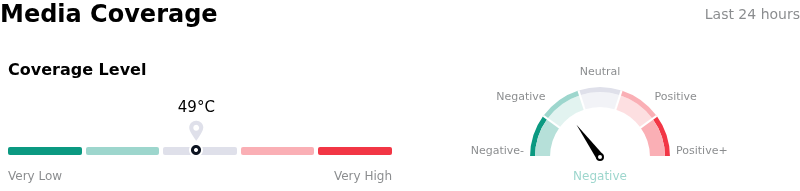
In terms of media coverage, Robinhood Markets Inc (HOOD) shows a coverage score of 49, indicating a moderate level of media attention. The overall market sentiment index is currently in bearish zone.
Fundamental Analysis of Robinhood Markets Inc (HOOD)
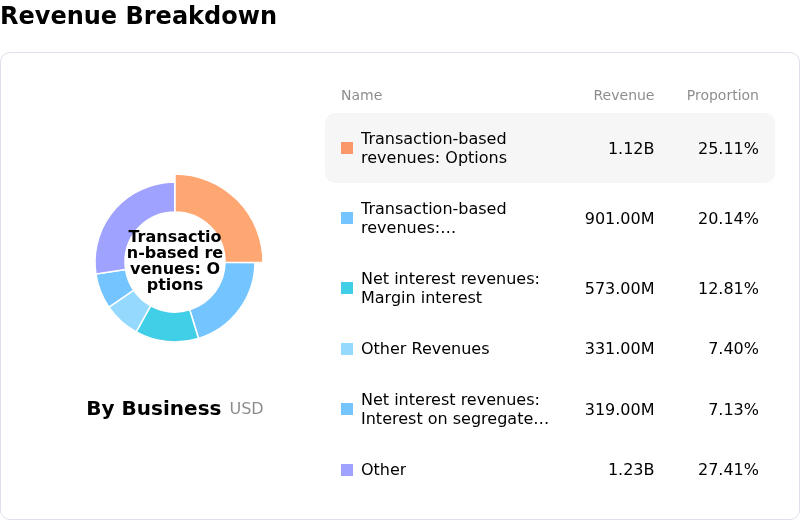
Robinhood Markets Inc (HOOD) is in the Financial Technology (Fintech) & Infrastructure industry. Its latest annual revenue is $4.47B, ranking 8 in the industry. The net profit is $1.88B, ranking 3 in the industry. Company Profile
Over the past month, multiple analysts have rated the company as Buy, with an average price target of $117.21, a high of $156.80, and a low of $54.55.
More details about Robinhood Markets Inc (HOOD)
Company Specific Risks:
- Net Interest Income Compression: Following the Q2 2024 earnings report, analysts are concerned that Robinhood's heavy reliance on net interest income (NII) makes the firm highly vulnerable to anticipated Fed rate cuts, which would significantly erode margins on uninvested cash and margin lending.
- Operational Dependency and Execution Risk: Recent systemic failures at Blue Ocean ATS, the third-party venue powering Robinhood’s 24-hour market, have highlighted a critical vulnerability in the firm's execution infrastructure, leading to forced trade cancellations and potential reputational damage during periods of high intraday volatility.
- Regulatory Litigation Overhang: The persistent threat of an SEC enforcement action following the issuance of a Wells Notice regarding Robinhood’s cryptocurrency operations remains a primary headwind, risking potential fines or the forced delisting of high-margin digital assets.
- Cyclicality of Retail Engagement: Despite recent growth in Gold subscriptions, institutional analysts warn of a "retail exhaustion" risk, where a shift in market sentiment or a sustained downturn could lead to a rapid contraction in options and crypto trading volumes, which are core drivers of transaction-based revenue.
This article may include AI-generated content that is human-reviewed, which is for reference and general information purposes only and does not constitute investment advice.
Recommended Articles







Comments (0)
Click the $ button, enter the symbol, and select to link a stock, ETF, or other ticker.