


Lowe's Companies Inc Stock (LOW) Closed Down by 3.50% on Jul 17: Key Drivers Unveiled



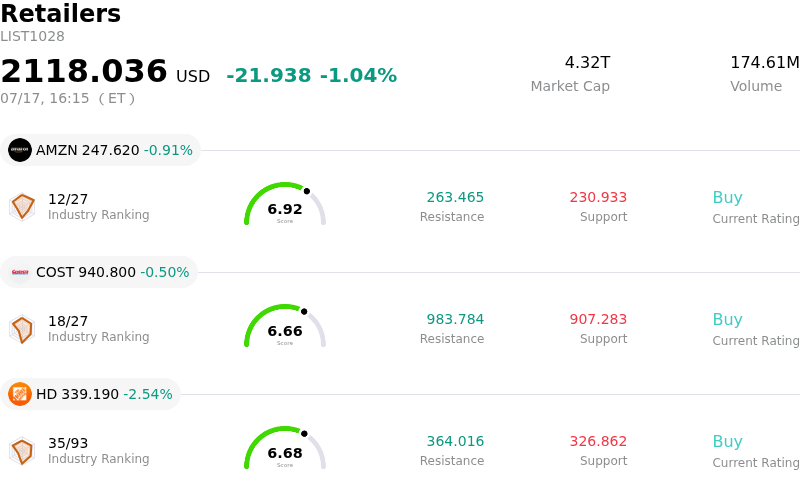
Lowe's Companies Inc (LOW) closed down by 3.50%. The Retailers sector is down by 1.04%. The company underperformed the industry. Top 3 stocks by turnover in the sector: Amazon.com Inc (AMZN) down 0.91%; Costco Wholesale Corp (COST) down 0.50%; Home Depot Inc (HD) down 2.54%.
What is driving Lowe's Companies Inc (LOW)’s stock price down today?
The downward movement in Lowe's share price today is primarily driven by a convergence of macroeconomic headwinds and softening indicators within the broader housing market. As a company deeply tethered to the health of the residential real estate sector, Lowe's is experiencing heightened sensitivity to recent data suggesting a slowdown in home turnover. Elevated mortgage rates continue to act as a deterrent for potential homebuyers, which in turn reduces the immediate demand for the significant home improvement projects and appliance upgrades that typically follow a home sale.
From an industry perspective, there is growing evidence of a shift in consumer spending patterns. Recent retail data indicates that middle-income households, a core demographic for the home improvement giant, are increasingly prioritizing essential expenditures over discretionary DIY projects. This deceleration in the do-it-yourself segment is particularly impactful for Lowe's, which historically maintains a higher proportion of DIY customers compared to its primary competitors. The market is currently pricing in the risk that this pullback in consumer spending may be more prolonged than initially forecasted.
Institutional sentiment has also been dampened by broader volatility across the consumer discretionary sector. Analysts have noted that while the company has made strides in expanding its professional contractor business, the current high-interest-rate environment makes it difficult to offset the weakness in the retail consumer base. Furthermore, the volatility observed during the trading session suggests a broader de-risking strategy among institutional investors who are rotating out of interest-rate-sensitive equities in favor of more defensive positions amidst uncertainty regarding the Federal Reserve's next move.
Operational risks related to margin pressure are also weighing on the stock. Although the company has implemented robust cost-cutting measures, the persistent inflation in labor and logistics continues to challenge bottom-line growth. Investors are closely monitoring whether the company can maintain its guidance in the face of these rising inputs. The combination of these factors has created a cautious outlook, as market participants wait for more favorable housing data or a clear signal of a shift in monetary policy before rebuilding long positions in the sector.
Technical Analysis of Lowe's Companies Inc (LOW)
Technically, Lowe's Companies Inc (LOW) shows a MACD (12,26,9) value of -1.519, indicating a sell signal. The RSI at 49.270 suggests neutral condition and the Williams %R at 57.370 suggests sell condition. Please monitor closely.
Media Coverage of Lowe's Companies Inc (LOW)
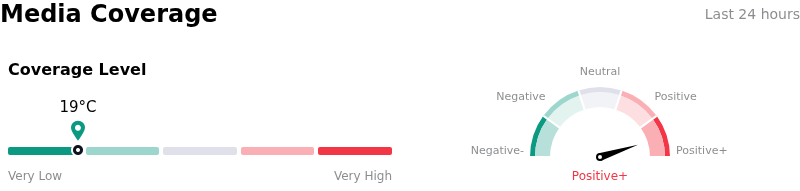
In terms of media coverage, Lowe's Companies Inc (LOW) shows a coverage score of 19, indicating a very low level of media attention. The overall market sentiment index is currently in extremely bullish zone.
Fundamental Analysis of Lowe's Companies Inc (LOW)
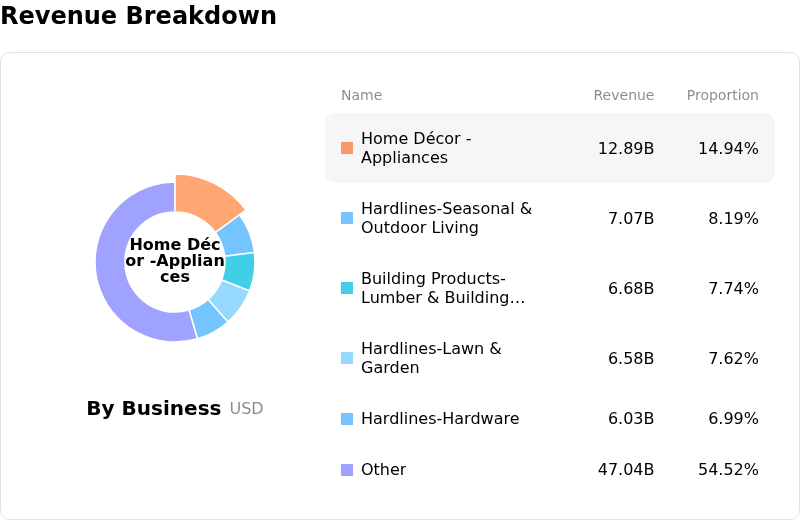
Lowe's Companies Inc (LOW) is in the Retailers industry. Its latest annual revenue is $86.29B, ranking 2 in the industry. The net profit is $6.64B, ranking 2 in the industry. Company Profile
Over the past month, multiple analysts have rated the company as Buy, with an average price target of $262.64, a high of $300.00, and a low of $202.00.
More details about Lowe's Companies Inc (LOW)
Company Specific Risks:
- Persistent Comparable Sales Contraction: In its latest Q3 earnings release, the company reported a 1.1% decline in comparable sales and updated its full-year outlook to reflect a total comparable sales drop of 3% to 3.5%, indicating a sustained inability to capture growth in a high-interest-rate environment.
- DIY Segment Sensitivity: Market volatility is being driven by management's confirmation that big-ticket discretionary DIY projects remain pressured, a fundamental weakness for the company given its higher exposure to the retail DIY consumer relative to competitors with a larger professional contractor mix.
- Operating Margin Pressure: The company narrowed its full-year adjusted operating margin guidance to a range of 12.3% to 12.4%, signaling that investments in the "Total Home Strategy" and digital infrastructure are currently limiting the company's ability to expand profitability amidst declining revenue.
- Exposure to Stagnant Housing Turnover: Analysts have expressed concern over the "lock-in" effect of current mortgage rates, which has frozen housing turnover at historic lows; this lack of home-moving activity removes a primary catalyst for the large-scale renovation spending essential to the company's business model.
This article may include AI-generated content that is human-reviewed, which is for reference and general information purposes only and does not constitute investment advice.
Recommended Articles









Comments (0)
Click the $ button, enter the symbol, and select to link a stock, ETF, or other ticker.