


Oracle Corp Stock (ORCL) Moved Up by 3.06% on Jul 17: What Investors Need To Know



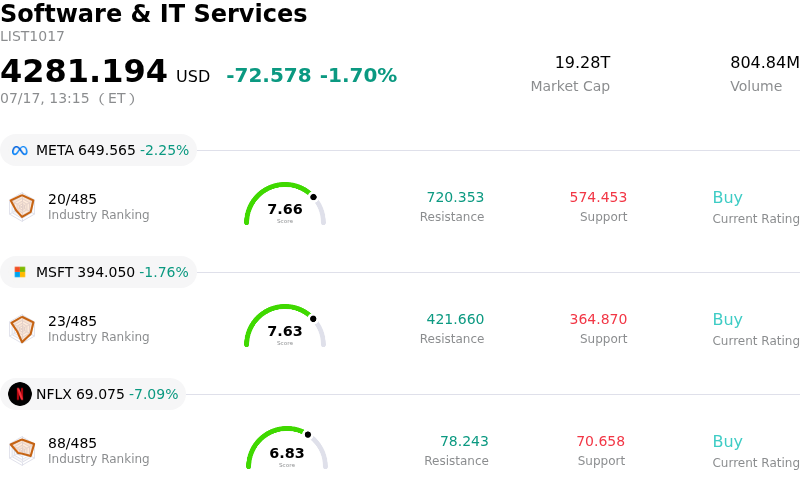
Oracle Corp (ORCL) moved up by 3.06%. The Software & IT Services sector is down by 1.70%. The company outperformed the industry. Top 3 stocks by turnover in the sector: Meta Platforms Inc (META) down 2.25%; Microsoft Corp (MSFT) down 1.76%; Netflix Inc (NFLX) down 6.88%.
What is driving Oracle Corp (ORCL)’s stock price up today?
Oracle's upward movement today is primarily driven by accelerating momentum in its cloud infrastructure business and strategic positioning within the artificial intelligence sector. Institutional interest has intensified following reports of expanded sovereign cloud deals and increased capacity utilization for its Gen2 Cloud Infrastructure. As a major provider of the specialized hardware required for large language model training, Oracle is benefiting from a structural shift where demand for high-performance computing continues to outstrip available supply.
The intraday volatility reflects a broader market recalibration of enterprise software valuations in light of recent technological breakthroughs. Oracle’s multi-cloud strategy, characterized by its deepening integration with other major hyperscalers, has reduced friction for enterprise migrations. The market is reacting positively to indications that the company is successfully converting its massive backlog into realized revenue faster than previously anticipated. This execution efficiency is particularly relevant as competitors face scaling bottlenecks that Oracle seems to have navigated through aggressive data center investments.
From a macroeconomic perspective, the stock is catching a tailwind from shifting interest rate expectations, which generally favors high-growth technology firms with robust cash flows. Investors are increasingly viewing Oracle as a defensive play within the tech sector due to its legacy database stickiness combined with its modern cloud growth profile. Recent analyst revisions have trended upward, citing margin expansion potential as the company scales its automated cloud services. The heightened trading volume suggests that institutional desks are rebalancing portfolios to increase exposure to infrastructure providers that serve as the backbone for the next generation of digital transformation.
Despite the positive price action, the observed volatility highlights underlying concerns regarding the capital expenditure requirements needed to maintain this growth trajectory. While sentiment remains bullish, market participants are closely monitoring global supply chain stability for critical semiconductor components. Any disruption in hardware procurement could temper the current enthusiasm. However, for the current session, the prevailing narrative is one of fundamental strength and a successful pivot from a legacy software vendor to a dominant cloud infrastructure powerhouse.
Technical Analysis of Oracle Corp (ORCL)
Technically, Oracle Corp (ORCL) shows a MACD (12,26,9) value of -2.082, indicating a sell signal. The RSI at 26.945 suggests sell condition and the Williams %R at 98.217 suggests oversold condition. Please monitor closely.
Media Coverage of Oracle Corp (ORCL)
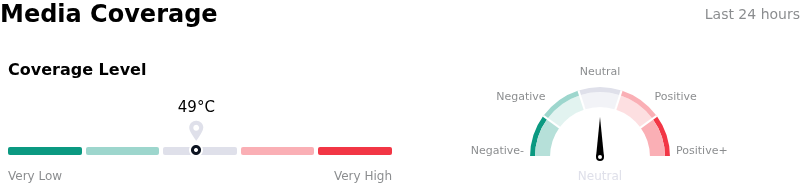
In terms of media coverage, Oracle Corp (ORCL) shows a coverage score of 49, indicating a moderate level of media attention. The overall market sentiment index is currently in neutral zone.
Fundamental Analysis of Oracle Corp (ORCL)
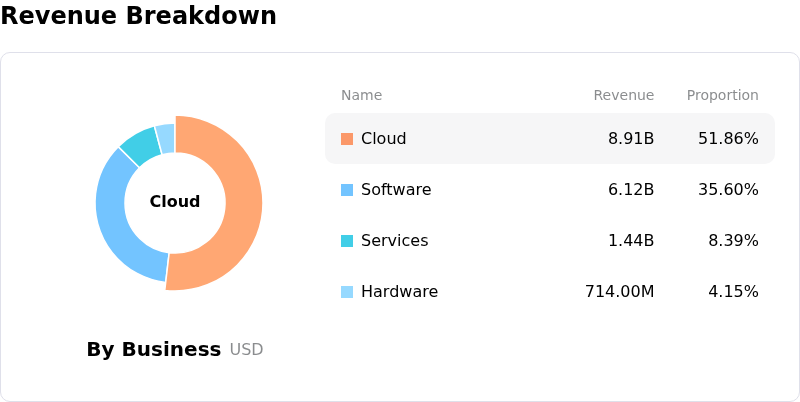
Oracle Corp (ORCL) is in the Software & IT Services industry. Its latest annual revenue is $67.36B, ranking 8 in the industry. The net profit is $16.98B, ranking 6 in the industry. Company Profile
Over the past month, multiple analysts have rated the company as Buy, with an average price target of $255.57, a high of $400.00, and a low of $155.00.
More details about Oracle Corp (ORCL)
Company Specific Risks:
- CapEx-Driven Margin Compression: Rapid acceleration in capital expenditures to support AI infrastructure and data center expansion is placing significant pressure on near-term free cash flow and threatening consolidated operating margins.
- Cerner Integration Headwinds: Ongoing friction in transitioning Cerner’s legacy healthcare contracts to a cloud-based SaaS model, alongside delays in major government implementations, continues to create revenue volatility in the health sciences division.
- Elevated Debt-to-Equity Exposure: With a total debt load exceeding $80 billion, the company remains highly sensitive to interest rate fluctuations, which limits financial flexibility for share repurchases and increases the cost of refinancing maturing obligations.
- Legacy Database Market Erosion: Increasing migration toward open-source and cloud-native database alternatives from major hyperscalers is challenging Oracle's core market share, forcing defensive pricing strategies that may dilute long-term average revenue per user.
This article may include AI-generated content that is human-reviewed, which is for reference and general information purposes only and does not constitute investment advice.
Recommended Articles







Comments (0)
Click the $ button, enter the symbol, and select to link a stock, ETF, or other ticker.