


Morgan Stanley Stock (MS) Moved Up by 3.97% on Jul 14: What Signal Does It Send?



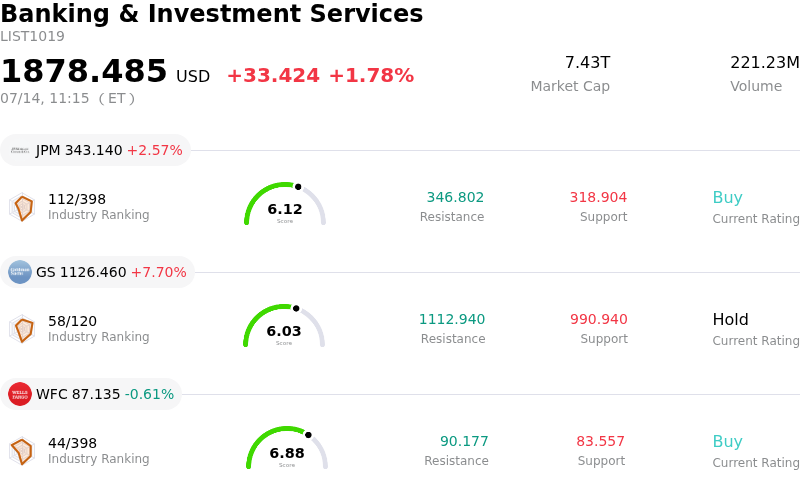
Morgan Stanley (MS) moved up by 3.97%. The Banking & Investment Services sector is up by 1.78%. The company outperformed the industry. Top 3 stocks by turnover in the sector: JPMorgan Chase & Co (JPM) up 2.57%; Goldman Sachs Group Inc (GS) up 7.70%; Wells Fargo & Co (WFC) down 0.56%.
What is driving Morgan Stanley (MS)’s stock price up today?
Morgan Stanley experienced a sharp upward trajectory today, driven primarily by a robust second-quarter earnings report that surpassed market expectations across several core business segments. The firm demonstrated significant strength in its investment banking division, where a resurgence in equity underwriting and advisory fees signaled a revitalized global deal-making environment. This performance suggests that the prolonged lull in mergers and acquisitions may be ending, positioning the bank to capture higher fee income as corporate activity accelerates.
The wealth management unit also continues to serve as a reliable engine of growth, reporting record client assets and strong net new flows. Investors have reacted positively to the margin stability within this segment, which provides a defensive cushion against market volatility. Furthermore, the bank’s ability to manage expenses effectively while investing in technology-driven advisory tools has bolstered institutional confidence in its long-term operating efficiency.
Macroeconomic factors have played a secondary but vital role in today’s gains. Recent cooling in inflation data has fueled expectations that the Federal Reserve may soon shift toward a more accommodative monetary policy. For a capital-markets-heavy institution like Morgan Stanley, the prospect of lower interest rates is double-edged; while it may compress net interest margins, the subsequent boost to market liquidity and initial public offering activity far outweighs the downside for its primary revenue drivers.
From a technical perspective, the stock’s movement was amplified by a series of analyst upgrades following the earnings call. Research notes highlighted the firm’s superior capital position and the potential for increased share buybacks and dividend hikes in the coming quarters. This bullish sentiment was echoed by institutional portfolio adjustments, as fund managers realigned their weightings to favor high-quality financials with diversified revenue streams.
Despite the day’s rally, professional investors remain mindful of potential headwinds, including heightened regulatory scrutiny regarding capital requirements and lingering geopolitical tensions that could disrupt global trade. However, the prevailing narrative today focuses on Morgan Stanley’s successful execution of its integrated firm strategy, which has clearly resonated with a market seeking both growth and stability in the financial sector.
Technical Analysis of Morgan Stanley (MS)
Technically, Morgan Stanley (MS) shows a MACD (12,26,9) value of -0.664, indicating a neutral signal. The RSI at 57.482 suggests neutral condition and the Williams %R at 32.313 suggests buy condition. Please monitor closely.
Media Coverage of Morgan Stanley (MS)
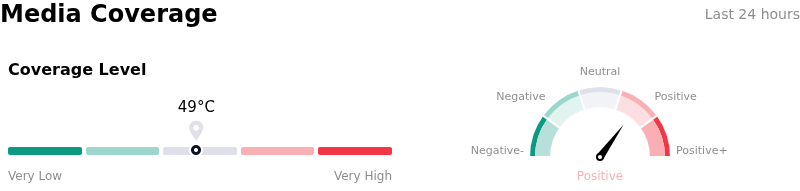
In terms of media coverage, Morgan Stanley (MS) shows a coverage score of 49, indicating a moderate level of media attention. The overall market sentiment index is currently in bullish zone.
Fundamental Analysis of Morgan Stanley (MS)
Morgan Stanley (MS) is in the Banking & Investment Services industry. Its latest annual revenue is $114.74B, ranking 3 in the industry. The net profit is $16.25B, ranking 2 in the industry. Company Profile
Over the past month, multiple analysts have rated the company as Buy, with an average price target of $217.58, a high of $255.00, and a low of $145.00.
More details about Morgan Stanley (MS)
Company Specific Risks:
- Wealth Management Margin Compression: Institutional analysts have raised concerns over a potential peak in Net Interest Income (NII) as client cash migration into higher-yielding instruments continues to squeeze margins within the firm's most significant revenue-generating segment.
- Regulatory Scrutiny of Wealth Onboarding: Ongoing federal investigations into the bank's anti-money laundering (AML) protocols and client vetting processes for its international wealth management division pose significant legal risks and the threat of increased compliance-related operational expenditures.
- Investment Banking Pipeline Conversion: Despite a reported surge in deal activity, market volatility and high capital costs are delaying the closing of major M&A and IPO mandates, leading to immediate uncertainty regarding the realization of advisory fee revenue for the current fiscal quarter.
- Heightened Non-Compensation Expenses: Recent internal reports and analyst commentary highlight an acceleration in technology and infrastructure spending related to the integration of E*TRADE systems, which threatens to erode short-term operating leverage if revenue growth fails to outpace these fixed-cost increases.
This article may include AI-generated content that is human-reviewed, which is for reference and general information purposes only and does not constitute investment advice.
Recommended Articles






Comments (0)
Click the $ button, enter the symbol, and select to link a stock, ETF, or other ticker.