


Advanced Micro Devices Inc Stock (AMD) Moved Down by 4.27% on Jul 13: Key Drivers Unveiled



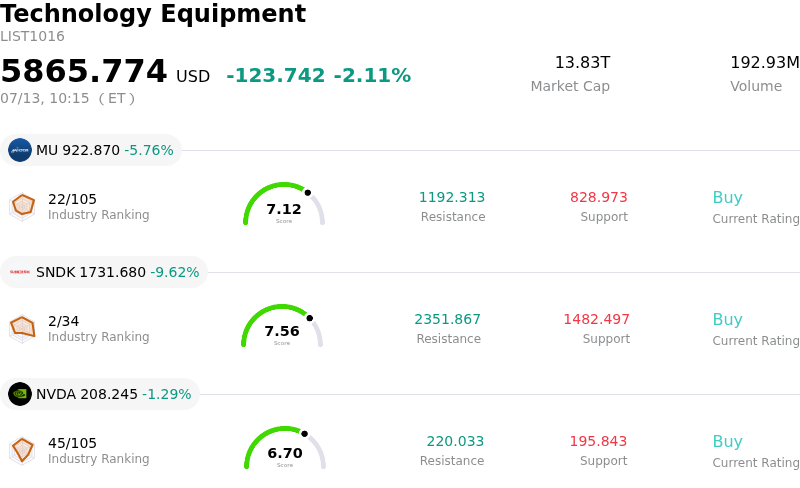
Advanced Micro Devices Inc (AMD) moved down by 4.27%. The Technology Equipment sector is down by 2.11%. The company underperformed the industry. Top 3 stocks by turnover in the sector: Micron Technology Inc (MU) down 5.76%; SanDisk Corporation (SNDK) down 9.62%; NVIDIA Corp (NVDA) down 1.29%.
What is driving Advanced Micro Devices Inc (AMD)’s stock price down today?
AMD is currently experiencing significant downward pressure as a broader retreat in the semiconductor sector weighs on investor sentiment. This volatility appears to be driven by a combination of macroeconomic concerns and specific anxieties regarding the sustainability of enterprise spending on artificial intelligence infrastructure. As market participants recalibrate their portfolios, high-growth technology stocks often bear the brunt of de-risking strategies, especially when global growth forecasts face downward revisions or geopolitical tensions in East Asia heighten supply chain uncertainties.
From a competitive standpoint, the market is closely scrutinizing the ability of the company to capture meaningful market share from established leaders in the AI accelerator space. While there have been significant strides in data center hardware, recent industry reports suggesting a potential slowdown in capital expenditure by major cloud service providers have introduced a layer of caution. Institutional investors may be locking in gains or shifting toward more defensive positions as they await clearer signals regarding the long-term return on investment for generative AI technologies.
Furthermore, recent adjustments in analyst outlooks have played a role in the current price movement. Several prominent brokerages have updated their models to reflect a more conservative trajectory for the gaming and client segments, which continue to face cyclical headwinds. The anticipation of upcoming quarterly financial disclosures often leads to heightened price sensitivity, as any perceived weakness in guidance or inventory management can trigger a sell-off among short-term traders and institutional holders alike.
Operational risks, including the pace of transition to next-generation manufacturing nodes and the execution of product roadmaps, remain at the forefront of the investment thesis. While the firm has historically demonstrated resilience in gaining CPU market share, the increasing intensity of competition in the GPU and specialized chip markets necessitates flawless execution. Until there is more certainty regarding the broader economic environment and specific demand signals for the latter half of the year, the stock is likely to remain sensitive to sector-wide shifts and external market shocks.
Technical Analysis of Advanced Micro Devices Inc (AMD)
Technically, Advanced Micro Devices Inc (AMD) shows a MACD (12,26,9) value of -6.011, indicating a neutral signal. The RSI at 57.466 suggests neutral condition and the Williams %R at 30.029 suggests buy condition. Please monitor closely.
Media Coverage of Advanced Micro Devices Inc (AMD)
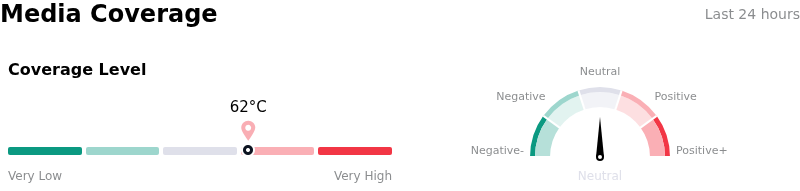
In terms of media coverage, Advanced Micro Devices Inc (AMD) shows a coverage score of 62, indicating a high level of media attention. The overall market sentiment index is currently in neutral zone.
Fundamental Analysis of Advanced Micro Devices Inc (AMD)
Advanced Micro Devices Inc (AMD) is in the Technology Equipment industry. Its latest annual revenue is $34.64B, ranking 8 in the industry. The net profit is $4.33B, ranking 10 in the industry. Company Profile
Over the past month, multiple analysts have rated the company as Buy, with an average price target of $510.16, a high of $670.00, and a low of $320.00.
More details about Advanced Micro Devices Inc (AMD)
Company Specific Risks:
- Margin Compression from Accelerated R&D: The transition to an annual release cadence for Instinct AI accelerators, including the newly announced MI325X and MI350 series, significantly increases research and development overhead, threatening to suppress gross margins as the company races to close the architectural gap with competitors.
- Custom Silicon Disintermediation: Major cloud service providers—specifically Amazon, Google, and Microsoft—are increasingly deploying proprietary ARM-based server CPUs for internal workloads, creating a structural headwind for AMD’s EPYC processor market share and reducing long-term demand from its largest Data Center customers.
- Geopolitical Export Vulnerability: Continued tightening of US Department of Commerce restrictions on high-performance computing exports to China poses a direct threat to AMD’s revenue growth, as the company remains highly susceptible to regulatory blocks on modified AI chips intended for the Chinese enterprise market.
- Supply Chain Execution Bottlenecks: Persistent constraints in advanced packaging capacity (CoWoS) at TSMC may limit AMD’s ability to fulfill the rising backlog for its MI300 series, potentially leading to lost revenue opportunities and market share gains for better-positioned rivals in the high-end AI training segment.
This article may include AI-generated content that is human-reviewed, which is for reference and general information purposes only and does not constitute investment advice.
Recommended Articles









Comments (0)
Click the $ button, enter the symbol, and select to link a stock, ETF, or other ticker.