


Brent (UKOIL) Is up by 3.33% on Jul 12: Is the Demand Outlook Changing?



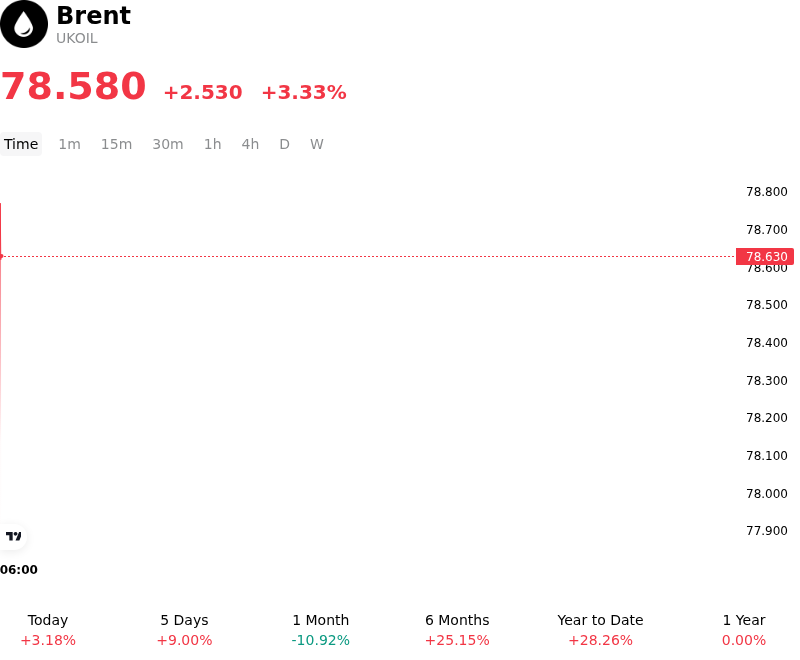
Brent (UKOIL) is up 3.33% at Jul 12 18:05(ET), now at $78.58, with a 7-day up of 9.15%.
What is driving Brent (UKOIL)’s stock price up today?
Brent crude prices advanced sharply as market participants reacted to an escalation of geopolitical tensions in the Middle East, specifically reports of renewed threats to maritime security near the Strait of Hormuz. This development has reintroduced a substantial risk premium into global benchmarks, as any potential disruption to this critical chokepoint threatens the stability of global supply chains. Institutional investors have moved to price in the possibility of a tighter physical market, particularly as the incident coincides with heightened regional friction that could impact output from major sovereign producers.
The supply-side pressure is being exacerbated by signals from the OPEC+ alliance suggesting a more cautious approach to restoring production. Recent communications from key member states indicate that the group may extend current voluntary production cuts well into the fourth quarter, diverging from previous expectations of a gradual supply return. This hawkish stance by the cartel highlights a commitment to maintaining market balance in the face of fluctuating global economic indicators, forcing a repricing of the supply-demand deficit for the remainder of the year.
Macroeconomic factors have provided further support to the rally, primarily through a significant weakening of the US Dollar. Recent cooling in US labor market data has intensified expectations that the Federal Reserve will adopt a more accommodative monetary policy stance in the coming months. As the US Dollar index retreated, the relative cost of dollar-denominated Brent crude fell for international buyers, stimulating broader demand. The shift in interest rate expectations has also bolstered risk sentiment across the commodity complex, as lower borrowing costs are anticipated to support global industrial activity.
Inventory levels at major trading hubs remain below historical averages for this time of year, leaving the market highly sensitive to any supply-side shocks. With refinery runs remaining high to meet peak summer demand for transportation fuels, the rapid drawdown of stocks has left little margin for error. The current price action reflects a structural shift in expectations as the market grapples with a convergence of geopolitical risk, disciplined supply management from OPEC+, and a more favorable macroeconomic environment for energy assets. Risk remains skewed to the upside as long as regional tensions persist and global inventories continue to tighten.
Technical Analysis of Brent (UKOIL)
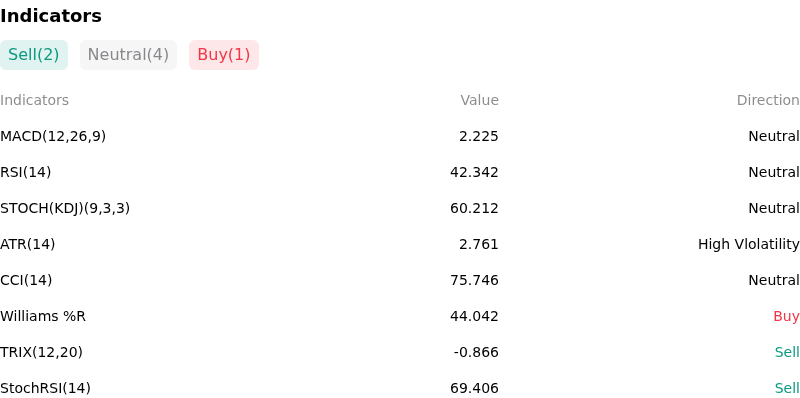
Technically, Brent (UKOIL) shows a MACD (12,26,9) value of 2.225, indicating a neutral signal. The RSI at 42.342 suggests neutral condition and the Williams %R at 44.042 suggests buy condition. Please monitor closely.
More details about Brent (UKOIL)
Recent Events and Risks:
- Slowing Chinese Industrial Demand: Recent economic data from China, including disappointing manufacturing PMI and refinery throughput figures, has heightened concerns over a structural slowdown in the world's largest oil importer, putting significant downward pressure on Brent crude prices.
- Reduction in Geopolitical Risk Premium: Renewed diplomatic efforts and reports of progress in Middle East ceasefire negotiations over the last 48 hours have led to an unwinding of the "war premium," as the immediate threat to regional supply infrastructure and transit routes appears to be receding.
- Unexpected US Inventory Builds: Recent weekly data from the Energy Information Administration (EIA) indicated an unexpected build in domestic crude and gasoline inventories, signaling that demand during the peak summer driving season may be weaker than institutional analysts previously forecasted.
- OPEC+ Supply Uncertainty: Market participants are increasingly concerned about the potential for an oversupplied market in late 2024, as OPEC+ signals a willingness to begin unwinding voluntary production cuts despite a fragile global macroeconomic outlook and rising non-OPEC production.
This article may include AI-generated content that is human-reviewed, which is for reference and general information purposes only and does not constitute investment advice.
Recommended Articles





Comments (0)
Click the $ button, enter the symbol, and select to link a stock, ETF, or other ticker.