


Brent Futures (UKOIL-F) Is up 2.04% on Jul 8: What Is Driving the Move?



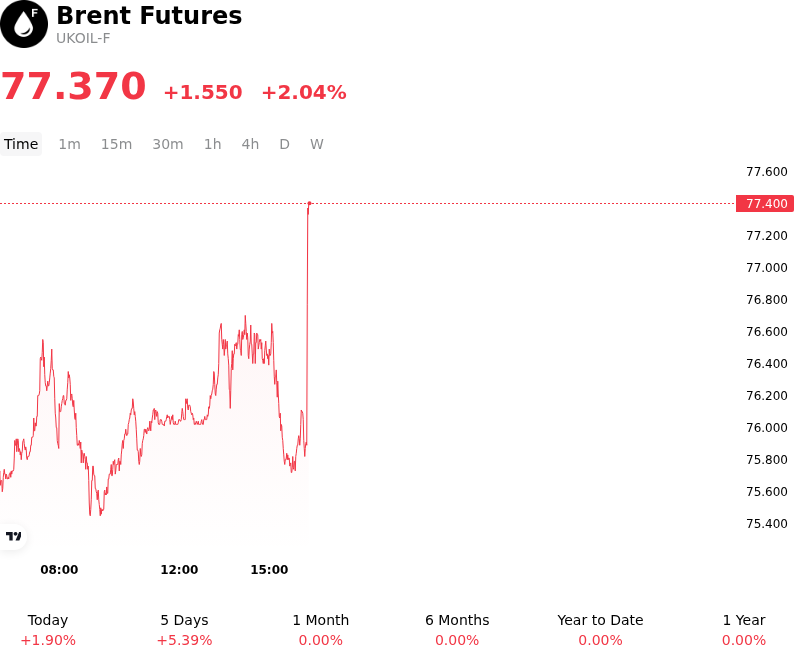
Brent Futures (UKOIL-F) is up 2.04% at Jul 8 04:20(ET), now at $77.37, with a 7-day up of 8.80%.
What is driving Brent Futures (UKOIL-F)’s stock price up today?
The global oil market experienced significant upward volatility, with international benchmark Brent crude rallying on back-to-back trading sessions. This reversal follows a period of bearish momentum and represents a sharp return of geopolitical risk premiums to energy pricing.
The primary catalyst for the advance was a severe escalation of geopolitical hostilities in the Middle East. Market participants aggressively bid up crude futures after the United States launched retaliatory military strikes against targets in Iran. This direct intervention was triggered by a series of missile attacks attributed to Iran targeting commercial shipping, including a Qatari liquefied natural gas carrier and a Saudi oil tanker, transiting the strategically vital Strait of Hormuz.
Compounding the supply-side anxiety, the U.S. Treasury Department's Office of Foreign Assets Control revoked a critical general license that had previously authorized certain Iranian oil sales. The revocation of this waiver effectively curtails Iran’s ability to legally market its crude on global platforms, threatening a direct reduction in physical supply and disrupting expectations of an impending global surplus. Analysts quickly revised their supply models as the potential disintegration of the fragile diplomatic understanding between Washington and Tehran raised the probability of prolonged shipping blockades and physical supply disruptions along the world’s most critical energy chokepoint.
These compounding geopolitical events triggered an abrupt unwinding of short positions. Prior to the escalation, Brent had drifted toward multi-month lows as financial institutions factored in expectations of a comfortable market balance, influenced by OPEC+ plans to gradually ease voluntary production curbs and an overall normalization of shipping logistics. The sudden threat of an active conflict affecting transit routes forced institutional capital to rapidly re-establish a risk premium.
On the physical microeconomic front, the supply-side shock was supported by supportive domestic inventory data from the United States. The American Petroleum Institute reported a draw in U.S. commercial crude stockpiles for the twelfth consecutive week, alongside notable declines in refined product inventories, including gasoline and distillates. This persistent destocking trend signaled resilient summer demand, reinforcing the upward price pressure created by the heightened geopolitical risk landscape.
More details about Brent Futures (UKOIL-F)
Recent Events and Risks:
- Dissipating Geopolitical Risk Premium: The rapid restoration of commercial shipping and vessel traffic through the Strait of Hormuz—which recovered to roughly 70% of pre-war capacity in late June following the US-Iran de-escalation memorandum of understanding—continues to strip out the war-period risk premium that had previously inflated Brent prices.
- Forecasted Global Oversupply and Inventory Builds: In its July 2026 Short-Term Energy Outlook, the US Energy Information Administration (EIA) sharply lowered its Brent price projections, warning that the return of previously offline Middle Eastern output will trigger global inventory accumulations and push markets back into structural oversupply.
- OPEC+ Production Increases: Supply-side pressures are mounting following the July 5 alliance decision to implement an production quota increase of 188,000 barrels per day for August, raising the risk of market saturation as producers actively restore previously curtailed volumes.
- Bearish Futures Curve Shift: The front end of the Brent forward curve has slipped into a mild contango structure, signalling to market participants that prompt-month supplies are becoming surplus to immediate physical refining demand, which historically exerts downward pressure on spot and near-term futures contracts.
This article may include AI-generated content that is human-reviewed, which is for reference and general information purposes only and does not constitute investment advice.
Recommended Articles





Comments (0)
Click the $ button, enter the symbol, and select to link a stock, ETF, or other ticker.