


Taiwan Semiconductor Manufacturing Co Ltd Stock (TSM) Moved Down by 6.62% on Jun 24: Key Drivers Unveiled



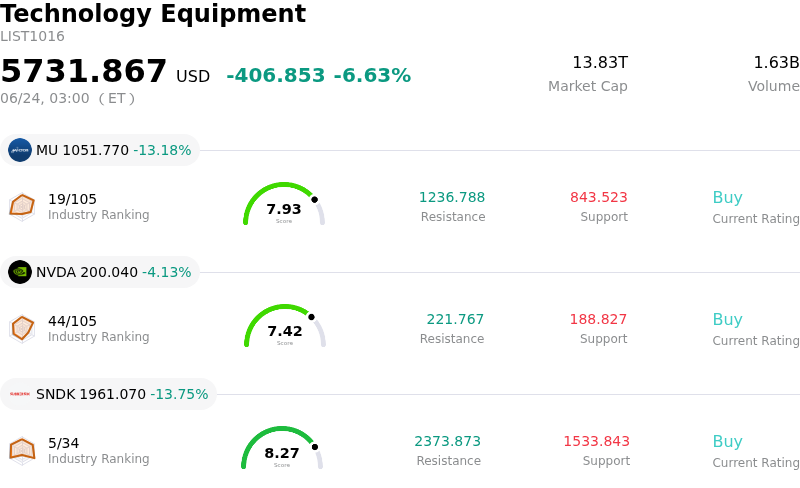
Taiwan Semiconductor Manufacturing Co Ltd (TSM) moved down by 6.62%. The Technology Equipment sector is down by 6.63%. The company outperformed the industry. Top 3 stocks by turnover in the sector: Micron Technology Inc (MU) down 13.18%; NVIDIA Corp (NVDA) down 4.13%; SanDisk Corporation (SNDK) down 13.75%.
What is driving Taiwan Semiconductor Manufacturing Co Ltd (TSM)’s stock price down today?
Taiwan Semiconductor Manufacturing Company (TSMC) experienced downward pressure and heightened intraday volatility during recent trading sessions, primarily driven by a broader global sell-off in high-flying semiconductor and technology equities. After reaching record-setting heights, the semiconductor sector has faced intensified profit-taking and investor rotation out of high-valuation artificial intelligence (AI) linked names. Market participants are showing increased caution ahead of critical industry earnings, leading to elevated options activity and rising demand for downside protection.
Compounding this macroeconomic rotation are several company-specific headwinds. TSMC faces active investigation by the U.S. International Trade Commission (ITC) over patent infringement complaints involving its advanced process nodes. With a preliminary ruling expected by the end of June 2026, the potential threat of a U.S. import ban on chips manufactured with key AI-accelerator technologies has heightened regulatory and geopolitical concerns for investors.
Furthermore, long-term concerns regarding the diversification of client supply chains have weighed on sentiment. Persistent capacity bottlenecks at TSMC have prompted key technology partners to adopt dual-sourcing strategies to reduce reliance on a single foundry. Reports of Apple partnering with Intel for domestic manufacturing, alongside efforts by major tech players like Google, AMD, and Tesla to utilize Samsung's advanced process nodes, have introduced long-term competitive risks. This shift is occurring just as TSMC faces intense pressure to qualify its own next-generation advanced packaging technologies, where key competitors currently hold structural leads.
Financial data discrepancies also contributed to the negative sentiment. Although the company reported strong double-digit growth in its May revenue, the combined growth rate for the past two months has fallen short of Wall Street’s elevated quarterly projections, sparking fears of a near-term revenue miss. Concurrently, TSMC's aggressive capital expenditures projected for 2026 raise concerns about potential margin compression and fixed-cost underutilization if AI hardware demand begins to soften.
While TSMC attempted to offset some of these concerns by announcing wafer price increases of five to ten percent across its advanced nodes to match industry rates, the market took the opportunity to lock in profits. This strategic pricing action, combined with a valuation that trades significantly above historical multiples, left the stock susceptible to a sharp pullback amid the wider market correction.
Technical Analysis of Taiwan Semiconductor Manufacturing Co Ltd (TSM)
Technically, Taiwan Semiconductor Manufacturing Co Ltd (TSM) shows a MACD (12,26,9) value of 2.349, indicating a buy signal. The RSI at 53.320 suggests neutral condition and the Williams %R at 56.678 suggests sell condition. Please monitor closely.
Fundamental Analysis of Taiwan Semiconductor Manufacturing Co Ltd (TSM)
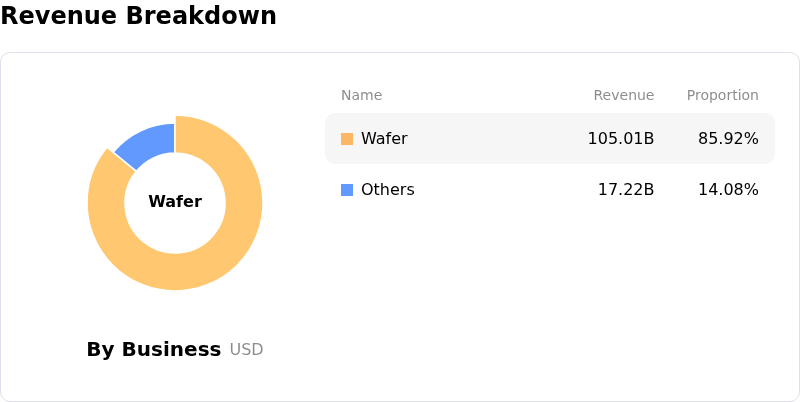
Taiwan Semiconductor Manufacturing Co Ltd (TSM) is in the Technology Equipment industry. Its latest annual revenue is $122.22B, ranking 2 in the industry. The net profit is $55.12B, ranking 2 in the industry. Company Profile
Over the past month, multiple analysts have rated the company as Buy, with an average price target of $462.82, a high of $600.00, and a low of $351.00.
More details about Taiwan Semiconductor Manufacturing Co Ltd (TSM)
Company Specific Risks:
- U.S. Patent Litigation and Threat of Import Ban: TSMC is under active investigation by the U.S. International Trade Commission (ITC) following patent infringement complaints from licensing firms Longitude Licensing and Marlin Semiconductor regarding its advanced process nodes. With a preliminary ruling expected in late June 2026, the company faces the direct threat of a potential U.S. import ban on chips manufactured with key AI-accelerator technologies.
- Loss of Client Dominance to Dual-Sourcing Strategies: Capacity bottlenecks at TSMC have prompted key tech and automotive clients to diversify their foundry partners. Apple has recently agreed to partner with Intel to manufacture chips domestically to reduce reliance on TSMC, while Google, AMD, and Tesla are actively pursuing Samsung's advanced process services, including plans for Tesla to exclusively manufacture its next-generation AI6 chip at Samsung's Texas facility.
- Growth Underperformance and Margin Risk from High CapEx: TSMC's combined April and May sales growth of 24% year-over-year underperformed Wall Street's quarterly expectations of 35%, raising the risk of a near-term revenue miss. Concurrently, TSMC's massive projected 2026 capital expenditures of $52 billion to $56 billion to expand advanced sub-3nm nodes and packaging infrastructure expose the company to severe fixed-cost underutilization and margin erosion if AI hardware demand softens.
- Customer Backlash and Order Adjustments from Sudden Price Hikes: TSMC's recent announcement to increase wafer foundry prices by 5% to 10% on all advanced processes (7nm and below, affecting 75% of its revenue sources) has caught customers off guard. This unexpected pricing adjustment could prompt major clients to adjust their order volumes, seek stricter contract terms, or shift production to alternatives like UMC for mature nodes.
This article may include AI-generated content that is human-reviewed, which is for reference and general information purposes only and does not constitute investment advice.
Recommended Articles









Comments (0)
Click the $ button, enter the symbol, and select to link a stock, ETF, or other ticker.