


Taiwan Semiconductor Manufacturing Co Ltd Stock (TSM) Moved Down by 3.33% on Jun 10: What Signal Does It Send?



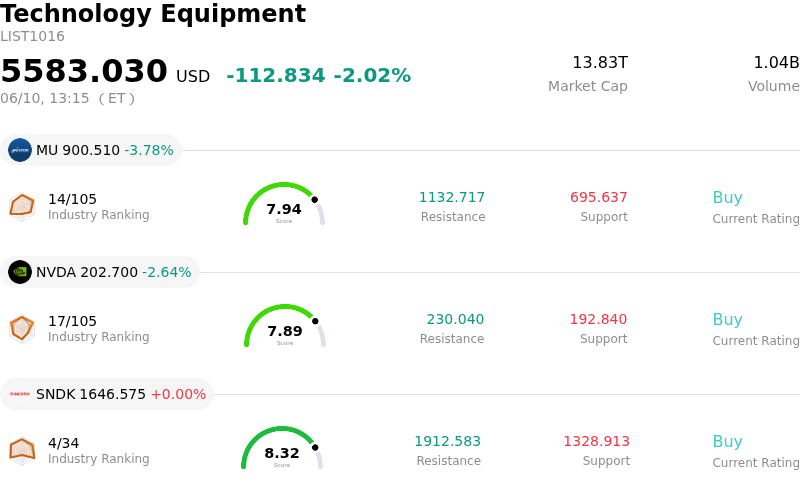
Taiwan Semiconductor Manufacturing Co Ltd (TSM) moved down by 3.33%. The Technology Equipment sector is down by 2.02%. The company underperformed the industry. Top 3 stocks by turnover in the sector: Micron Technology Inc (MU) down 3.85%; NVIDIA Corp (NVDA) down 2.64%; SanDisk Corporation (SNDK) up 0.00%.
What is driving Taiwan Semiconductor Manufacturing Co Ltd (TSM)’s stock price down today?
Taiwan Semiconductor Manufacturing Company (TSM) is experiencing notable intraday volatility and a downward price movement, primarily influenced by a broader market and sector-specific downturn affecting AI and semiconductor stocks. This weakness appears to stem from a confluence of macroeconomic factors, profit-taking after a sustained rally, and a re-evaluation of valuations across the technology sector. The Nasdaq Composite, for instance, experienced a significant decline on June 5th, with the semiconductor industry broadly leading the rout.
A key contributing factor to the sector-wide cautious sentiment includes a more conservative outlook on AI chip demand provided by Broadcom (AVGO) earlier in the month. Broadcom's guidance for its third-quarter AI chip sales fell short of analyst expectations, which, alongside ongoing concerns about a deepening memory chip crisis and projected weakness in global smartphone demand, triggered a broader sell-off across the semiconductor industry. This has prompted investors to reduce exposure to high-growth technology stocks and engage in profit-taking after a period of strong gains.
Geopolitical considerations also weigh on investor sentiment for TSM. Reports suggest that Taiwan is contemplating tighter export controls on artificial intelligence chips destined for China, which could introduce further uncertainty for the company. Additionally, US lawmakers have urged the administration to implement stricter regulations on contract chip manufacturers, including TSM, to prevent them from producing advanced AI chips for overseas subsidiaries of Chinese companies. These developments highlight the persistent US-China technology rivalry and its potential impact on TSM's operational landscape.
Despite these headwinds, TSM itself reported robust financial performance for May 2026, with consolidated net revenue increasing over 30% year-on-year and 1.5% from April. This strong revenue growth, which aligns with the company's second-quarter guidance, underscores the continued high demand for advanced semiconductors crucial for artificial intelligence and high-performance computing. However, this positive company-specific news has been overshadowed by the prevailing negative market sentiment and sector-wide re-calibration.
Technical Analysis of Taiwan Semiconductor Manufacturing Co Ltd (TSM)
Technically, Taiwan Semiconductor Manufacturing Co Ltd (TSM) shows a MACD (12,26,9) value of [11.31], indicating a neutral signal. The RSI at 55.95 suggests neutral condition and the Williams %R at -41.03 suggests oversold condition. Please monitor closely.
Fundamental Analysis of Taiwan Semiconductor Manufacturing Co Ltd (TSM)
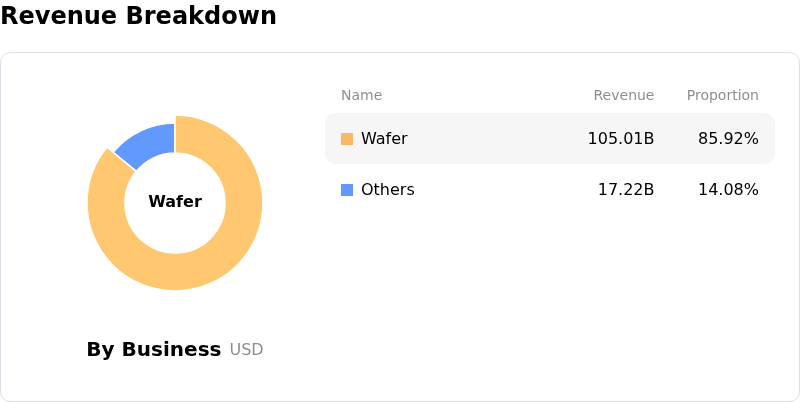
Taiwan Semiconductor Manufacturing Co Ltd (TSM) is in the Technology Equipment industry. Its latest annual revenue is $122.22B, ranking 2 in the industry. The net profit is $55.12B, ranking 2 in the industry. Company Profile
Over the past month, multiple analysts have rated the company as Buy, with an average price target of $458.87, a high of $600.00, and a low of $351.00.
More details about Taiwan Semiconductor Manufacturing Co Ltd (TSM)
Company Specific Risks:
- Heightened geopolitical and regulatory pressures, including calls from U.S. senators for stricter chip export controls to China and potential new restrictions from Taiwan, threaten to increase compliance costs and limit future sales opportunities.
- Ongoing production capacity challenges are compelling major AI chip developers like Google and Nvidia to consider alternative suppliers such as Intel, posing a risk to TSMC's market share and revenue.
- Expansion into new process technologies (e.g., 2nm) and the ramp-up of overseas fabrication plants are projected to dilute gross margins by 2-3% initially, with overseas fabs potentially facing a 3-4% dilution in later stages.
- The company reported a cumulative realized loss of NT$4,296.56 million from expired financial derivative contracts for May 2026, indicating recent negative financial impact.
This article may include AI-generated content that is human-reviewed, which is for reference and general information purposes only and does not constitute investment advice.
Recommended Articles










Comments (0)
Click the $ button, enter the symbol, and select to link a stock, ETF, or other ticker.