


Oracle Corp Stock (ORCL) Opened Down by 3.28% on Jun 10: Drivers Behind the Movement



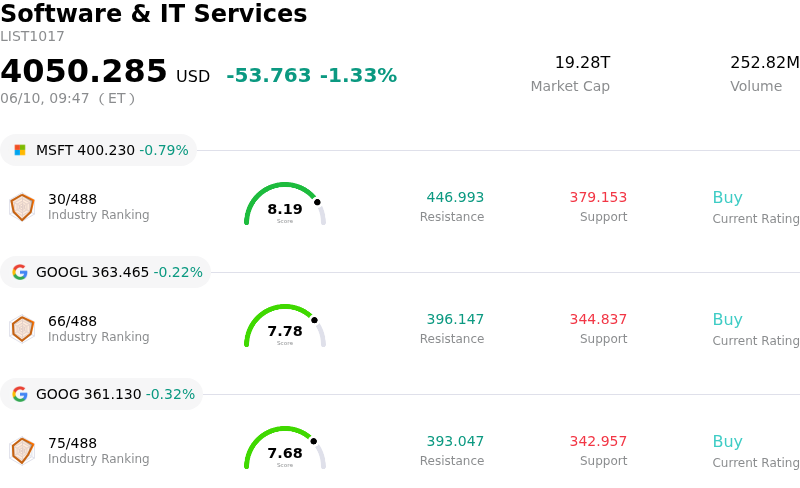
Oracle Corp (ORCL) opened down by 3.28%. The Software & IT Services sector is down by 1.33%. The company underperformed the industry. Top 3 stocks by turnover in the sector: Microsoft Corp (MSFT) down 0.79%; Alphabet Inc Class A (GOOGL) down 0.22%; Alphabet Inc Class C (GOOG) down 0.32%.
What is driving Oracle Corp (ORCL)’s stock price down today?
Oracle's stock experienced a downward movement today, largely driven by investor anticipation and apprehension ahead of its fiscal fourth-quarter 2026 earnings report, scheduled for release after the market closes. This pre-earnings volatility reflects deep market scrutiny over the financial implications of the company's aggressive strategy in artificial intelligence infrastructure. Investors are closely watching for updates on how Oracle plans to fund its substantial AI-related capital expenditures and convert its significant backlog of AI contracts into tangible revenue and improved free cash flow.
A primary concern among market participants is the considerable capital outlay required for Oracle's ambitious AI buildout, such as the Stargate project. The scale of these investments has raised questions about the company's free cash flow and its long-term debt levels, with some analysts highlighting potential balance sheet pressure. While the company boasts a massive backlog of signed AI contracts, the market is keen to understand the pace and cost of fulfilling these obligations and whether this intense spending will translate into timely and profitable returns.
Adding to company-specific worries, the broader technology sector, particularly AI and semiconductor stocks, has been experiencing a downturn. This general market weakness stems from investors reallocating assets and expressing concerns about the high costs associated with AI development, as well as cautious macroeconomic sentiment. Geopolitical tensions, including recent military actions, are also contributing to a risk-off environment across global markets, further dampening investor confidence in riskier assets.
These converging factors—pre-earnings jitters regarding financial metrics like capital expenditures and free cash flow, along with an overarching cautious sentiment in the tech sector and broader market uncertainties—are collectively influencing the downward pressure on Oracle's share price as investors await clarity from the upcoming earnings report.
Technical Analysis of Oracle Corp (ORCL)
Technically, Oracle Corp (ORCL) shows a MACD (12,26,9) value of [12.14], indicating a neutral signal. The RSI at 51.65 suggests neutral condition and the Williams %R at -62.20 suggests oversold condition. Please monitor closely.
Media Coverage of Oracle Corp (ORCL)
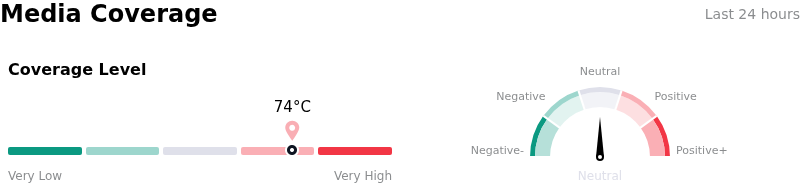
In terms of media coverage, Oracle Corp (ORCL) shows a coverage score of 74, indicating a high level of media attention. The overall market sentiment index is currently in neutral zone.
Fundamental Analysis of Oracle Corp (ORCL)
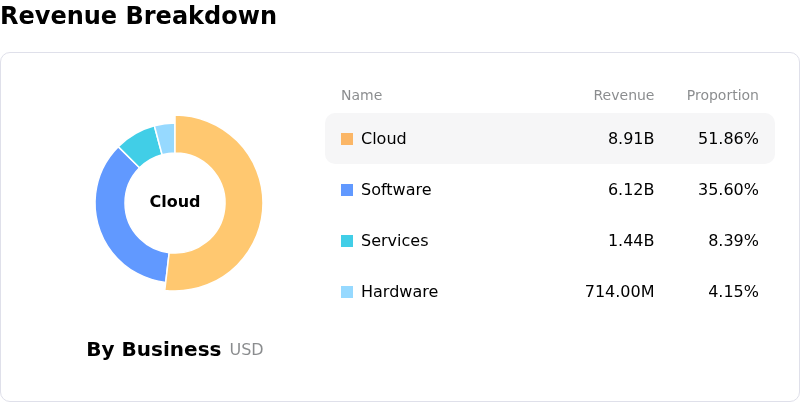
Oracle Corp (ORCL) is in the Software & IT Services industry. Its latest annual revenue is $57.40B, ranking 9 in the industry. The net profit is $12.44B, ranking 9 in the industry. Company Profile
Over the past month, multiple analysts have rated the company as Buy, with an average price target of $258.44, a high of $400.00, and a low of $155.00.
More details about Oracle Corp (ORCL)
Company Specific Risks:
- Oracle is facing significant financial pressure due to substantial capital expenditures for its AI infrastructure buildout, resulting in increased long-term debt exceeding $124 billion and negative free cash flow, which raises concerns about long-term financing requirements.
- The company's stock is perceived as overvalued by several analysts, with its P/E ratio trading 23% above sector averages and its price-to-sales ratio 180% higher, leading to recent downgrades and skepticism regarding its AI-driven growth projections.
- Oracle is currently a defendant in securities fraud class action lawsuits, which allege the company made false statements or concealed that its AI infrastructure strategy would lead to massive capital expenditure increases without equivalent near-term revenue growth.
- The company faces aggressive competition from major hyperscalers like AWS, Microsoft, and Google in the burgeoning AI infrastructure market, coupled with execution risks in translating its large AI backlog into recognized revenue and ensuring timely delivery of data center capacity.
This article may include AI-generated content that is human-reviewed, which is for reference and general information purposes only and does not constitute investment advice.
Recommended Articles






Comments (0)
Click the $ button, enter the symbol, and select to link a stock, ETF, or other ticker.