


 Discount


SpaceX Stock Falls Nearly 37% From Highs Post-Listing: Can SPCX Return to $200 in 2027?



AI Podcast


SpaceX’s stock experienced significant volatility following its June 2026 IPO, surging to a peak of $201.80 before retreating below its $135 IPO price amid tech valuation pullbacks and capital-efficiency concerns. Despite strong Q3 performance—featuring $14.575 billion in revenue driven by Starlink and AI segments—investors remain focused on capital return timelines and rising financing costs. Key 2027 growth drivers include Starlink subscriber expansion, Starlink Mobile, Starship reusability milestones, and the superintelligence division. Wall Street maintains positive long-term price targets ranging from $205 to $300, though technical indicators suggest the stock remains in a medium-term downtrend awaiting breakout confirmation above key resistance.
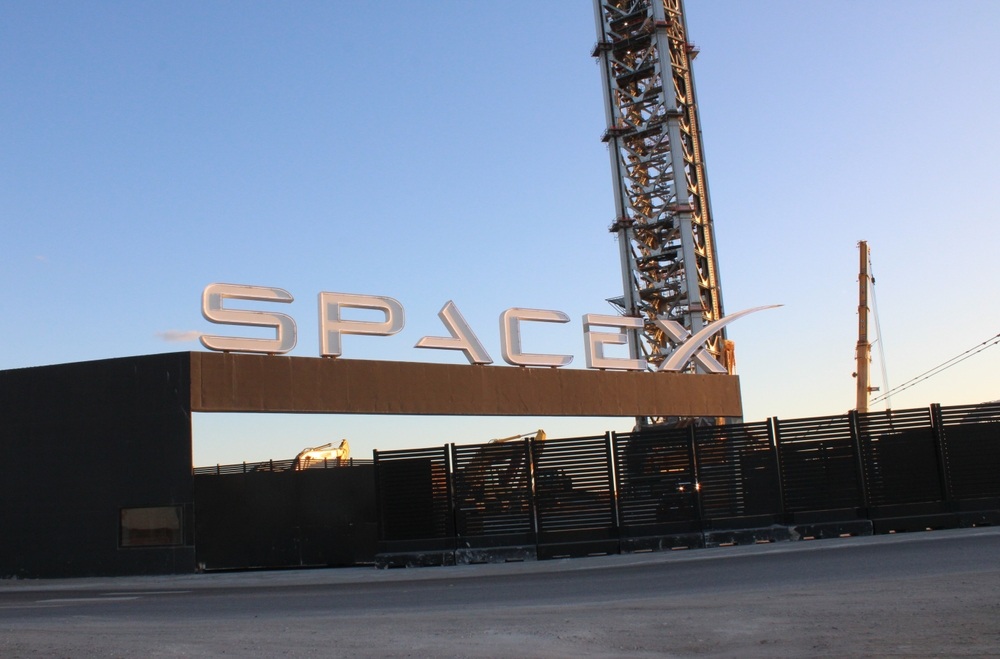
SpaceX Stock 2026 Performance Review
TradingKey - SpaceX (SPCX) debuted on Nasdaq on June 12, 2026, with an IPO price of $135 per share. High market expectations for Starlink's growth, Starship's commercialization, and the company's expansion into artificial intelligence computing power drove SPCX to surge rapidly following its listing, setting a record closing high of $201.80 on June 16 after touching an intraday high of $225.64.
However, this post-IPO rally did not last. Amid a broad pullback in tech valuations, the gradual entrance of IPO lock-up shares into the market, and investors reassessing Starship's R&D costs along with financing risks for AI data centers, SPCX quickly surrendered most of its gains. In mid-July, the stock fell below its $135 IPO price for the first time, dipping further to $108.27 on August 5, marking a cumulative drawdown of about 46% from its June peak.
Moving into September and October, Starlink's user growth, the expansion of its AI computing business, and Starship's completion of its first commercial payload mission drove the stock back toward the $150 mark.
However, tech and AI concept stocks faced another sell-off in November, bringing SPCX back near its IPO price. On November 23 Eastern Time, SpaceX closed at $133.35, slightly below its $135 IPO price and down about 34% from its record closing high of $201.80.
Why SpaceX Stock Pulled Back From Above $200?
SpaceX's sharp post-listing rally largely reflected market optimism regarding Starlink's subscriber growth, Starship's full reusability, and the expansion of its AI business. However, with the stock having already priced in the simultaneous success of multiple business lines, any slowdown in progress could trigger a significant valuation correction.
Based on operational metrics, SpaceX's growth momentum has not weakened noticeably. In the third quarter of 2026, SpaceX generated revenue of approximately $14.575 billion, up 161% year-over-year, with operating profit of about $2.8 billion, net income reaching $4.4 billion, and adjusted EBITDA of approximately $8.8 billion. Revenue growth was primarily driven by Starlink connectivity services and the superintelligence division, rather than traditional commercial launches.
Previously, investors focused more on how quickly SpaceX could expand its satellite network, increase compute capacity, and advance rocket programs; now, attention is gradually shifting toward when these investments will generate adequate returns and whether revenue growth can sustainably convert into cash flow. Meanwhile, rising credit market risk premiums have led investors to place greater emphasis on financing costs and capital efficiency at high-capex firms, putting pressure on high-valuation stocks supported by long-term growth expectations.
The market is no longer solely focused on how much compute capacity SpaceX can build or how many satellites it can launch, but is instead questioning how long it will take for these assets to generate returns. As credit spreads widen, growth stocks supported by distant cash flows typically face higher discount rates, making it difficult for SPCX to sustain the high valuations seen shortly after its listing.
What Are SpaceX’s Growth Drivers in 2027?
SpaceX's most critical business in 2027 remains Starlink. As of the end of September 2026, Starlink's individual subscribers reached 13.6 million, nearly doubling from 7.2 million a year earlier. In the third quarter, connectivity revenue reached $5.248 billion, up 69% year-over-year; operating profit reached $2.367 billion, surging 99% year-over-year, with an operating margin of approximately 45%.
These figures indicate that Starlink has gradually evolved from an early expansion project into SpaceX's primary profit driver. Revenue from aviation, maritime, enterprise, and government customers grew 91% year-over-year. These clients typically carry higher contract values and lower churn rates, which are expected to enhance future revenue predictability.
Starlink Mobile could emerge as a new source of incremental growth in 2027. SpaceX has signed an agreement to acquire licenses related to the 800MHz spectrum, with the transaction expected to close in the first half of 2027. If the direct-to-cell service rolls out smoothly, the company's addressable market will extend from fixed broadband to mobile communications, potentially creating new revenue channels through partnerships with telecom operators.
If Starlink underpins SpaceX's current revenue base, Starship holds the key to the efficiency and cost of expanding its satellite network in the future. SpaceX has already utilized Starship to deploy Starlink V3 satellites, successfully placing 26 satellites into orbit in a single launch, with the added downlink capacity per mission being approximately 10 times that of a Falcon 9 Starlink mission. Greater payload capacity means the company can reduce the number of launches required for an equivalent deployment scale, accelerate satellite network expansion, and gradually lower long-term deployment costs.
However, Starship's commercial value depends not only on its single-flight payload capacity, but more importantly on whether it can establish a stable, reusable launch architecture. Only when the spacecraft and booster can be returned to service with limited maintenance after completing missions can rocket reusability genuinely translate into a sustained cost advantage.
If SpaceX achieves higher-frequency, stable reflights in 2027, the unit cost of Starlink's expansion is expected to decline, and the return on capital for related operations could improve accordingly. Conversely, if testing progress is delayed or vehicle refurbishment costs exceed expectations, Starship could continue to consume capital over an extended period.
The superintelligence business also delivered a standout performance. In the third quarter of 2026, the company's new revenue from AI infrastructure contracts, cloud services, and related software businesses reached approximately $6.7 billion. While this business is growing rapidly, it requires simultaneously building data centers, procuring chips, and securing adequate power, making its capital intensity no lower than that of Starship.
SpaceX Stock 2027 Trend Forecast
Wall Street currently remains positive on SpaceX's future share price. Morgan Stanley has set a price target of $300 for SPCX, Bank of America stands at $275, Bernstein at $268, RBC Capital Markets at $225, while Jefferies and Mizuho have set targets of $210 and $205, respectively.
However, analysts' optimism regarding its long-term value does not mean the stock has met the conditions for a short-term reversal. From a technical perspective, SPCX remains in an overall downtrend after pulling back from a high of $225.25. The stock's rebound highs continue to shift lower and remain constrained by a downward trendline, indicating that the medium-term bearish structure has not fundamentally reversed.
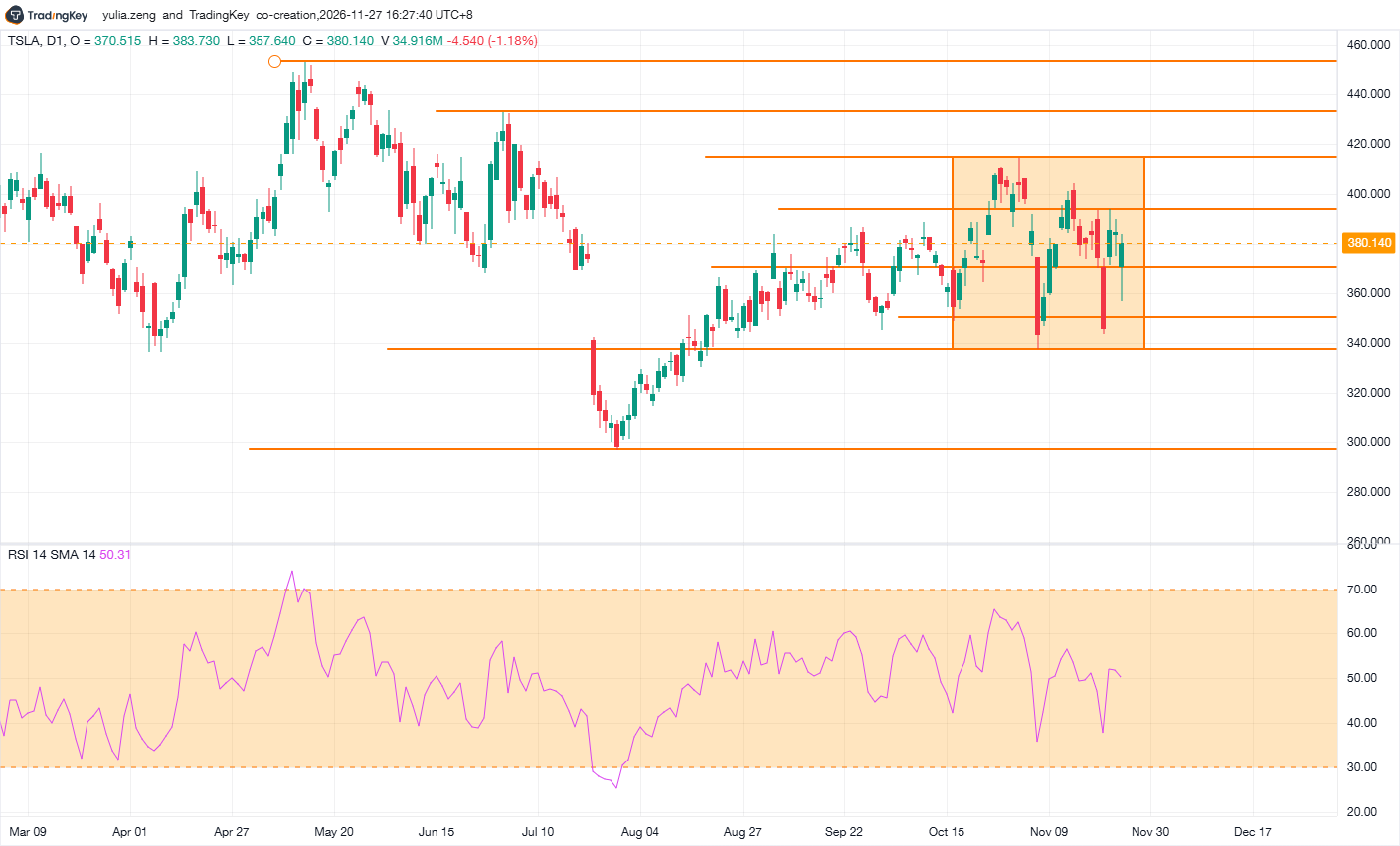
Source: TradingKey
The $120 to $125 area will serve as the primary bull-bear dividing line. The stock has repeatedly found support near this range recently, and as long as there is no breakdown on heavy volume, SPCX still has a chance to establish a temporary bottom and stage another rebound toward $132.73. However, the $132 to $135 range coincides with Fibonacci resistance and a prior volume-heavy consolidation zone; only if the stock firmly establishes itself above this area will the short-term weak structure begin to improve.
If the stock successfully breaks above $132.73 and further breaks free from the downward trendline's constraints, the room for a rebound could gradually expand, with the next levels to watch being $150.41 and $164.70. The vicinity of $150 is both an important psychological round-number level and the 38.2% Fibonacci retracement level, where noticeable selling pressure is expected. If bulls can continue to push the stock higher and effectively reclaim the 50% retracement level at $164.70, it would signal further progress in repairing this round of declines, and the medium-term trend could begin to turn from weak to strong.
In a more optimistic scenario, if SPCX further breaks above the 61.8% Fibonacci retracement level at $178.99 in 2027, the technical picture will deliver a clearer signal of trend improvement. At that point, the market may view $199.33 as the next stage target, and the stock could subsequently challenge its previous high of $225.25.
Conversely, if the $120 support area is decisively broken, current bottoming expectations could be undermined, and SPCX might test lower toward $110 or even retest its previous low of $104.15. The $104 to $105 range is a key defensive level for the medium-term trend; once lost, the prior support structure could completely unravel, and the stock cannot rule out sliding further toward the $100 psychological level, or even seeking new buying interest in the $90 to $95 range.
If Starlink continues to expand its individual subscriber base and enterprise customer revenue in 2027, Starship achieves stable reflights and lowers launch costs, and computing power utilization and profit margins in the superintelligence business gradually improve, market confidence in SpaceX's profitability and cash flow outlook is expected to rebound, thereby driving a valuation recovery.
This content was translated using AI and reviewed for clarity. It is for informational purposes only.
Recommended Articles






Comments (0)
Click the $ button, enter the symbol, and select to link a stock, ETF, or other ticker.