


TradingKey Wall Street Weekly Report:S&P 500 Gains 1.2% as 10-Year Treasury Yield Hits 52-Week High



AI Podcast


During the week of October 5 to October 11, 2026, U.S. equities reached record highs despite persistent inflation and 10-year Treasury yields climbing to 5.24%. The S&P 500 rose 1.2%, supported by energy and defensive sectors, while the Nasdaq lagged due to profit-taking in technology shares. Federal Reserve commentary highlighted ongoing inflation risks, though softer labor data reduced October rate-hike expectations. Investors favored high-dividend value stocks and equal-weighted indexes to mitigate high borrowing costs. Key risks ahead include upcoming inflation prints, potential spikes in Treasury yields, and geopolitical uncertainties, prompting recommendations for a balanced, quality-oriented allocation framework.

Previous Week’s Market Review & Analysis
TradingKey - During the week of October 5 to October 11, 2026, the U.S. macroeconomic environment was defined by persistent inflation pressures, rising long-term Treasury yields, and a complex monetary policy outlook. The 10-year Treasury yield climbed to a 52-week high of 5.32% before ending near 5.24%, driven by heavy sovereign debt issuance, elevated term premiums, and rising crude oil prices amid Middle East conflict uncertainties. Labor market indicators delivered mixed signals; weekly initial jobless claims fell to 197,000 for the week ending October 3, reflecting underlying labor market strength, even as broader nonfarm payroll growth moderated. Meanwhile, consumer confidence deteriorated sharply, with the University of Michigan Index of Consumer Sentiment falling to 46.3 in October 2026, as year-ahead inflation expectations rose to 4.7%.
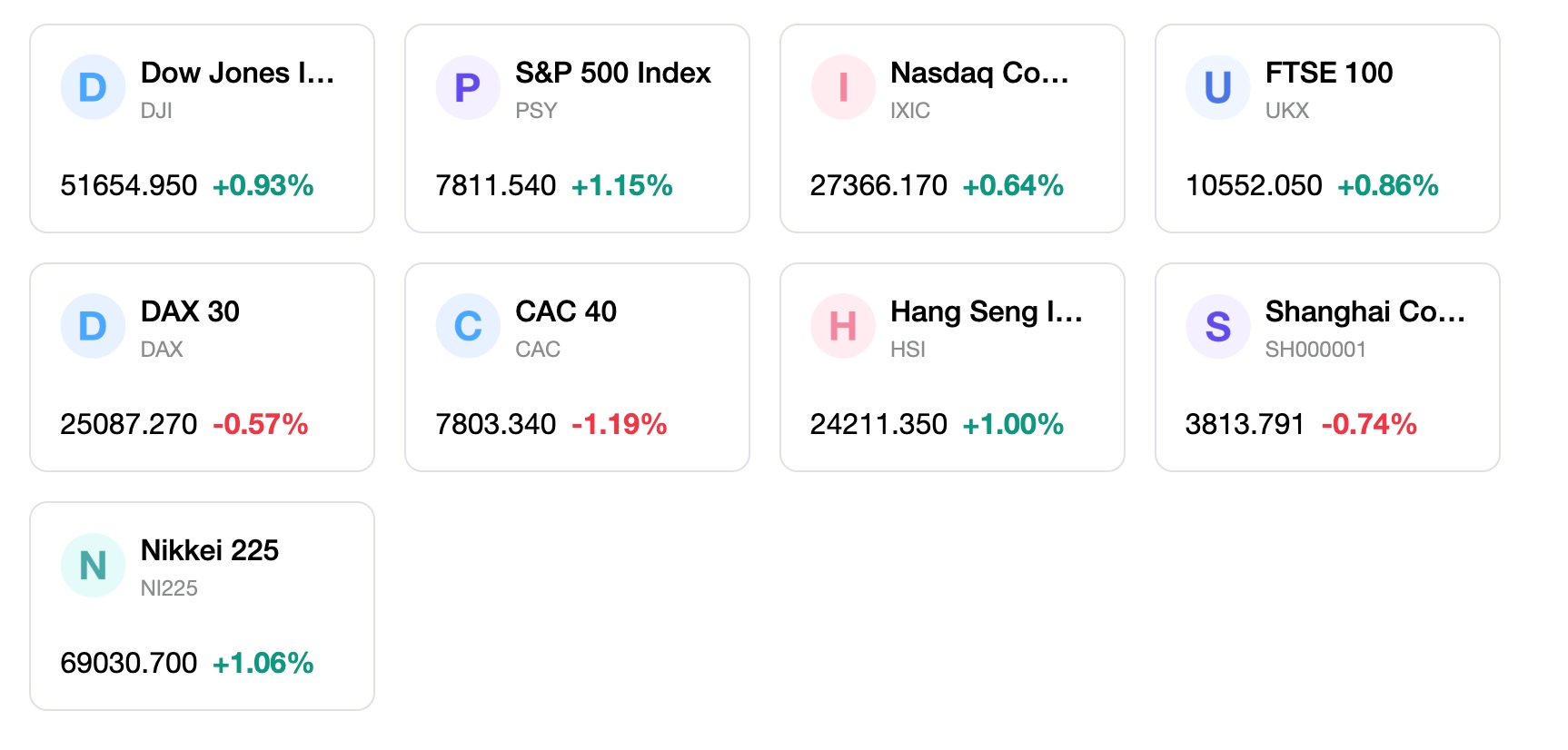
U.S. equity markets posted broad weekly gains for the period from October 5 to October 11, 2026, with benchmark indexes achieving new record highs before experiencing mid-week volatility. The S&P 500 rose 1.2% over the reporting period, while the Dow Jones Industrial Average gained 0.9%. The Nasdaq Composite lagged with a 0.6% advance as semiconductor and mega-cap technology shares faced profit-taking. In style rotation, value and broad-market equities led the advance, with the equal-weighted S&P 500 outperforming the market-cap benchmark by rising 1.6%. Smaller capitalization equities underperformed, as the Russell 2000 index fell between 0.5% and 1.0% under the weight of higher borrowing costs. Sector performance showed nine of eleven S&P sectors advancing, led by defensive and energy segments including Utilities, Consumer Staples, and Energy, while Technology was among the few declining sectors.
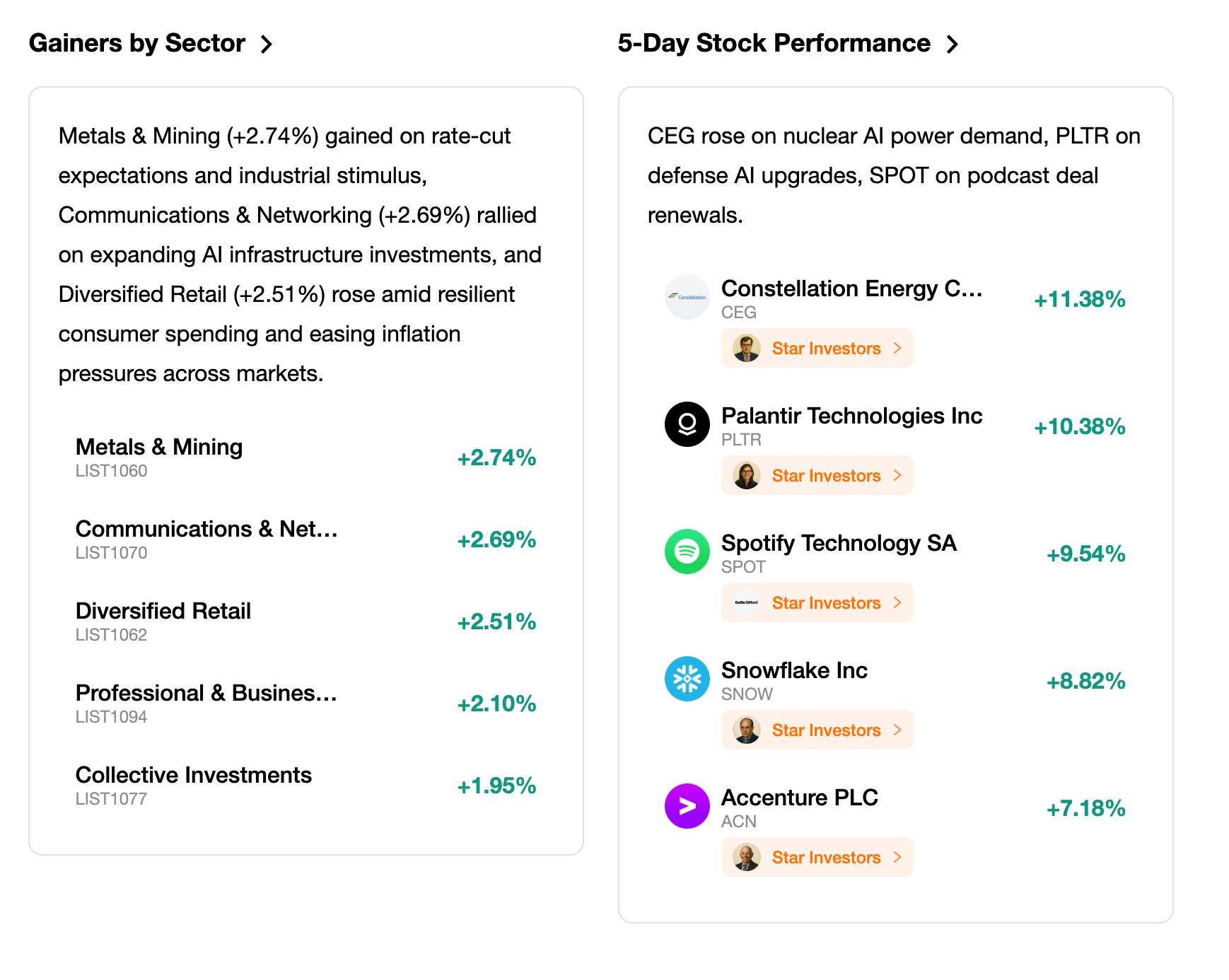
Monetary policy dynamics and corporate announcements served as primary market drivers. The release of Federal Reserve meeting minutes showed a unanimous vote for the September rate hike to 3.75 percent to 4 percent, though softer nonfarm payroll data reduced market expectations for an October rate hike to below 20%. Federal Reserve Governor Christopher Waller noted during an October 8 address in Istanbul that upside risks to inflation remain a key concern, with core personal consumption expenditures inflation remaining sticky between 2.5% and 3.0%. In corporate news, third-quarter earnings season kicked off alongside strategic commercial deals, including Constellation Energy contracting power delivery to Google, which provided support to energy and industrial shares.
Market sentiment stabilized moderately despite pressure from the bond market, with the CBOE Volatility Index falling to approximately 14.84 by the end of the week. Equity fund flows and positioning indicators pointed to cautious repositioning, as the Fear & Greed Index rose from 31 to 45 into neutral territory, even though broader market breadth metrics remained cautious. Institutional flows favored high-dividend defensive sectors and equal-weighted indexes, reflecting a strategy to insulate portfolios against elevated risk-free yields. Investors trimmed momentum positions in high-multiple technology and semiconductor stocks, redirecting liquidity toward value segments that offer attractive intrinsic valuations and resilient balance sheets.
The overall market behavior reflects a late-cycle phase characterized by a widening divergence between corporate earnings resilience and restrictive macro-financial conditions. Resilient corporate profitability and secular artificial intelligence spending continue to support large-cap equity valuations, allowing benchmark indexes to trade near historic highs despite 10-year Treasury yields reaching levels not seen in over two decades. However, the persistent drag of elevated interest rates on small-cap stocks, stagnant housing activity, and weakening consumer sentiment suggests that the broad economy faces ongoing headwinds. The equity market is navigating an environment where strong micro fundamentals are balancing out macro policy tightening.
Next Week's Key Market Drivers & Investment
Looking ahead to the coming week, financial markets will focus on pivotal macroeconomic releases and the formal acceleration of the third-quarter earnings calendar. Key economic releases include the September Consumer Price Index and Producer Price Index reports, which will provide crucial evidence on whether inflationary pressures are continuing to broaden. Investors will also monitor monthly retail sales data and regional manufacturing surveys to gauge consumer spending health. On the corporate front, major Wall Street financial institutions will kick off third-quarter bank earnings, setting the tone for corporate profitability, net interest margin trends, and credit loss provision expectations.
Market price action in the upcoming week will likely be dictated by the interaction between inflation data and Treasury yield movements. If incoming inflation data prints higher than anticipated, bond yields could re-test multi-year highs, creating valuation pressure on high-duration growth equities and reigniting policy tightening concerns for the December FOMC meeting. Conversely, if inflation shows signs of moderation and initial bank earnings exceed expectations, equities could extend their broad-based rotation, allowing value and cyclical sectors to maintain momentum while helping major benchmarks digest high risk-free interest rates.
From a strategy perspective, institutional investors are advised to maintain a balanced and quality-oriented allocation framework. Equity portfolios should feature an overweight tilt toward high-quality value and defensive sectors, including Healthcare, Consumer Staples, and Utilities, which offer attractive dividend yields and earnings stability in a high-rate environment. Exposure to mega-cap technology leadership should be retained selectively to participate in artificial intelligence growth trends, but concentration risk should be managed by utilizing equal-weighted index strategies. Maintaining moderate cash reserves will also allow investors to capitalize on potential volatility spikes surrounding economic data releases.
Key market risk factors requiring close attention include potential upside spikes in inflation driven by volatile energy markets and ongoing Middle East geopolitical conflicts. A sustained break of the 10-year Treasury yield above recent highs would increase corporate borrowing costs and pressure equity market valuation multiples. Additional downside risks include potential credit quality deterioration reported in bank earnings, downward revisions to fourth-quarter corporate earnings guidance, and further declines in household consumer sentiment that could signal a sharper retrenchment in broad consumer spending.
Markets Weekly
5-Day Index Performance
Recommended Articles









Comments (0)
Click the $ button, enter the symbol, and select to link a stock, ETF, or other ticker.