


Meta Muse vs. Google Gemini vs. ChatGPT: Who Has the Upper Hand in the AI Agent Race?



AI Podcast


Meta launched its personal AI agent Muse on September 8, entering the consumer-facing task execution market alongside competitors Google Gemini and OpenAI’s ChatGPT. Muse leverages consumer tasks and rapid initial downloads, surpassing 2.5 million cumulative downloads by September 21. While Google dominates ecosystem entry points and ChatGPT leads in enterprise workflows, Muse focuses on personal affairs and shopping via subscriptions priced up to $100 monthly. Its commercialization hinges on user retention, paid conversion, transaction volume, and scaling unit task costs, while facing merchant integration hurdles that will ultimately impact Meta’s return on massive AI infrastructure investments.
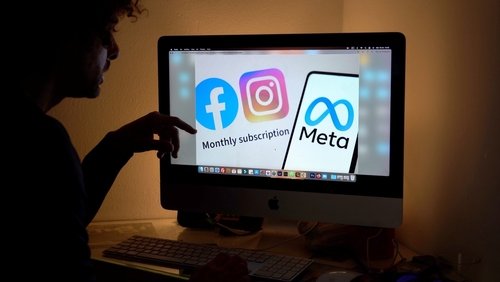
TradingKey - Meta (META) launched its personal AI agent Muse on September 8. The product can operate web pages, invoke applications, and shop and check out on behalf of users on supported platforms. The launch of Muse pushes Meta further into the consumer-facing AI task execution market.
Google (GOOGL) covers personal and workplace scenarios through the Gemini app, Android, and Workspace, while expanding agent features across Search and Shopping services. Meanwhile, OpenAI strengthens research, programming, and enterprise workflows through ChatGPT Work. Competition among the three products primarily focuses on task execution capabilities, the scope of third-party service integration, and pricing models.
What Features Does Muse Have, and How Does It Differ from Gemini and ChatGPT?
Product | Primary Positioning | Core Capabilities | Pricing Model |
Meta Muse | Personal Task and Shopping Assistant | Emails, itineraries, and shopping | Free and paid subscriptions |
Google Gemini | Google ecosystem personal assistant | Search, office productivity, and background tasks | Free and Google AI subscriptions |
ChatGPT | General and enterprise work assistant | Research, coding, and complex tasks | Personal and enterprise subscriptions, with developer APIs billed separately |
Muse operates in an isolated cloud environment, Muse Secure VM, with online operations audited by the Sentinel agent. Users can manage app and account permissions and view complete operation logs; Muse requires user confirmation before sending emails or completing purchases.
Muse can search for products, fill out orders, and generate one-time card numbers via Stripe Link for payment. Meta stated that Muse cannot directly view user passwords or payment details, nor will user conversations and virtual machine data be sent to Meta's advertising system.
According to data from market research firm Sensor Tower, Muse climbed to the top of the free iPhone app chart in the U.S. ten days after its launch. As of September 21, cumulative downloads of Muse have exceeded 2.5 million since its release, demonstrating rapid initial download growth.
Google, ChatGPT or Muse: Who Has the Upper Hand?
Google holds an advantage in product entry points and account services. Gemini can reach users via Search, Android, and Workspace; Gemini Spark can call upon Gmail, Docs, Slides, and Calendar to handle background tasks, though its availability remains limited by region and subscription tier.
ChatGPT is more mature in complex workflows and enterprise applications. ChatGPT Work can connect to email, cloud storage, collaboration platforms, and project management tools to perform research, data analysis, documentation, and programming tasks.
Muse's advantages are concentrated in personal affairs and consumer scenarios, with the ability to expand its reach via WhatsApp, Mac, and future AI glasses. Its task scope remains dependent on third-party platforms opening up data and transaction interfaces. Shopify and PayPal have announced partnerships, while Amazon restricts Muse from shopping on behalf of users, raising concerns over AI identity authentication, account data, and security.
At this stage, Google leads in product entry points and account services, while ChatGPT holds an advantage in complex workflows and enterprise applications. Muse has gotten off to a fast start leveraging consumer tasks and WhatsApp, but its merchant coverage, user retention, and revenue conversion remain unproven.
Can Muse Bring New Revenue to Meta?
Muse offers a free tier along with paid plans priced at $20 and $100 per month, with direct revenue currently coming primarily from subscriptions. Meta has not yet disclosed Muse's active users, paying subscribers, or revenue. User retention and paid conversion rates will determine its revenue scale, while payments, merchant partnerships, and transaction services could become future growth drivers.
Meta expects capital expenditures of $130 billion to $145 billion in 2026, primarily allocated to data centers, servers, networking equipment, and other AI infrastructure. If Muse can generate stable subscription and transaction-related revenue, it will expand Meta's AI commercialization channels and influence market judgment regarding its return on AI investment.
What Meta Investors Are Watching Next
Muse's primary metrics are monthly active users, user retention, paid conversion, and task completion rates. These figures will reflect whether initial downloads can translate into sustained usage.
The growth of its e-commerce business depends on the scope of merchant and payment platform integrations. The broader the coverage across retail, travel, ticketing, and local lifestyle services, the larger the scope of tasks Muse can execute and the greater its potential transaction volume.
On the cost side, Muse requires continuous investment in model inference, cloud virtual machines, and security review resources. Whether unit task costs decline as scale expands will directly impact the profit margin of the subscription business.
Over the long term, whether Muse can connect across mobile devices, WhatsApp, Mac, and AI glasses will determine its user reach and usage frequency. User retention, paid conversion, transaction volume, and unit task costs are core metrics for measuring its commercialization progress.
This content was translated using AI and reviewed for clarity. It is for informational purposes only.
Recommended Articles











Comments (0)
Click the $ button, enter the symbol, and select to link a stock, ETF, or other ticker.