


Micron Stock Price Forecast: Plunges Below $1,000 Mark, Risks Another 20% Drop



AI Podcast


Micron Technology shares tumbled 7.02% to close at $940.76, leading a broader semiconductor sector sell-off driven by surging Treasury yields, geopolitical escalation, and AI capex doubts. Rising risk-free rates discounted tech valuations and sparked concerns over corporate financing costs. Additionally, soaring crude prices fueled secondary inflation fears and increased rate hike probabilities, triggering institutional capital outflows. Technical analysis indicates potential 20% downside risk, with the next key support level near the late-July low of $740.
TradingKey - Micron shares tumble over 7% to trigger selling pressure, technical analysis warns of potential 20% downside risk.
On August 19 ET, Micron Technology (MU) continued to drop about 2% in overnight trading, temporarily trading at $921.63. Yesterday, Micron Technology faced heavy intraday selling pressure, with its stock plunging 7.02% to close at $940.76, as its single-day turnover surged to $35.3 billion, topping the U.S. stock market.
Yesterday, the semiconductor and storage sectors suffered a broad position flush. Beyond Micron's crash, Seagate Technology (STX), SK Hynix (SKHY), and SanDisk (SNDK) all tumbled over 9%, Marvell (MRVL) dropped over 8%, and Western Digital (WDC) fell over 7%, indicating a collective exit of capital. This sector-wide pullback was a systemic risk-off sell-off sparked by surging macro yields, escalating geopolitical risks, and doubts surrounding AI capital expenditures.
The U.S. 30-year Treasury yield surged past 5.3%, reaching a multi-year high, while the 10-year Treasury yield also climbed to near 4.75%. The rising risk-free rates directly discounted tech stocks' forward valuation models, sparking market concerns that tech giants such as Microsoft (MSFT), Meta (META), and Google (GOOG) will face significantly higher costs for large-scale bond financing to build AI data centers, thereby dampening future budgets for computing power and memory procurement.
Furthermore, with the expiration of the 60-day ceasefire agreement in the Middle East and U.S. President Trump ordering his negotiation team to suspend contacts with Iran—stating "there will be no talks or dialogue with Iran now or in the future"—geopolitical tensions escalated again, sending Brent crude (UKOIL) prices past $90 a barrel. The spike in oil prices fueled market fears of secondary inflation, with the CME FedWatch Tool showing the market-implied probability of another Fed rate hike before year-end climbing sharply to nearly 70%, leaving the high-beta semiconductor sector to bear the brunt as an ATM for capital outflows.
Another factor that cannot be ignored is that despite Micron's solid fundamentals (with a forward P/E of around 21x), top institutions like Bridgewater and Duquesne Family Office disclosed tactical trims in recent holdings disclosures, prompting follow-on market selling.
From a technical analysis perspective, Micron's stock price faces pressure to retest its low. Although Micron's share price surged past the $1,000 threshold on Monday, its late-session pullback indicated that sellers were taking action. Yesterday, the sell-off intensified further, causing the stock to open sharply lower and move downward. The next line of defense is the late-July low of $740, representing roughly 20% downside risk from current levels.
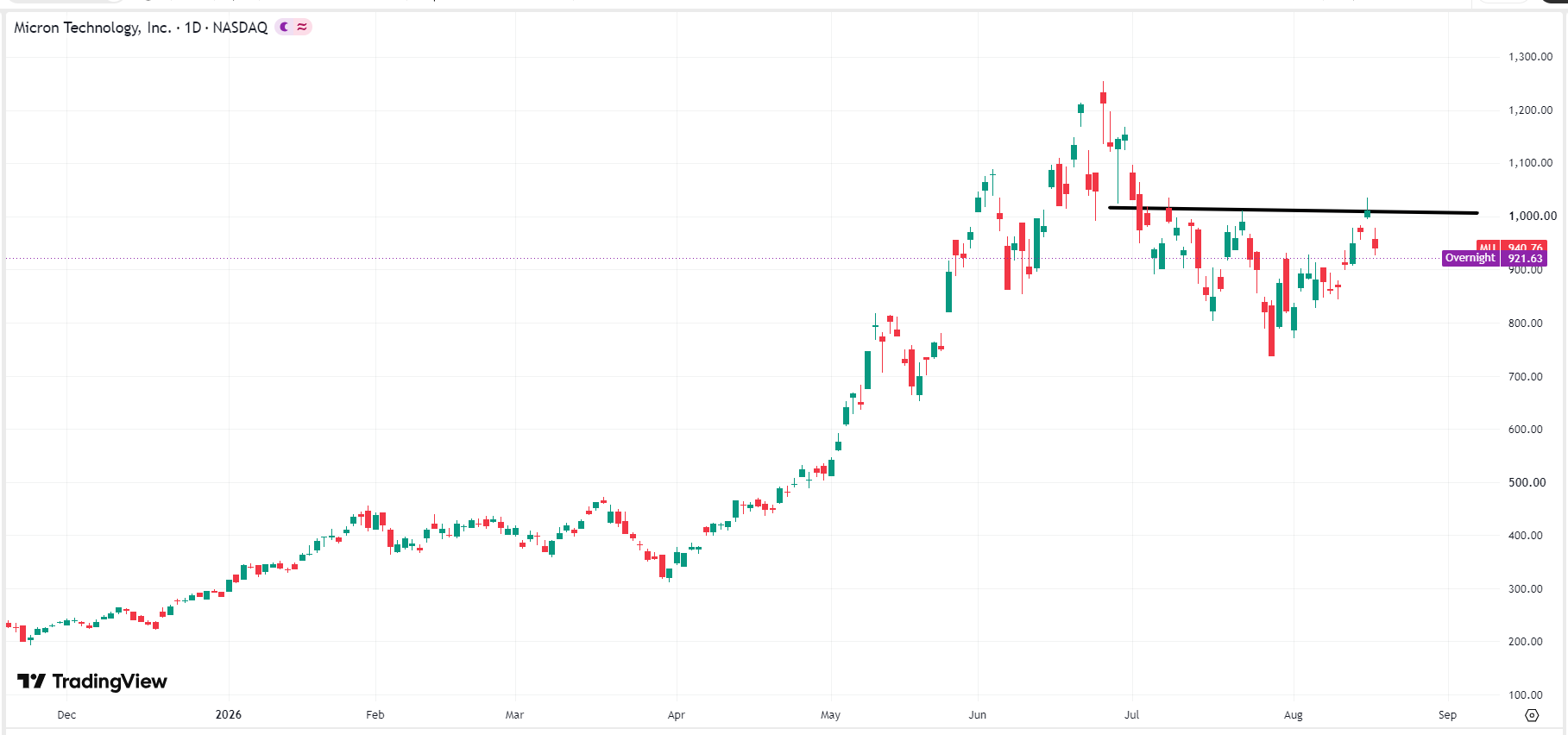 Micron stock price chart, Source: TradingView
This content was translated using AI and reviewed for clarity. It is for informational purposes only.
Recommended Articles










Comments (0)
Click the $ button, enter the symbol, and select to link a stock, ETF, or other ticker.