


Samsung, SK Hynix CEOs Sued by South Korean Shareholder Group as Police Open Investigation



AI Podcast


On August 5, the Korea Shareholder Movement Headquarters filed lawsuits against the CEOs of Samsung Electronics and SK Hynix, alleging breach of trust regarding employee bonus payments implemented in May. The group contends that linking fixed percentages of semiconductor operating profits to bonuses constitutes a major distribution matter requiring shareholder approval, rather than routine collective bargaining. Furthermore, the group has accused the Minister of Employment and Labor of abuse of power regarding government intervention in labor negotiations. While police are currently reviewing these complaints, market response remained positive, with both firms’ shares rising at the close on August 5.

TradingKey - According to South Korean media reports, South Korean shareholder group "Korea Shareholder Movement Headquarters" stated on August 5 that it has filed a lawsuit with the police against the CEOs of Samsung Electronics and SK Hynix for allegedly breaching shareholder trust provisions under the Act on the Aggravated Punishment of Specific Economic Crimes. The cases have now been referred to the First and Second Investigation Divisions of the Gyeonggi Nambu Provincial Police Agency, respectively.
The accused executives include Samsung Electronics Co-CEOs Jun Young-hyun and Roh Tae-moon, as well as SK Hynix CEO Kwak Noh-jung. The shareholder group submitted a complaint to the National Investigation Headquarters of the Korean National Police Agency on July 22, alleging that these executives agreed to pay bonuses to employees without fully reviewing the labor-management agreements and established a payment mechanism that unreasonably depleted company assets, thereby constituting a breach of trust.
The disputed agreements were implemented in May this year. Samsung decided to distribute special bonuses equivalent to 10.5% of the performance gains of its semiconductor business, while SK Hynix has a profit-sharing mechanism that allocates 10% of its semiconductor division's operating profit as employee bonuses.
These high-value incentive packages were introduced against the backdrop of significant earnings growth driven by the AI boom in recent years, with management aiming to ease labor-management tensions and prevent the loss of core talent.
However, the shareholder group argues that linking a fixed percentage of operating profit to bonuses goes beyond the scope of routine collective bargaining and essentially constitutes a major profit distribution matter that requires approval at a general meeting of shareholders. They claim that management's agreement with the labor union without thorough review and shareholder authorization could lead to an improper outflow of company assets and harm shareholder interests, making them legally liable.
Currently, the Samsung case is being handled by the First Investigation Division of the Gyeonggi Nambu Provincial Police Agency, while the SK Hynix case falls under the jurisdiction of the Second Investigation Division, with police currently reviewing the contents of the complaints.
In addition to corporate executives, the group has filed a separate complaint with the Corruption Investigation Office for High-ranking Officials, accusing South Korea's Minister of Employment and Labor, Kim Young-hoon, of abuse of power, obstruction of the exercise of rights, and coercion. The group claims that improper government intervention occurred during the tentative agreement reached between Samsung Electronics and its labor union in May this year, extending the dispute from a corporate governance issue to the level of government conduct.
As of press time, neither Samsung Electronics nor SK Hynix has publicly responded to the allegations. At the close on August 5, SK Hynix rose 5.77% to close at 1,668,000 Korean won (approximately $1,170), while Samsung Electronics rose 2.5% to close at 246,000 Korean won.
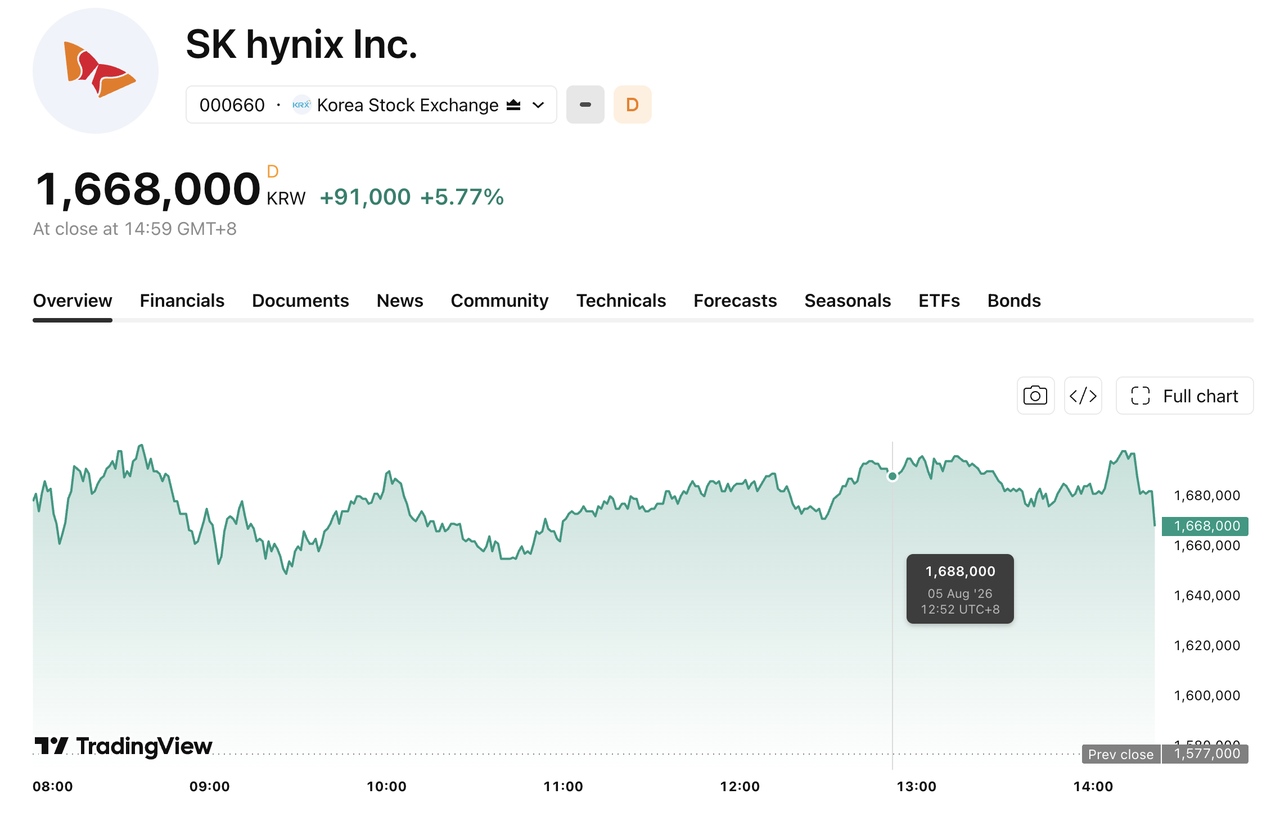
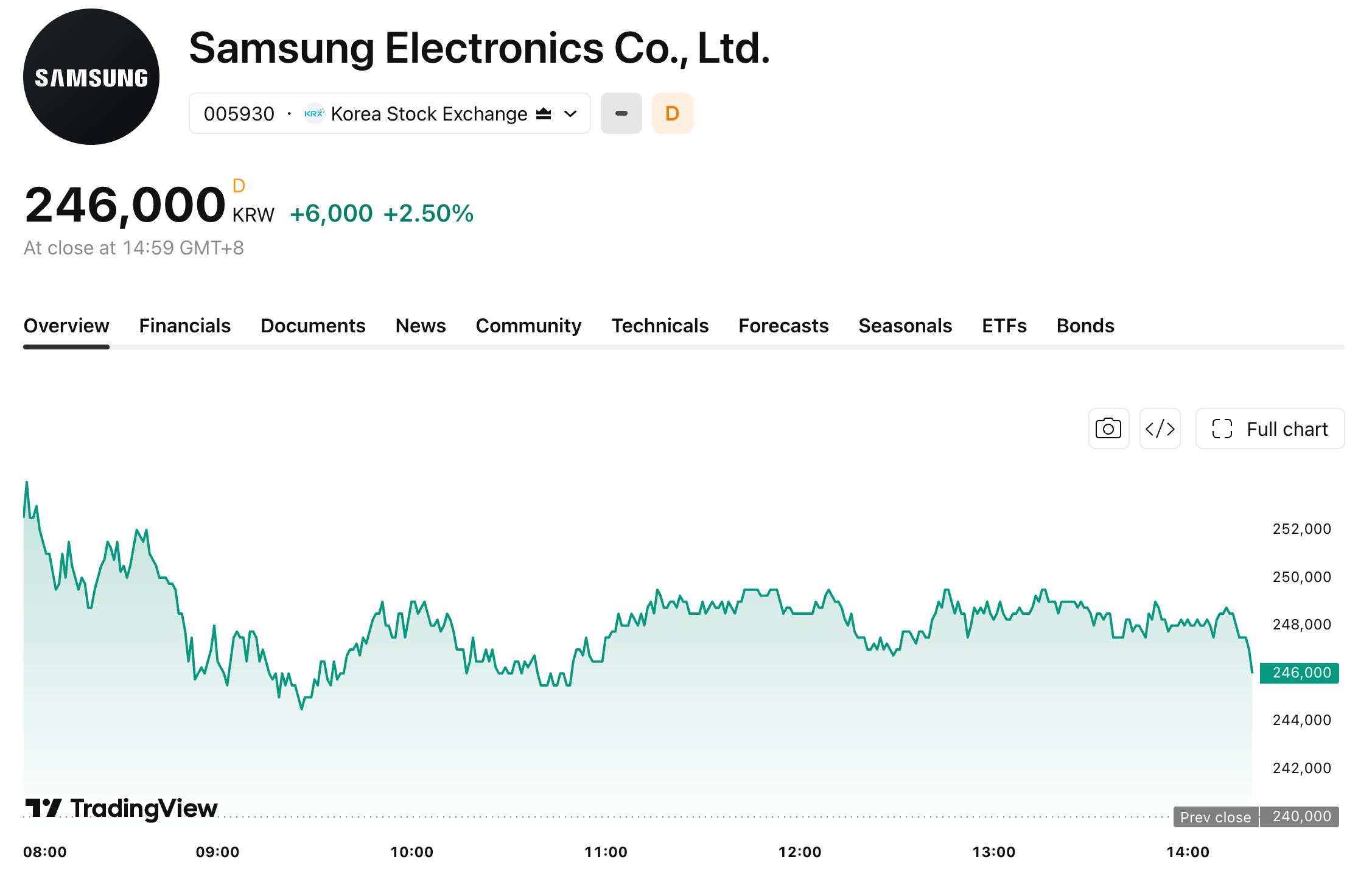
[Source: TradingView]
This content was translated using AI and reviewed for clarity. It is for informational purposes only.
Recommended Articles










Comments (0)
Click the $ button, enter the symbol, and select to link a stock, ETF, or other ticker.