


AI Price War Intensifies: xAI, OpenAI, Meta Collectively Cut Prices, Anthropic Under Pressure, Where Do AI Industry Chain Profits Flow?



AI Podcast


The AI industry has transitioned from a performance-based arms race to a cost-driven price war. Giants including OpenAI, xAI, and Meta have significantly slashed API token pricing, reflecting a shift in enterprise demand from "token maximization" to strict budget optimization. This trend has pressured margins for model developers, forcing providers like Anthropic to pivot to usage-based billing. While model layer profitability faces headwinds, this competition accelerates token consumption, creating a structural demand boom for upstream semiconductor and memory chip manufacturers. Ultimately, industry viability increasingly depends on achieving superior token efficiency in an era of strict capital discipline.
TradingKey - Over the past week, the focus of competition in the AI industry has shifted from 'performance' to 'price'. From Elon Musk's SpaceXAI ( SPCX) to OpenAI, and then to Meta ( META ), the three giants released their next-generation AI models in quick succession. But this time, they are competing not just on who is 'smarter', but also on who is 'cheaper'.
Grok 4.5 is over 60% cheaper than Anthropic's Opus 4.8, the price of GPT-5.6 Terra has been cut in half, and the input pricing for Meta Muse Spark 1.1 is just $1.25 per million tokens. The core logic of this price war has shifted from a 'performance race' to a 'cost race', accelerating the explosion of token consumption and indirectly driving the growth of upstream hardware demand.
What Is a Token?
A token is the smallest unit of text processed by an AI model. Before a piece of text is fed into a model, it is segmented into multiple tokens, which can be complete words, word roots, or punctuation marks. In a Chinese language context, a single Chinese character or a common word can serve as a token. The number of tokens directly determines the maximum text length for a single conversation. In API pricing, tokens are the basis for billing, with input text and generated responses billed cumulatively based on their respective token counts.
Companies Tighten AI Spending as Focus Shifts From Using More to Calculating Costs
Just a few months ago, a culture of "Token Maximization" was popular in Silicon Valley, where companies encouraged employees to use AI as much as possible for fear of falling behind if they used it less. Recently, however, things have changed.
According to a recent report by The Information, Tesla ( TSLA) notified employees that, starting July 6, it will cap employees' AI tool spending at $200 per week, with any excess requiring approval from a supervisor. Uber ( UBER) exhausted its entire 2026 AI budget in April, subsequently capping each employee's monthly token spending on any single AI tool at $1,500.
According to corporate spend data platform Ramp, the median monthly corporate spend on AI tokens in April 2026 was $2,246, but the average was as high as $140,000. This massive gap indicates that a small number of "super users" are consuming the vast majority of AI budgets.
Companies are beginning to do the math. A year ago, OpenAI executives were still discussing the possibility of charging thousands of dollars a month in subscription fees for top-tier AI models. Today, Sam Altman's tune has changed: "Every enterprise is thinking about what they are spending on AI and the value they are getting from it, which is exactly what we want to address."
xAI, OpenAI, Meta Collectively Cut Prices, AI Price War Escalates
SpaceXAI was the first to release Grok 4.5 on July 8, marking the company's first new model since its listing. Musk made a high-profile announcement on X: "This is an Opus-class model, but faster, more token-efficient, and cheaper."
Test data corroborates this. In SWE-Bench Pro tasks, Grok 4.5 solved problems using an average of just 15,954 tokens, compared with 67,020 tokens for Claude Opus 4.8, which is less than a quarter of its competitor's usage. API pricing is $2 for input and $6 for output per million tokens, over 60% cheaper than Claude Opus and GPT-5.5. SpaceXAI claims its token efficiency is twice that of comparable products.
OpenAI launched GPT-5.6 to the public on July 9, introducing three models at once: Sol, Terra, and Luna.
Sol: Input at $5 and output at $30 per million tokens, matching the price of the previous generation while significantly elevating efficiency and performance. In the Coding Agent index by the authoritative organization Artificial Analysis, Sol (max) set a new global benchmark with a score of 80, demonstrating strong sustained drive when executing complex multi-step tasks, with overall task costs substantially lower than traditional frontier models.
Terra: Input at $2.50 and output at $15 per million tokens, benchmarked against GPT-5.5 in performance but with pricing cut directly in half. In OpenAI's official Agents' Last Exam test, Terra, powered by its efficient logical chain, can complete specific professional workflows at an estimated cost of approximately one-sixteenth of traditional frontier models.
Luna: Input at $1 and output at $6 per million tokens, the cheapest of the three and ideal for high-frequency call scenarios.
Meta followed closely, introducing its first paid API model, Muse Spark 1.1. In terms of pricing, it is $1.25 for input and $4.25 for output per million tokens. This compares with Anthropic Fable 5's input of $10 and output of $50. Muse Spark 1.1's pricing is only one-tenth of Fable 5's.
Zuckerberg said bluntly: "Other labs have high pricing and huge profit margins. We have the ability to provide frontier intelligence at a more affordable price." Meta's confidence stems from its highly profitable advertising business, using low prices to capture the market first, before gradually raising prices once it has established a foothold.
Anthropic Under Pressure: Customers Vote With Budgets, Not Leaderboards
With the big three collectively cutting prices, Anthropic undoubtedly feels the greatest pressure. According to Ramp data, Anthropic's enterprise AI subscription share reached 41% in May 2026, surpassing OpenAI's 39.5% for the first time. Anthropic, which originally held an advantage in the enterprise market, is now being outflanked by rivals using price.
In addition, data shows that Anthropic's own computing power expenditure has reached 2.3 times its payroll expenses. Based on a fully loaded cost of $224,000 for a senior engineer, the corresponding computing power expenditure per engineer is approximately $515,000 per year.
Anthropic recently shifted Claude Enterprise from a flat-rate subscription model to a usage-based billing model. This shift itself precisely reflects that AI cost pressures have already been transmitted from customers to the providers themselves.
Where Are Industry Chain Profits Flowing?
If the model layer is engaged in a price war, where are the profits going?
First stop: Model routing service providers. As the number of models multiplies and pricing becomes increasingly chaotic, enterprises have an even greater need for tools that let them 'use whichever is cheapest.' Platforms like OpenRouter allow users to automatically switch among hundreds of models based on the task. In May 2026, OpenRouter completed a $113 million Series B funding round, reaching a valuation of $1.3 billion. The volume of tokens it processes weekly has grown from 5 trillion to 25 trillion.
A Citigroup report shows that the share of open-source model tokens processed on the OpenRouter platform surged from 34% in January to 65% in June.
Second stop: More cost-effective alternatives. The share of tokens from US companies using Chinese AI models on OpenRouter has remained steady above 30% weekly since 2026, peaking at 46%.
According to third-party evaluation data, the overall performance gap of mainstream Chinese frontier models in multimodal understanding and engineering deployment compared with top US closed-source models has significantly narrowed to between 1% and 4%, while their pricing is 60% to 90% lower.
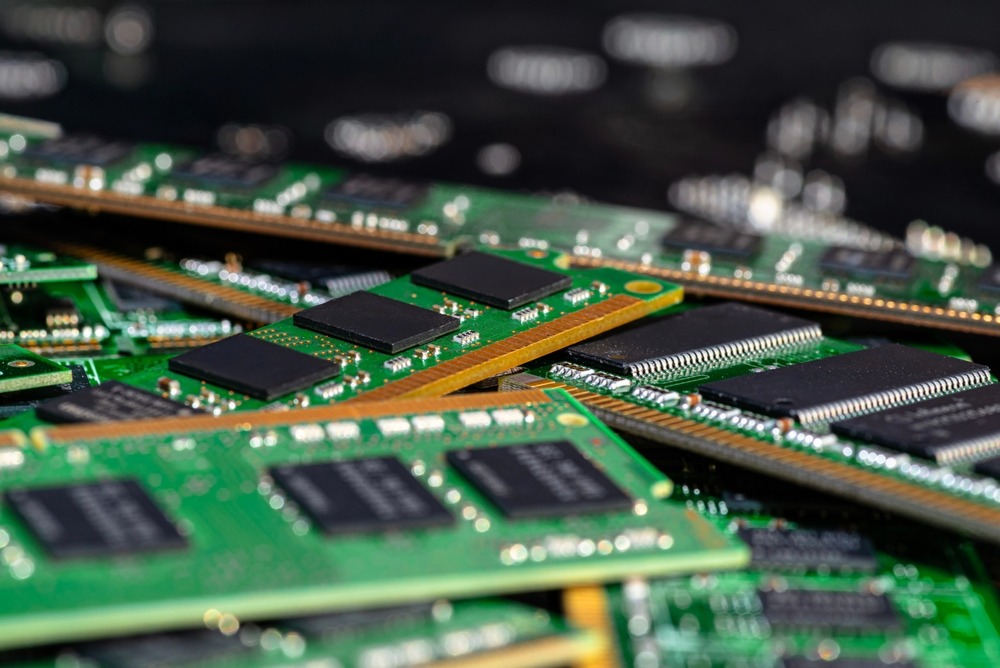
Third stop: Upstream semiconductors. The price war burns through the model layer, and it is the model layer that pays the bill. The confidence of model developers to cut prices stems from the continuous decline in inference costs, which is backed by the structural boom in the AI chip and memory chip industries. Micron ( MU) saw its single-quarter operating margin exceed 80%, while SK Hynix ( SKHY) and Samsung's memory chip profits continue to hit record highs. The bulk of AI computing power costs lies not in the model layer, but in the chip layer. Behind every API call, there is consumption of GPUs and HBM. The fiercer the battle in the model layer, the more rigid the demand for upstream chips and memory; the more brutal the price war, the more certain the benefits to the upstream.
From ‘Is It Worth It’ to ‘Is It Expensive’: The Era of Token Efficiency Arrives
A price war at the model layer benefits customers in the short term, offering lower costs, more choices, and stronger bargaining power. In the long run, however, surviving AI developers must answer one question: As unit prices for tokens continue to decline, how will they recoup the hundreds of billions of dollars invested in chips and data centers?
Zuckerberg has an advertising business to bankroll his efforts, Musk has the ability to pitch narratives to the capital markets, and OpenAI enjoys a first-mover advantage and brand premium. Meanwhile, Anthropic, a company built on being 'the most intelligent,' is facing a harsh reality: customers are voting with their budgets, not with leaderboard rankings.
AI's 'token efficiency era' has arrived. The biggest change this year is not how much stronger models have become, but how the entire industry has shifted from asking 'is it worth it' to 'is it too expensive.' As every enterprise scrutinizes its AI bills, whoever can help customers save money will be the one to survive.
This content was translated using AI and reviewed for clarity. It is for informational purposes only.
Recommended Articles





Comments (0)
Click the $ button, enter the symbol, and select to link a stock, ETF, or other ticker.