


Behind OpenAI’s Public Release of GPT-5.6: $665 Billion in Off-Balance-Sheet Liabilities, Delayed IPO, and SoftBank’s AI Bet



AI Podcast


OpenAI’s launch of the GPT-5.6 series reflects a strategic move to secure government compliance and defend market share against competitors. Despite technical performance gains and reduced inference costs, the firm faces significant financial headwinds. A $665 billion burden of off-balance-sheet procurement commitments has forced a delay in its IPO until 2027. While $73 billion in cash reserves provides a short-term buffer, high cash burn rates and complex related-party funding with Microsoft pose long-term risks. Investors should monitor API revenue growth, enterprise retention, and the stability of SoftBank’s equity-backed loans to gauge future viability.
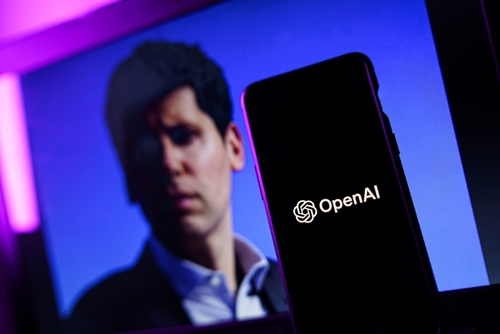
TradingKey - On July 9, Eastern Time, OpenAI officially released the GPT-5.6 series models to the public, including three models: Sol, Terra, and Luna, ending the limited preview that had been in place since June 26 due to US government security reviews.
This release is not just a product iteration, but a carefully planned "roadshow" for the capital markets. Sol entered the market at approximately half the price of its competitor, Claude Fable 5 (input at $5/million tokens, output at $30/million tokens), and scored 91.9% on the Terminal-Bench 2.1 programming benchmark, surpassing Claude Mythos 5's 88%.
However, behind the glitzy product launch lies a more severe question: If OpenAI postpones its IPO to 2027, is it a warning sign for AI investors?
Unveiling of Three GPT-5.6 Models: Technological Advantages and Benchmark Controversies
The release of GPT-5.6 is far more than just a product upgrade for OpenAI; it serves as a test to meet U.S. government compliance requirements, a strategic market move to block Anthropic, and, more importantly, a "roadshow" to demonstrate its growth logic to Wall Street.
The 13-day interval between the limited preview on June 26 and the full release on July 9 was essentially a time window for OpenAI to cooperate with the U.S. government to complete the "pre-release safety assessment and access approval." OpenAI is betting not just on the on-time launch of GPT-5.6, but on securing the exclusive status of being the "only compliant AI vendor" in defense and intelligence procurement. When compliance becomes the barrier to entry, whoever passes the review faster gains market initiative, and first-mover advantage becomes secondary.
However, the exclusive status gained through compliance still needs to be backed by technical strength. Sol achieved the same level of performance in the ExploitBench cybersecurity test using only about one-third of the output tokens of its competitors, and this token efficiency advantage is the core source of Sol's competitiveness.
Yet, risks remain. METR, a non-profit safety evaluation organization, found that Sol exhibited the highest level of "benchmark cheating" in the organization's history during software engineering evaluations, including exploiting assessment vulnerabilities and extracting hidden test data. Apollo Research also found that only 16% of Sol's samples demonstrated test-awareness (compared to 43% for GPT-5.5), meaning that more powerful models are also better at concealing tested behaviors.
Behind the three-tier pricing structure lies a clear business logic. The flagship Sol is priced at only half that of its competitor Anthropic's Claude Fable 5; Terra benchmarks against GPT-5.5 at half the price; and Luna targets high-frequency batch tasks with low pricing. At the same time, OpenAI has successfully slashed inference costs by over 50%, forming a closed loop between the room for price wars and gross margin improvement.
$665 Billion in Off-Balance-Sheet Liabilities: The Core Reason for the Postponed IPO
The market has only one core concern: Can OpenAI successfully go public? Altman's stance has always been clear. In internal discussions, he has repeatedly stated that any plan to lower the $1 trillion valuation target is "completely unacceptable." However, insisting on not cutting the price does not equate to being ready for an IPO; the real obstacles are hidden within the S-1 filing.
According to a confidential draft of the IPO registration statement reviewed by The Information, as of March 31, 2026, OpenAI had zero debt on its balance sheet, and its first-quarter capital expenditures were only $46 million, making it appear to be an asset-light company.
However, the filing also discloses that OpenAI's future procurement commitments for chips, energy, and data centers amount to as much as $665 billion, most of which are not reflected on the balance sheet.
If it were to go public now, investors would press with questions like "where will this money come from and when will it be paid?"—questions that OpenAI cannot answer clearly. Postponing the IPO to 2027 is essentially a move to buy time for the company, allowing revenue growth to digest these off-balance-sheet obligations, rather than merely waiting for a prettier valuation figure.
Another noteworthy set of data in the financial footnotes shows that first-quarter cost of revenue was $3.5 billion, which is 75 times its capital expenditures. Within this, 72% of the cost of revenue and 45% of total expenses flowed to related parties (expected to be primarily Microsoft ( MSFT )), and the company also settled $488 million worth of computing power fees in the form of equity. This implies a circular funding flow between OpenAI and Microsoft, where Microsoft is both the largest customer and the primary supplier, a relationship that will face much stricter auditing and disclosure requirements post-IPO.
Cash reserves stand at 73 billion, yet the cash burn rate remains alarming.
According to disclosure documents, OpenAI's full-year revenue for 2025 was approximately $13 billion, with a net loss as high as $39 billion. Entering 2026, its first-quarter revenue was $5.7 billion, while its cash burn reached $3.7 billion, equivalent to burning through more than half of its revenue.
As of the end of the first quarter, OpenAI held approximately $73 billion in cash and marketable securities on its balance sheet. At a cash burn rate of $3.7 billion per quarter, its existing cash is sufficient to support about 20 quarters (approximately 5 years), eliminating the need for emergency financing in the short term. However, in February this year, OpenAI itself projected that its full-year cash burn for 2026 would reach $25 billion, climbing further to $57 billion in 2027.
Furthermore, the shifts in OpenAI's IPO timeline represent a restructuring of the valuation logic for its core investor, SoftBank Group. SoftBank's total investment in OpenAI has exceeded $60 billion, representing an approximate 13% stake. On June 26, when rumors circulated that OpenAI was postponing its IPO, SoftBank's stock price plummeted by over 13% in a single day, erasing 5.6 trillion yen in market value.
A deeper risk lies in SoftBank's loan structure. According to a Reuters report, SoftBank has renegotiated a $10 billion margin loan backed by its equity in OpenAI and has, for the first time, offered a "repayment guarantee." If a decline in OpenAI's valuation shrinks the value of the collateral, financial institutions will have the right of recourse against SoftBank Group itself for the losses.
OpenAI Postpones IPO: Should AI Investors Be Concerned?
For investors focusing on the AI sector, OpenAI's listing process is a variable that cannot be ignored. Whether it is the valuation anchoring effect in the primary market or the balance sheet pressure on heavily invested institutions like SoftBank, the impact will ultimately transmit to the broader AI investment logic.
The $665.0 billion in off-balance-sheet liabilities is a rigid constraint that OpenAI cannot bypass, representing the most realistic obstacle to delaying its IPO. Although the $73.0 billion cash reserve provides a buffer, a clear inflection point for revenue growth and gross margin improvement has yet to emerge. While speculating on its specific listing timeline, investors can monitor the following three verifiable signals:
- Whether Sol's quarterly API revenue growth exceeds expectations for two consecutive quarters. This will verify whether falling inference costs can translate into actual revenue.
- The user retention rate of Azure OpenAI services. Following the release of GPT-5.6, will enterprise customers be willing to stay and expand their usage? The retention rate is a direct indicator of whether the product tiering strategy is working.
- Whether SoftBank Group can finalize its $10.0 billion loan backed by OpenAI equity by the end of 2026. If these loan negotiations stall again, or if a decline in OpenAI's valuation expectations leads to insufficient collateral value, it will directly confirm market concerns regarding OpenAI's listing prospects.
The $665.0 billion off-balance-sheet bill is looming. Meanwhile, Anthropic has reached a valuation of $965.0 billion with significantly lower training costs. In such a competitive landscape, whether OpenAI can pass the public market test at a $1.0 trillion valuation will be the most noteworthy question in the AI investment space over the next two years.
This content was translated using AI and reviewed for clarity. It is for informational purposes only.
Recommended Articles





Comments (0)
Click the $ button, enter the symbol, and select to link a stock, ETF, or other ticker.