


GameStop's Cash Reserves Hit $9 Billion, but Wall Street Analysts Are Skeptical About Its Potential



Key Points
- GameStop's valuation is now not as disconnected from the company's underlying value.
- A $9 billion war chest, coupled with its crypto reserves, helps to somewhat justify the company's $10.5 billion market cap.
- However, still expensive on a price-to-tangible-book basis, unless GameStop quickly announces an acquisition that wows investors, shares are at risk of further price drops.
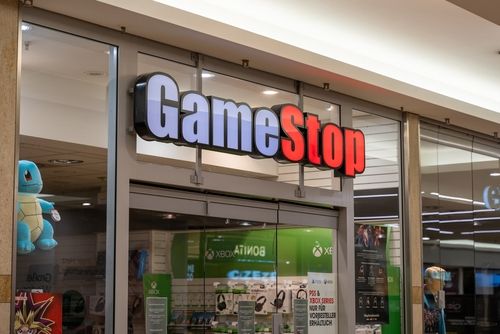
A far cry from its meme-stock heyday, shares in GameStop (NYSE: GME) have traded fairly rangebound over the past year. At the same time, the video game retailer has built an impressive cash and crypto war chest.
GameStop has around $9 billion in cash on hand, along with Bitcoin worth around $368 million. Considering this large position in liquid assets, on the surface, GameStop's valuation no longer appears fully out of sync with its underlying value.
Will AI create the world's first trillionaire? Our team just released a report on the one little-known company, called an "Indispensable Monopoly" providing the critical technology Nvidia and Intel both need.
At current prices, GameStop has a market cap of around $10.5 billion. Yet, while GameStop may be cheaper than it's been in years, don't assume it has become one of the undervalued stocks. Shares instead trade at a premium to tangible book value. This premium could evaporate if the company falls further short of investor expectations.

Image source: Getty Images.
GameStop and its balance sheet transformation
GameStop's war chest has grown considerably, but it's not as if this is the product of high profits or lucrative asset sales. Rather, the company raised this additional capital, largely through the sale of convertible debt in two separate offerings.
From these offerings, GameStop borrowed a total of $4.2 billion. The flipside, however, is that GameStop must eventually convert these notes into newly issued shares. The notes mature in April 2030 and June 2032. At maturity, GameStop will need to either refinance the debt or swap the notes for common stock at conversion prices ranging from $28.91 to just under $30 per share.
However, it's not just the specter of added share dilution that has Wall Street skeptical. Among the smart money, skepticism runs high about other aspects of the stock and GameStop Chairman Ryan Cohen's current game plan.
Wall Street isn't impressed, and you shouldn't be either, at least not yet
Steve Eisman, a professional investor made famous by The Big Short, is doubtful of GameStop's latest gambit. He doesn't think the company can both successfully acquire other retailers and essentially liquidate its legacy operations through store closures and aggressive cost-cutting.
Eisman isn't the only one bearish on this heavily followed video game stock. Last year, Wall Street analysts, like Wedbush's Michael Pachter, noted that GameStop remained valued more on hype than on fundamentals, a view that has yet to change. Take a look at GameStop's financials, and it's easy to come to the same conclusion.
GameStop has a tangible book value of only $12.14 per share, more than 47% below its current stock price. I agree with analysts like Pachter that it makes little sense to pay a high premium for what's essentially a holding company.
Still, if GameStop fails to make a deal soon and investors grow wary, the opportunity to buy in at or below tangible book value could emerge. If it finally becomes a bona fide value stock, the prospect of GameStop putting its high cash position to good use, or any use for that matter, starts appearing a lot more promising.
Recommended Articles




Comments (0)
Click the $ button, enter the symbol, and select to link a stock, ETF, or other ticker.