


KOSPI Slumps 3%, Nikkei Nears 65,000 Level as Kioxia, Samsung and SK Hynix Plunge



AI Podcast


On Monday Asian time (August 31), Asia-Pacific markets opened sharply lower, driven by external macroeconomic pressures and Fed hawkish signals. South Korea's KOSPI Index dropped 3.06% to 6,581.24, with Samsung Electronics and SK Hynix leading losses. Meanwhile, the Nikkei 225 Index fell 2.07% to 65,028.06, pressured by declines in tech heavyweights like SoftBank and Kioxia. The downturn reflects spillover from last Friday's U.S. tech sector correction and escalating investor concerns regarding prolonged high interest rates, which collectively dampened risk appetite and triggered capital outflows from regional risk assets.

TradingKey - Fed Hawkish Bombshell! Japanese and South Korean Stock Markets Bloodbath at Open: South Korean Stocks Tumble 3% Below 6,600, Nikkei Nears 65,000 Level as Tech Heavyweights Lead Losses.
On Monday Asian time (August 31), Asia-Pacific stock markets opened generally lower in early trading, with both Japanese and South Korean markets opening lower and coming under pressure. Among them, South Korea's KOSPI Index opened down 3.06%, breaching the 6,600 mark to trade at 6,581.24 points. South Korea's two major heavyweights both opened lower: Samsung Electronics fell 3.7%, losing the 250,000 mark to trade at 247,500 KRW; SK Hynix dropped 4.3%, falling below the 1.6 million mark to trade at 1,582,000 KRW.
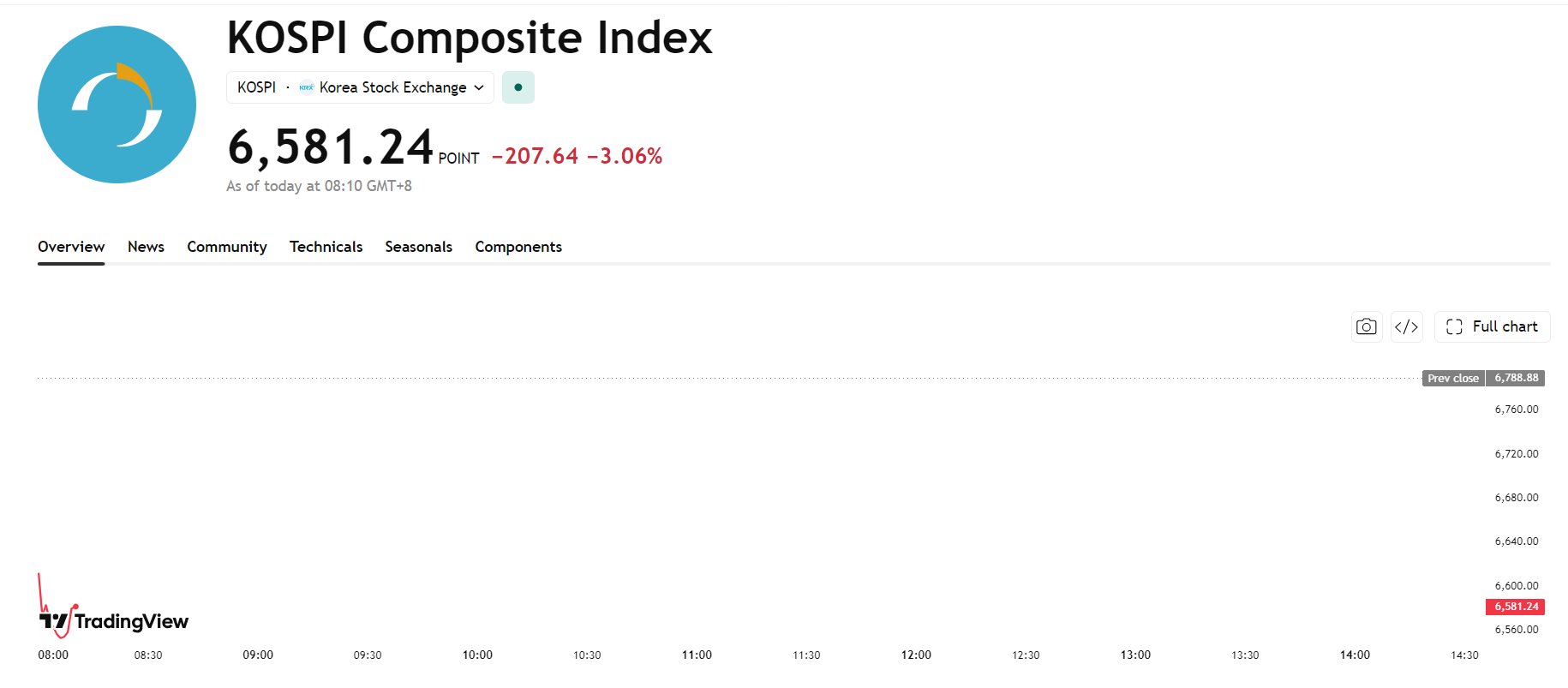
KOSPI Index Chart, Source: TradingView
The Nikkei 225 Index fell 2.07%, approaching the 65,000 mark to trade at 65,028.06 points. The two major heavyweights also posted sharp losses: Kioxia fell 2.3% to trade at 46,800 JPY, while SoftBank dropped 5.12%, breaching the 5,000 mark to trade at 4,897 JPY.
Japanese and South Korean stock markets were influenced at the open today by a combination of multiple macroeconomic factors and spillover effects from external markets. Among them, U.S. tech stocks—especially the semiconductor sector—experienced a significant correction last Friday, directly dampening buying interest in tech stocks during Asian trading hours. In addition, Fed Chair Warsh delivered hawkish signals, worsening market concerns over the Federal Reserve's future monetary policy path. Worries that the Fed might maintain high interest rates or even raise them led to a general decline in market risk appetite, sparking capital outflows from risk assets.
This content was translated using AI and reviewed for clarity. It is for informational purposes only.
Recommended Articles








Comments (0)
Click the $ button, enter the symbol, and select to link a stock, ETF, or other ticker.