


Japan, South Korea Stocks Plunge at Open as Kospi Drops Over 4% to Breach 6,500; Kioxia, Samsung, SK Hynix Tumble Across the Board



AI Podcast


During the Asian trading session on August 25, Japanese and South Korean stock markets extended corrective trends, with the KOSPI dropping 4.21% below 6,500 and the Nikkei 225 falling over 800 points, or 1.34%, below 65,000. Heavy selling in tech and semiconductor giants like SK Hynix, Samsung Electronics, and Kioxia drove the declines. This downward pressure stemmed from profit-taking following exhausted positive news, risk aversion from U.S. tech consolidation, South Korean domestic negatives, and an intraday technical rebound in the yen that negatively impacted Japanese exporter earnings expectations.

TradingKey - Japanese and South Korean stocks plunged at the open as the KOSPI tumbled over 4% to lose the 6,500 mark and the Nikkei slumped 800 points, while a broad dive in Samsung and SK Hynix triggered heavy selling pressure.
During the Asian trading session on August 25, Japanese and South Korean stock markets both extended yesterday's corrective trend, with selling pressure on tech and semiconductor heavyweights showing no sign of easing as markets gapped lower at the open. Among them, South Korea's KOSPI Index fell 4.21%, breaking below the 6,500 level to stand at 6,415.05; two major heavyweights both dived, with SK Hynix falling 4.67% and briefly losing the 1.6 million mark to stand at 1,594,000 KRW, while Samsung Electronics fell 3.34% to lose the 250,000 mark, standing at 248,500 KRW.
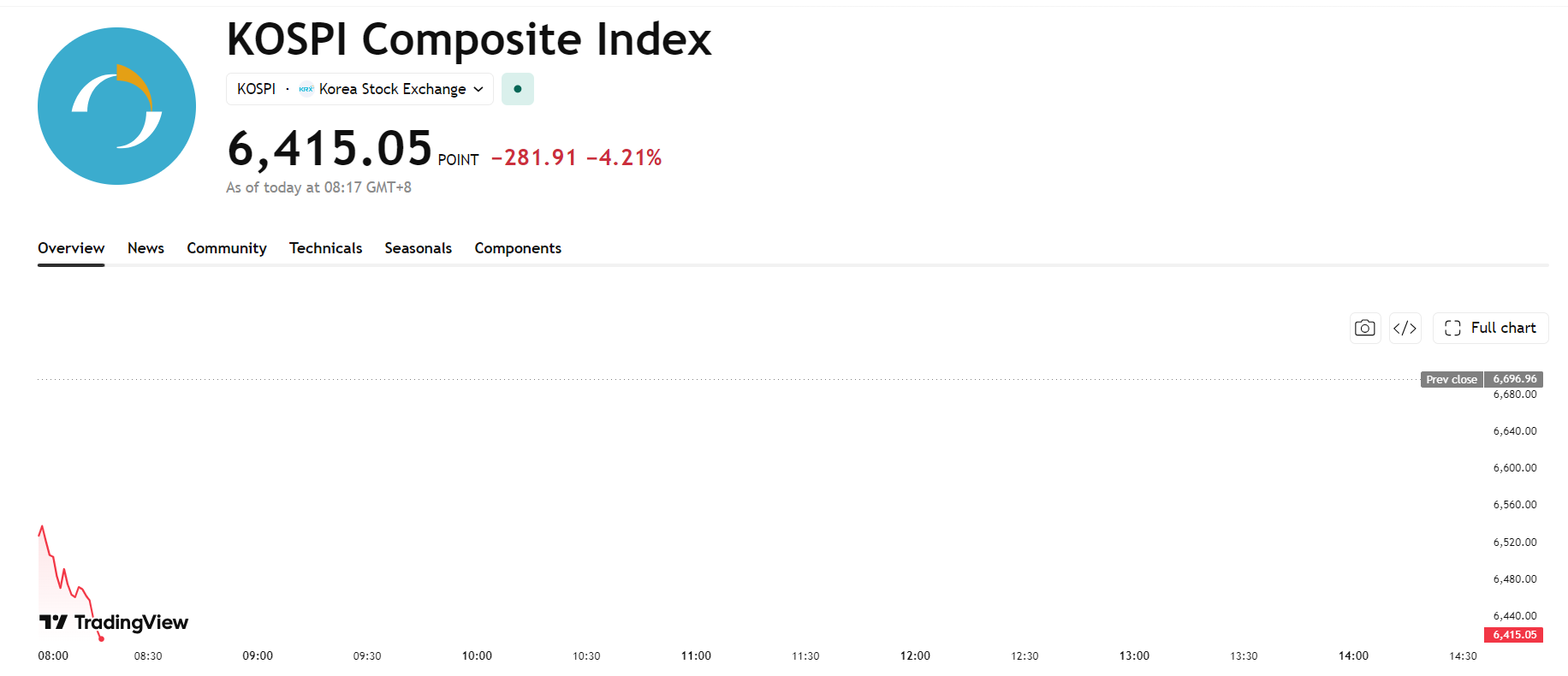 KOSPI Index Chart, Source: TradingView
The Nikkei 225 Index lost the 65,000-point mark at the open, falling over 800 points, or 1.34%, to stand at 64,651.05; heavyweights continued to fall, with Kioxia dropping 2.49% to lose the 50,000 mark, standing at 49,690 JPY, while SoftBank fell 1.19% to stand at 4,916 JPY.
The opening of Japanese and South Korean stock markets today extended and amplified the downward pressure from the previous trading day, primarily as a chain reaction triggered by collective profit-taking in Asian semiconductor heavyweights after positive news was exhausted, risk-averse sentiment brought by high-level consolidation in U.S. tech stocks, and domestic negative factors in the South Korean market. In addition, an intraday technical rebound in the yen exchange rate weighed on short-term earnings expectations for Japanese exporters as well as the automotive and machinery sectors.
This content was translated using AI and reviewed for clarity. It is for informational purposes only.
Recommended Articles











Comments (0)
Click the $ button, enter the symbol, and select to link a stock, ETF, or other ticker.