


SK Hynix Drops Over 8%, Samsung Falls Nearly 6% as Korean Memory Giants Face Renewed Selloff



AI Podcast


On August 6, the KOSPI index plummeted 4.37% amid panic selling, triggering a sidecar suspension. This downturn followed disappointing revenue guidance from SanDisk and a sell-off in Western Digital, causing sentiment to spill over into Asian memory chip stocks like SK Hynix and Samsung Electronics. Despite these declines, analysts at Goldman Sachs and JPMorgan maintain buy ratings, noting that forward P/E ratios of 3.5x–3.6x appear detached from fundamentals. While the sector faces heightened volatility and emotional trading, institutions view the current correction as a potential entry opportunity, assuming memory market sustainability remains intact.

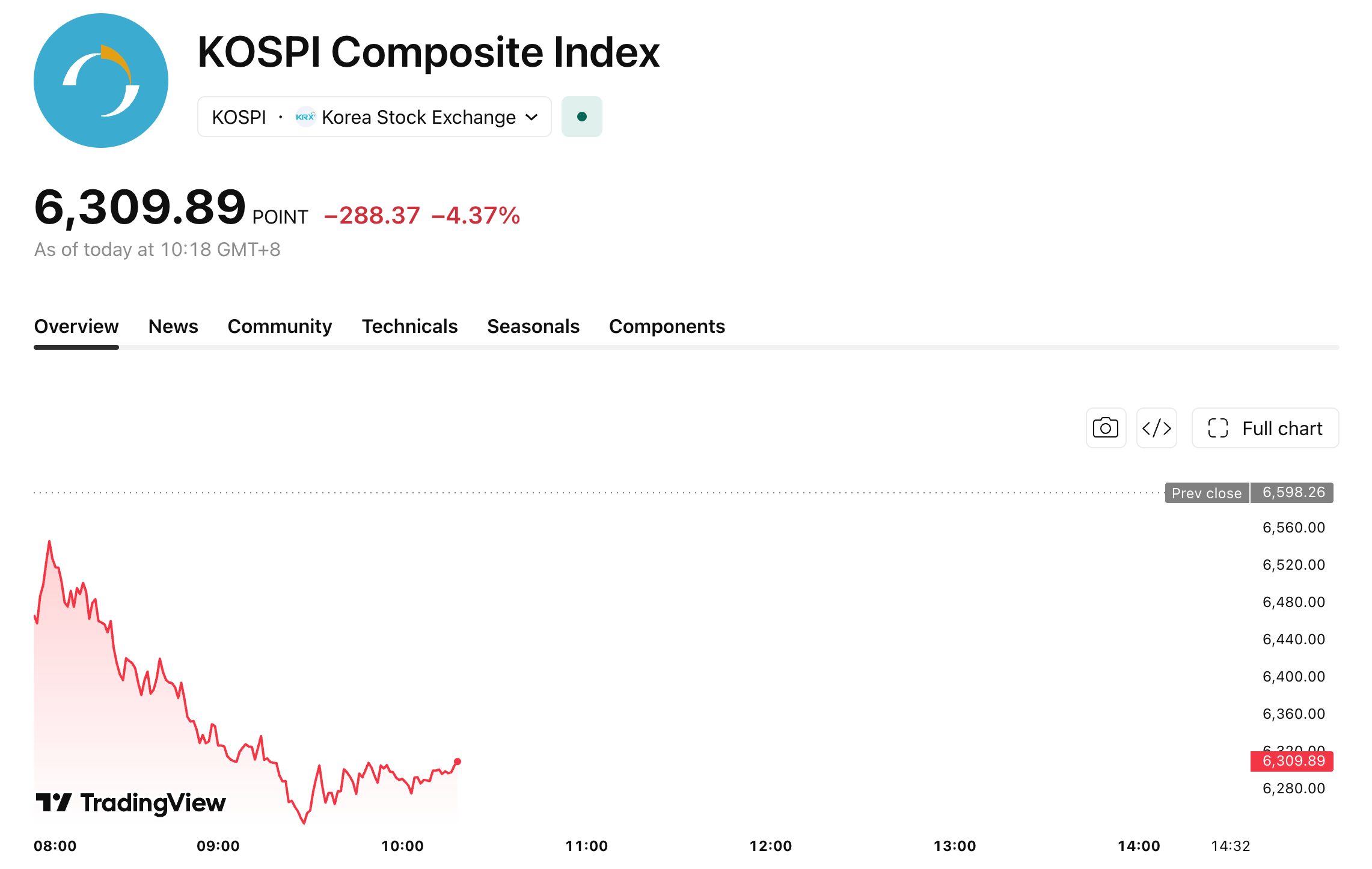
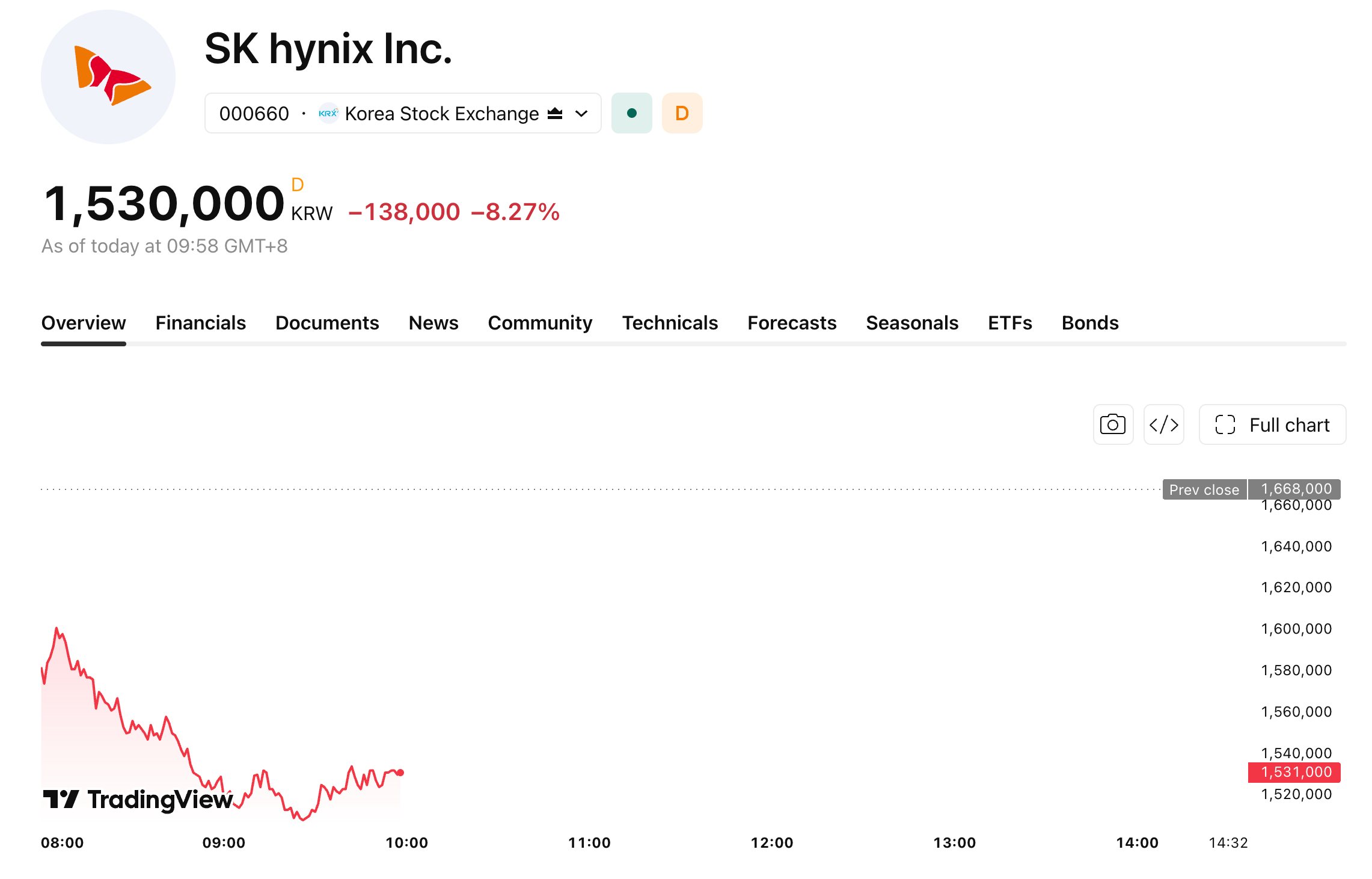
TradingKey - During the Asian session on August 6, South Korean stocks suffered panic selling, with the KOSPI index tumbling 5% at one point, triggering the exchange's "sidecar" mechanism and suspending program sell orders. As of press time, the KOSPI index was down 4.37%, heavyweight SK Hynix fell 8.27% to 1.53 million won (equivalent to $1,076), and Samsung Electronics dropped 5.69% to 231,500 won.
[Source: TradingView]
The direct trigger for this plunge was the spillover of sentiment from the overnight US stock market. Memory giant SanDisk ( SNDK) released its fiscal fourth quarter 2026 financial results, with revenue surging 372% year-on-year to $8.96 billion and adjusted EPS reaching $39.25, both beating expectations. However, the company's revenue guidance for the first quarter of fiscal 2027 was set at $10.3 billion to $10.8 billion, with a midpoint of approximately $10.55 billion, which fell short of the market expectation of $10.8 billion. Affected by this, SanDisk's shares fell over 8% at one point in after-hours trading.
Western Digital, which also released its earnings on the same day ( WDC ), faced a similar situation. Although its revenue, EPS, and next-quarter guidance all beat market expectations, its shares fell over 10% in after-hours trading. Market analysis suggests that because the company's stock price had already risen significantly beforehand, investors had extremely high expectations, and these results—which "met expectations but were not spectacular"—failed to satisfy the market's loftier expectations.
As a result, pessimism in the memory chip sector quickly spread to Asian markets. Following the opening of the South Korean stock market the next day, SK Hynix and Samsung Electronics faced heavy sell-offs.
[Source: TradingView]
Goldman Sachs ( GS) pointed out in a research report released on August 5 that SK Hynix and Samsung Electronics had fallen by approximately 35% and 23%, respectively, over the past month, with their forward P/E ratios for 2027 dropping to around 3.5x to 3.6x. This valuation level already implies extreme market distrust regarding the sustainability of the two companies' earnings, but fundamentals do not support such cheap pricing. Goldman Sachs reiterated its buy rating for both companies.
JPMorgan ( JPM) also maintained its optimistic outlook on SK Hynix and the memory industry, viewing the recent correction as an opportunity to increase positions.
Analysts believe that after a prolonged bull market, the global memory semiconductor sector is entering a period of high sensitivity and volatility, and it will take some time for the short-term emotional impact to be digested.
This content was translated using AI and reviewed for clarity. It is for informational purposes only.
Recommended Articles










Comments (0)
Click the $ button, enter the symbol, and select to link a stock, ETF, or other ticker.