


KOSDAQ Futures Rise Over 6% Triggering Trading Halt as Korea Finance Minister Koo Yun-cheol Vows to Stabilize Market



AI Podcast


During the Asian trading session on August 4, KOSDAQ futures surged over 6%, triggering a trading halt. Finance Minister Koo Yun-cheol signaled government intervention to stabilize volatility, specifically targeting rebalancing trades from single-stock leveraged ETFs, which contribute significant market pressure. Recent regulatory steps include raising margin requirements and banning new leveraged product listings. South Korea’s equity market remains highly volatile, evidenced by record-high circuit breaker triggers and a 22% July decline in the KOSPI. Significant valuation erosion in tech heavyweights, including SK Hynix and Samsung Electronics, underscores the broader market instability currently impacting South Korean capital markets.

TradingKey - During the Asian trading session on August 4, South Korea's KOSDAQ futures surged over 6% at one point, triggering a five-minute trading halt by the Korea Exchange. As of press time, the KOSDAQ futures index was up 4.58%.
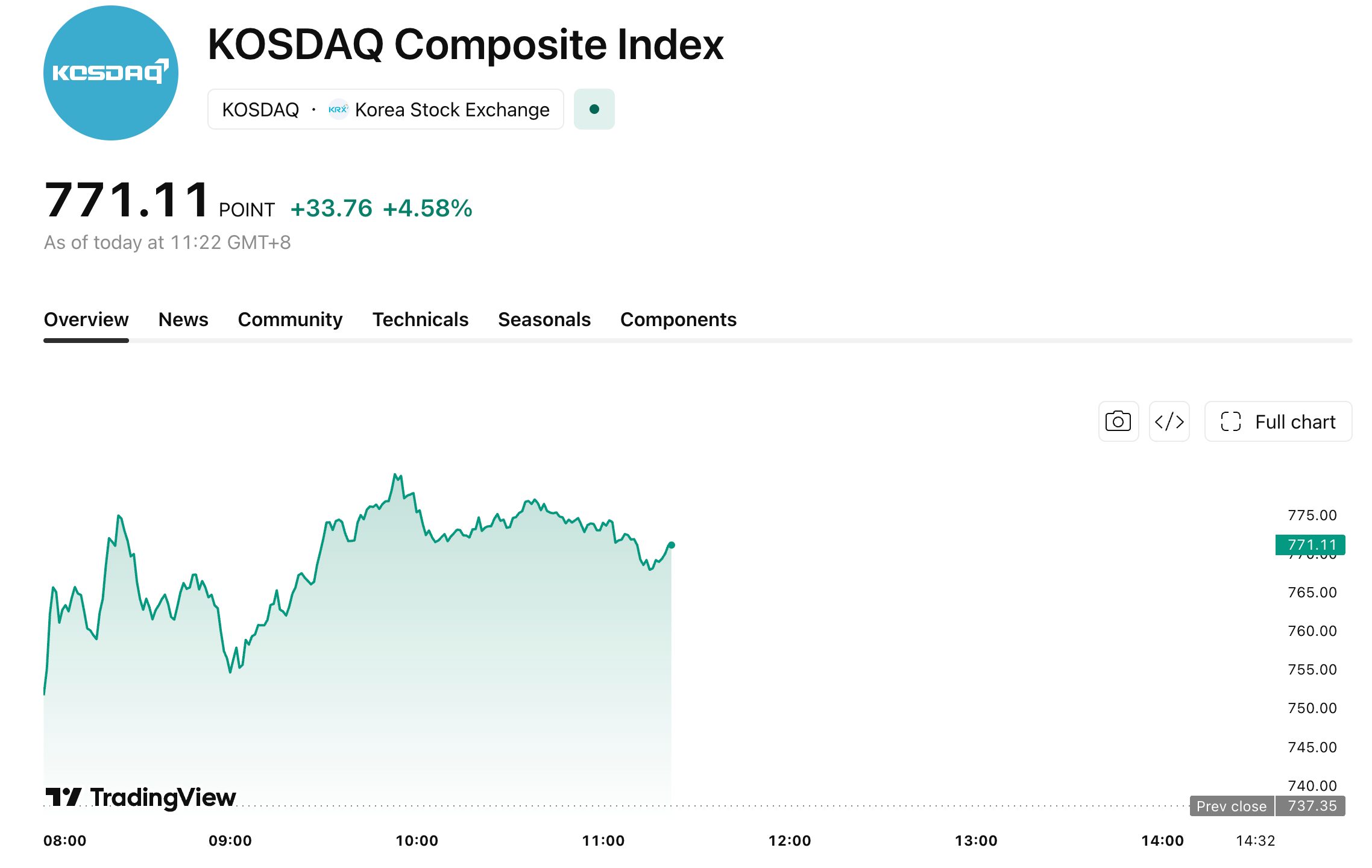
[Source: TradingView]
Almost simultaneously, South Korean Finance Minister Koo Yun-cheol commented on stock market volatility during a cabinet meeting, stating that the government will commit to improving market fundamentals to ease volatility and ensure long-term structural stability. Koo pledged that the Finance Ministry will swiftly implement supplementary measures recently announced for single-stock leveraged ETFs to limit the impact of such products on the market.
Recently, the South Korean stock market has been under continuous pressure due to concentrated rebalancing trades triggered by single-stock leveraged ETFs. According to estimates by the Korea Capital Market Institute, since the listing of such products in May this year, daily rebalancing transactions have reached 700 billion to 2.1 trillion won, concentratedly impacting market liquidity during late-day trading.
To curb the associated risks, the Financial Services Commission of South Korea announced official measures on July 16, raising the minimum margin requirement from 10 million won to 30 million won and banning the listing of new single-stock leveraged products.
Against the backdrop of severe volatility in the semiconductor sector, the South Korean market has frequently triggered circuit breakers. As of August 4, KOSDAQ futures had triggered the sidecar mechanism 29 times this year, hitting a record high in recent years and highlighting that market volatility remains elevated.
Earlier in July, the South Korean stock market experienced its most severe correction since the financial crisis, with the KOSPI Index falling 22% in a single month, marking its largest monthly decline since 2008. Heavyweight SK Hynix fell approximately 35% over the entire month of July, with its maximum intraday drawdown exceeding 50%; Samsung Electronics dropped about 21% in July, with extreme intraday losses nearing 36%. This storm wiped out more than 2,100 trillion won (approximately $2 trillion) in total market capitalization from the South Korean stock market in just two months.
This content was translated using AI and reviewed for clarity. It is for informational purposes only.
Recommended Articles





Comments (0)
Click the $ button, enter the symbol, and select to link a stock, ETF, or other ticker.