


Fed July Meeting Preview: Rate Hike Still Possible As Markets Await Impact on US Stocks, Dollar, and Gold



AI Podcast


The Federal Reserve meets from July 28 to 29 Eastern Time, with markets anticipating a hold at 3.50%–3.75%. Despite cooling CPI data, rising geopolitical tensions and trade risks have increased the probability of a surprise 25-basis-point hike to 33.7%. The policy statement and Chairman Warsh’s commentary on inflation and future policy paths are critical. A hawkish stance may pressure U.S. equities and bolster the dollar, while a moderate tone could favor growth stocks and gold. With institutional views divided, market participants remain cautious regarding the Fed's commitment to curbing inflation amid persistent economic resilience.
TradingKey - The Federal Reserve will hold its monetary policy meeting from July 28 to 29 Eastern Time, and will announce its interest rate decision at 2:00 PM on July 29, followed by a press conference by Chairman Kevin Warsh half an hour later. The current target range for the federal funds rate is 3.50% to 3.75%. Since this meeting will not release new economic projections or the interest rate dot plot, market focus will be concentrated on the policy statement, voting results, and Warsh's remarks on inflation and the September policy path.
Market Expects Fed to Hold Steady but Rate Hike Possibility Still Exists
From the perspective of market expectations, keeping interest rates unchanged remains the baseline scenario. According to a Reuters survey of 104 economists, all respondents expect the Federal Reserve to maintain its interest rate range at 3.50% to 3.75% at its July meeting, with about three-quarters of respondents also expecting no rate adjustments for the rest of the year.
However, vigilance in financial markets regarding a surprise rate hike has risen significantly. The latest interest rate futures pricing shows that traders see an approximately 33.7% probability of the Fed raising rates by 25 basis points this week, up from about 10% two weeks ago. The main factors driving this shift in expectations include tensions in the Middle East temporarily pushing up oil prices, U.S. tariff policies increasing the risk of imported inflation, and a noticeable decline in policy predictability after Fed Chair Warsh reduced forward guidance.
Recent U.S. data, meanwhile, has provided justification for holding off on rate hikes. U.S. CPI in June rose 3.5% year-on-year, lower than the 4.2% in May; core CPI fell from 2.9% to 2.6% year-on-year and was flat month-on-month. June PPI fell 0.3% month-on-month but was still up 5.5% year-on-year, indicating that upstream price pressures have not completely disappeared. Meanwhile, June retail sales grew 0.2% month-on-month and 6.7% year-on-year, suggesting that consumer momentum has slowed down somewhat, though the U.S. economy has not rapidly lost steam.
This means the Federal Reserve faces a dilemma: cooling inflation data does not support an immediate rate hike, but risks in energy, tariffs, and service prices remain, while consumption and employment are not weak enough to force a policy shift toward easing. The June dot plot has already signaled a hawkish shift, with nine Fed officials expecting at least one rate hike in 2026 and only one official projecting a rate cut, indicating that the committee remains highly vigilant about inflation risks.
Institutional views are also clearly divided. UBS noted that it would not be surprising if the Fed delivers a surprise rate hike to demonstrate its resolve to curb inflation, and Warsh's stance could be the ultimate deciding factor. Citi, on the other hand, believes that raising rates solely to maintain credibility lacks sufficient justification, as market-based inflation expectations have not become significantly de-anchored.
How Fed Decision Will Impact US Stocks, Dollar, and Gold Trends
For U.S. stocks, if the Fed keeps interest rates unchanged while Warsh acknowledges that inflation is cooling and downplays the necessity of near-term rate hikes, Treasury yields may pull back, potentially supporting tech stocks, AI concept stocks, and other high-valuation growth stocks. If the Fed stands pat but emphasizes risks from oil prices, tariffs, and services inflation, and hints at a possible rate hike in September, U.S. stocks may rise initially before falling, as higher-for-longer interest rates will raise corporate borrowing costs and weigh on valuations. If the Fed unexpectedly raises rates by 25 basis points, tech and small- and mid-cap stocks could lead the decline, and banking stocks may briefly benefit from expectations of improved net interest margins, but overall risk appetite will still decline.
For the U.S. dollar, the key to this meeting is whether the Fed strengthens expectations for subsequent rate hikes. If the Fed unexpectedly raises rates, or if Warsh explicitly states that it remains necessary to continue raising rates in September, U.S. Treasury yields could rise, and the U.S. Dollar Index is expected to strengthen rapidly. Conversely, if the Fed acknowledges continuous improvement in inflation and reduces the likelihood of a September rate hike, markets may lower U.S. interest rate expectations, putting pressure on the dollar to pull back. However, as long as Warsh does not signal rate cuts, the interest rate differential between the U.S. and other major economies is still likely to limit the downside for the U.S. dollar.
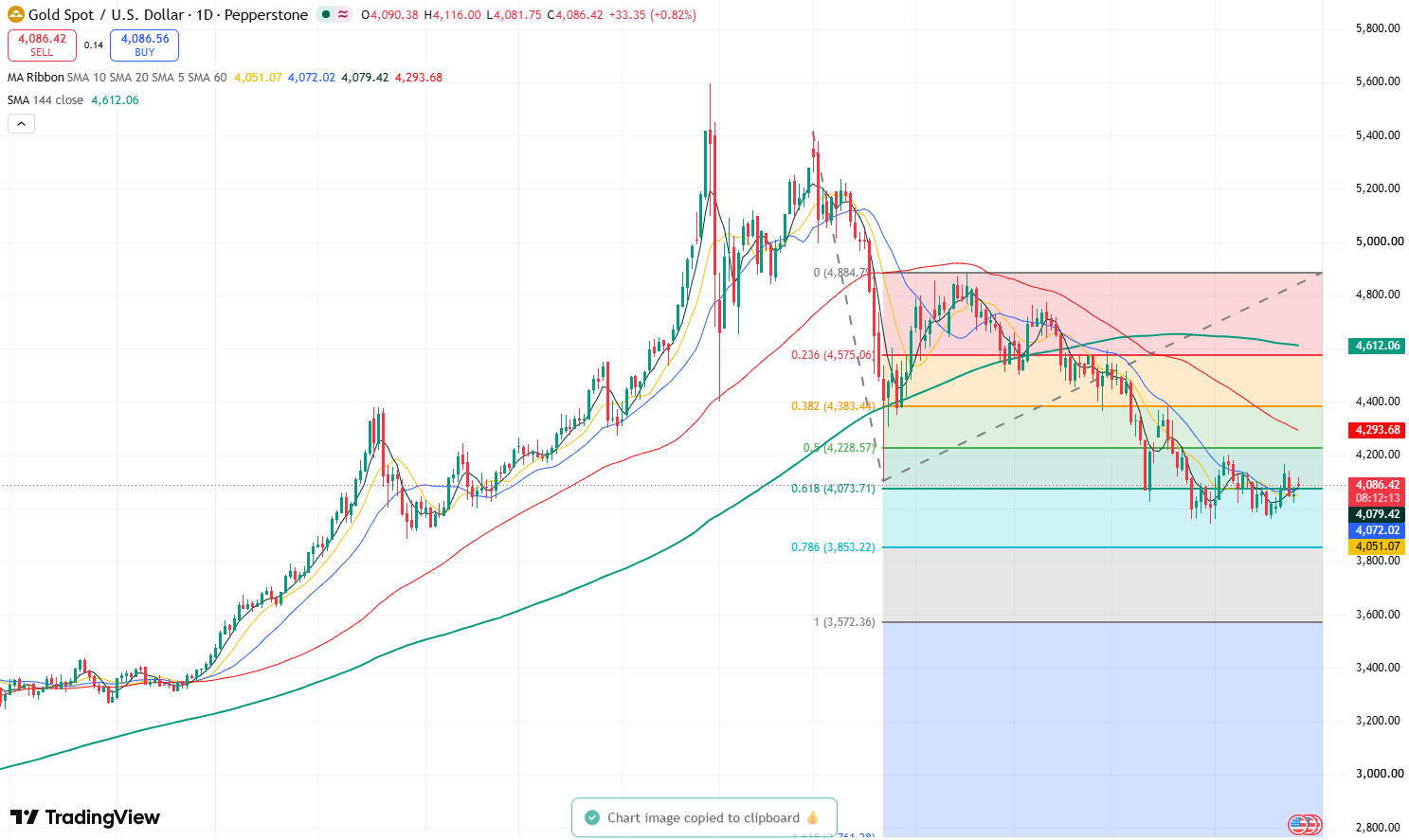
Gold Price Daily Chart, Source: TradingView
For gold, the U.S. dollar and real interest rates will be the primary variables determining its short-term direction. If the Fed keeps rates unchanged and Warsh strikes a relatively moderate tone, a pullback in the dollar and Treasury yields will lower the cost of holding gold, and gold prices are expected to extend their recent rebound to test the resistance level of $4,200. If the Fed unexpectedly raises rates, or if Warsh emphasizes that inflation remains above target and rates need to stay higher for longer, the dollar and Treasury yields may rise in tandem, and gold prices could face downward pressure again to test support at the $4,000 mark.
This content was translated using AI and reviewed for clarity. It is for informational purposes only.
Recommended Articles








Comments (0)
Click the $ button, enter the symbol, and select to link a stock, ETF, or other ticker.