


What Are Prediction Markets? Why Trump Is Mandating Exclusive Jurisdiction to the CFTC



AI Podcast


President Trump has asserted exclusive CFTC regulatory authority over prediction markets, defining them as tradable futures contracts for future events, distinct from stock markets. This move aims to resolve state-federal regulatory conflicts and position the US as a leader in the rapidly growing global market. Potential conflicts of interest and concerns regarding the financialization of gambling may arise.
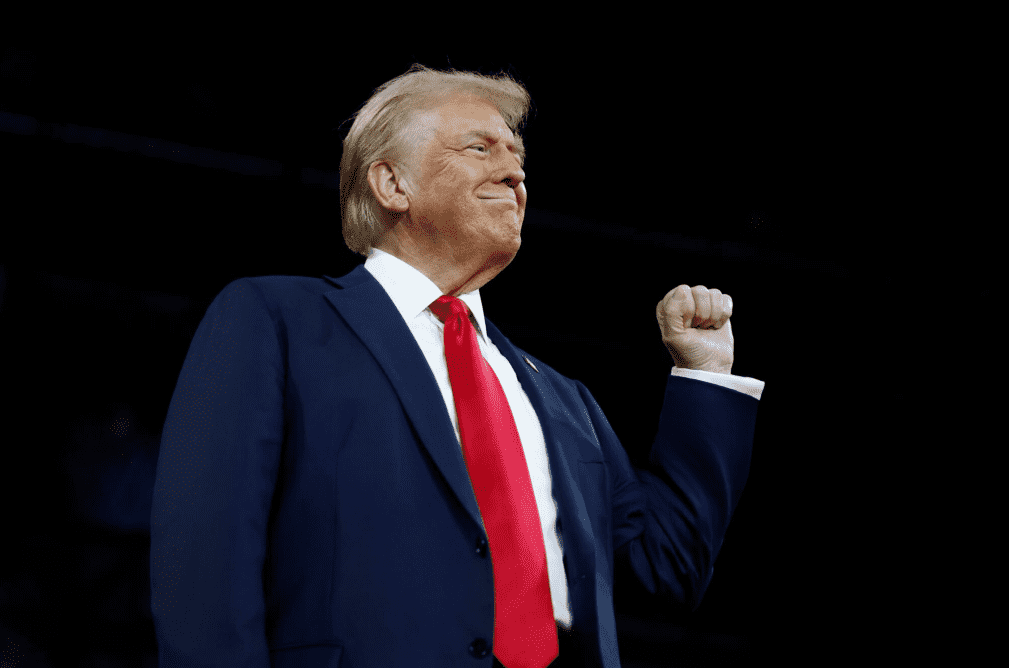
TradingKey - On Tuesday, May 26 (ET), U.S. President Trump posted on social media expressing support for the development of prediction markets and emphasized that the Commodity Futures Trading Commission (CFTC) has exclusive regulatory authority. This move has drawn public attention to prediction markets. However, what are prediction markets, and why does Trump place such importance on them?
What are prediction markets?
Forecasting involves making judgments about future events, whereas prediction markets are financial markets where the results of these judgments are traded as futures contracts—for instance, whether the Federal Reserve will cut interest rates or if it will rain tomorrow. Typically, each contract in the market settles at $1 if the outcome is correct and $0 if it is incorrect.
While both prediction markets and stock markets appear to be bets on the future, the stock market essentially involves purchasing the "future value of an asset," whereas prediction markets trade the "probability of a future event occurring." This distinction leads to several key differences, as follows:
Prediction Market | Stock Market | |
Underlying Instrument | Outcome of a specific event | Ownership stake in a company |
Price Implication | Probability of an event occurring | Intrinsic value and future earnings expectations of the company |
Settlement | Upon occurrence, the correct contract receives a 100% payout, while the incorrect contract pays 0. | As long as the company does not go bankrupt or delist, the stock value will not be zero. |
Primary Platforms | Polymarket, Kalshi, PredictIt, etc. | New York Stock Exchange (NYSE), Nasdaq (NDAQ) |
Liquidity | Lower | Higher |
Why is Trump Granting "Exclusive Jurisdiction" to the CFTC?
Prior to Trump's intervention in prediction markets, more than 15 U.S. states moved to ban the sector, classifying it as gambling. Specifically, Minnesota passed legislation to completely ban prediction platforms like Kalshi and Polymarket and initiated a lawsuit against the CFTC. The CFTC countered the legal action, asserting that regulatory authority over prediction markets belongs to federal agencies and that state governments lack the power to intervene.
Amid this conflict, Trump's intervention was aimed at resolving state-federal friction as well as advancing national financial strategy. As global monthly trading volumes for prediction markets skyrocketed beyond $20 billion, the sector has transformed from a niche betting activity into a high-growth emerging financial segment. Trump stated: "Other countries are competing for this new financial market; the U.S. must maintain its leadership position."
Trump's move to grant jurisdiction to the regulator-friendly CFTC may also be driven by family business interests. Reportedly, Donald Trump Jr. has not only invested heavily in Polymarket but also serves as a strategic advisor to Kalshi. Furthermore, the parent company of Trump's Truth Social publicly announced it is preparing to launch a prediction market product. In this context, allowing states to crack down on the sector would severely damage the business and capital interests currently being positioned by the Trump family.
Conclusion
Trump’s forceful directive to consolidate "exclusive jurisdiction" over prediction markets under the federal Commodity Futures Trading Commission (CFTC) is set to significantly boost trading volumes, potentially turning the sector into the most active financial battleground outside of U.S. equities. However, this move could also spark numerous complications, including legal disputes between federal and state authorities, political manipulation, rent-seeking, and the financialization of gambling, all of which could ultimately impact the prediction markets themselves.
This content was translated using AI and reviewed for clarity. It is for informational purposes only.
Recommended Articles











Comments (0)
Click the $ button, enter the symbol, and select to link a stock, ETF, or other ticker.