


Iran-U.S. MOU Details Disclosed. Gold Drops to $4,400 Mark Hitting New Low Since March 30; Two Major Crude Oil Futures Weaken



AI Podcast


An informal document between Iran and the U.S. outlines a potential framework for easing tensions, including lifting a "naval blockade" and regional military withdrawals. In return, Iran would restore commercial traffic in the Strait of Hormuz, coordinated with Oman. Progress on this agreement could lead to a UN Security Council resolution. This de-escalation has driven gold prices to their lowest since late March and caused crude oil benchmarks to plunge. Further influencing precious metals are anticipated Fed policy statements and PCE inflation data, with robust inflation potentially increasing yields and the dollar, pressuring gold and silver.

Tradingkey - According to Iranian sources, a "preliminary informal document" regarding the framework of a memorandum of understanding between Iran and the United States has been disclosed, covering issues such as the Strait of Hormuz, regional military deployments, and future agreement arrangements.
Driven by the de-escalation of geopolitical tensions, gold prices dropped to their lowest level since late March. Both major crude oil benchmarks plunged, with WTI futures hitting a low of $87.77 per barrel, the lowest since April 22, while Brent crude fell to a low of $94.17 per barrel.
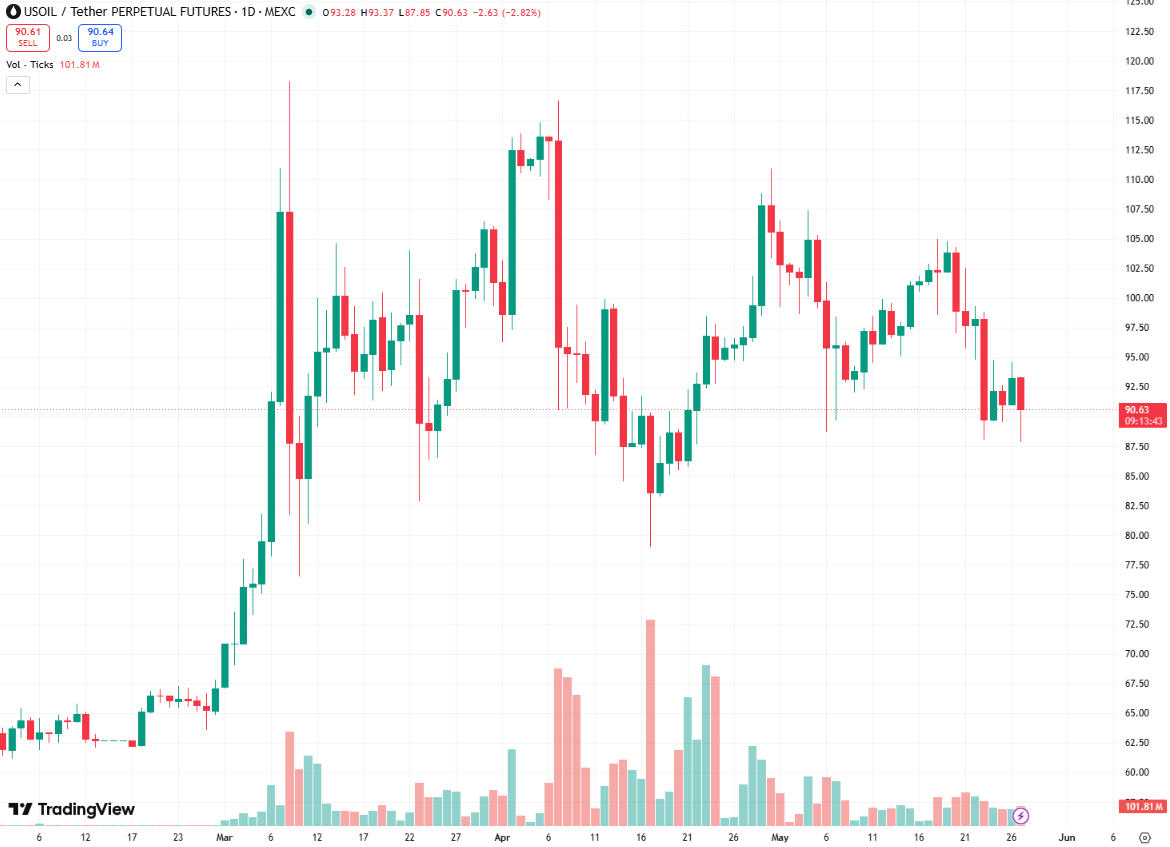
[Source: TradingView]
Specifically regarding the document's contents: the U.S. pledges to lift the "naval blockade" against Iran and withdraw a portion of its military forces stationed in the surrounding region. In exchange, Iran will gradually restore commercial vessel traffic in the Strait of Hormuz to pre-escalation levels within one month, excluding military ships.
The management of vessel traffic and route arrangements will be jointly coordinated by Iran and Oman. The document indicates that if Iran and the U.S. can reach a final agreement within 60 days, the terms could be ratified as a binding UN Security Council resolution. Reportedly, Iran emphasized that it will not take any practical steps until "tangibly verifiable" inspections are completed.
Spot precious metals also faced synchronized pressure. Spot gold briefly dropped to the $4,400 mark, its lowest level since March 30, and is currently down 1.39% at $4,444.65; silver fell by more than 3% to $74.63.
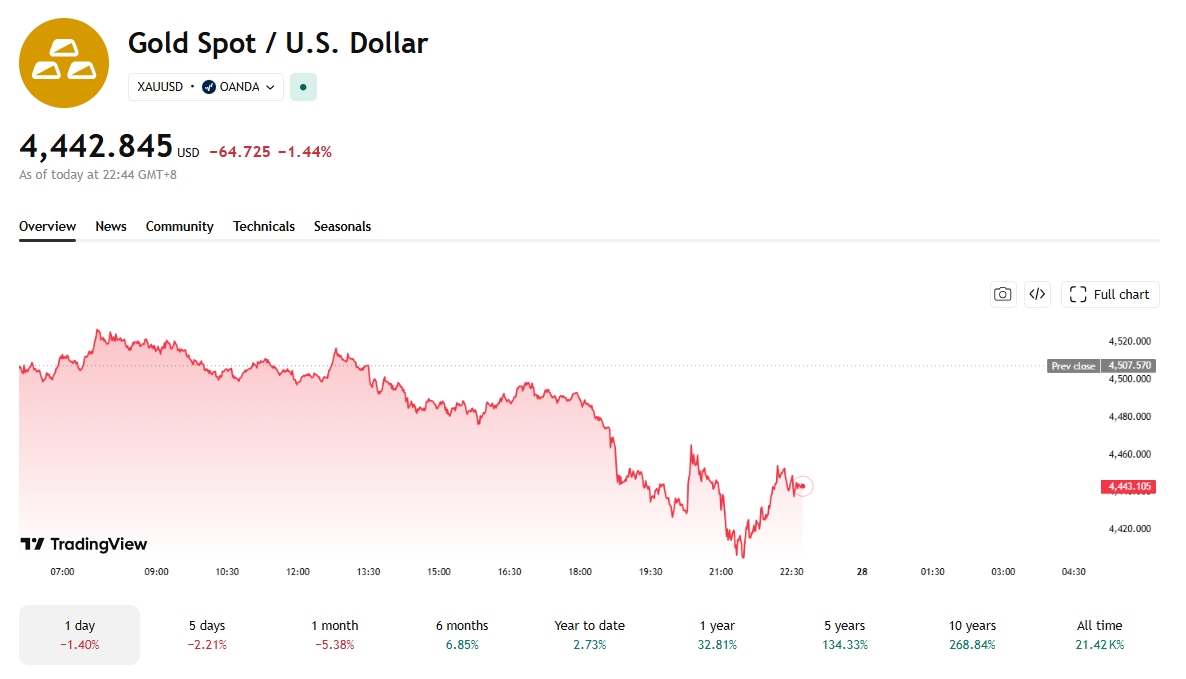
Market analysts suggest that the U.S.-Iran conflict remains the primary geopolitical event influencing precious metal price movements. Should peace negotiations make substantive progress, safe-haven demand for gold and silver is expected to recede, thereby exerting downward pressure on prices.
Furthermore, the trajectory of Federal Reserve policy has emerged as another critical factor for the precious metals market. Investors are currently awaiting official statements from the Fed and the release of U.S. Personal Consumption Expenditures (PCE) inflation data. Should inflation figures prove unexpectedly robust, it would likely drive up U.S. Treasury yields and strengthen the U.S. Dollar Index, thereby increasing the opportunity cost of holding precious metals and further weighing on their prices.
This content was translated using AI and reviewed for clarity. It is for informational purposes only.
Recommended Articles










Comments (0)
Click the $ button, enter the symbol, and select to link a stock, ETF, or other ticker.