Jefferies strategists warn investors to hedge against potential market volatility if Supreme Court unexpectedly upholds Trump tariffs



Wall Street analysts are telling investors to get ready for bumpy markets when the Supreme Court rules on Trump-era tariffs. Jefferies strategists warn stocks could take a hit if justices shock everyone by letting the trade levies stand.
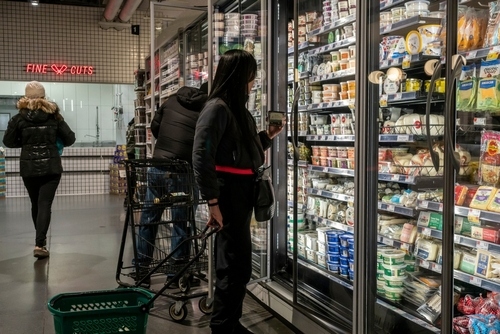
Most traders figure the court will strike down the tariffs. But Jefferies strategist Aniket Shah said in a Wednesday note that an unexpected ruling upholding them “would likely jolt markets.” His advice? Look at put options or volatility instruments “as prudent insurance.” Putting money into sectors that dodge tariffs, like food and staples, could help too.
The thing is, nobody knows when the ruling will drop. The court won’t be in session again until Feb. 20. And while Jefferies thinks the tariffs will get tossed, trade fights have heated back up over Trump’s push to control Greenland.
Markets already got a taste of what happens when the court doesn’t deliver. Jan. 9 saw Mattel Inc. and Deere & Co. shares fall after an expected ruling never came. Tuesday brought another slide in the S&P 500 when Trump threatened tariffs on eight European countries. Things bounced back Wednesday, up 1.1%, after Trump backed off talk of using force to take Greenland.
Trade uncertainty may haunt markets all year
“If the Court upholds IEEPA tariffs, it likely green-lights continued use of tariffs as policy leverage,” the Jefferies note, seen by Bloomberg, said, talking about the 1977 International Emergency Economic Powers Act. “This would keep trade-related headline risk elevated in 2026.”
Here’s where it gets interesting. If the Supreme Court says the tariffs are illegal, companies could be looking at refunds worth hundreds of billions of dollars total. But trade attorneys say don’t hold your breath, getting that money back could drag on.
Trump wrote Jan. 12 on social media that “it would take many years to figure out what number we are talking about and even who, when, and where to pay.” He called it “a complete mess, and almost impossible for our Country to pay.”
Import companies and customs experts aren’t buying it. They say the process should be straightforward since tariff payments are all documented.
Don’t expect stores to slash prices right away, either
Josh Ketter, who runs Spreetail, pointed out that “Retailers haven’t passed on the full cost of tariffs to consumers over the past year, instead they’ve seen their margins squeezed.” First priority for any refunds? “To make themselves financially whole again, so consumers expecting immediate price cuts are going to be disappointed.”
How would tariffs refund actually play out?
Michael Lowell from Reed Smith laid out how this might play out. “There is no set timeline on when refunds will be given back,” he said.
One way it could go is that the Supreme Court tosses the tariffs but sends the refund question to the Court of International Trade. That would mean months of arguments, probably heading back to the Supreme Court eventually. Another option has the Supreme Court ordering the CIT to start refunds directly.
Right now, the Justice Department and companies involved in tariff cases want the CIT to set up a steering committee to handle over 1,000 refund cases already filed, Lowell said.
Tim Keeler at Mayer Brown, who used to work for U.S. Trade Representative Susan Schwab, said steering committees usually handle this kind of thing. But he warned that everyone rushing for refunds at once could jam up the works. “Customs can take up to two years to process a protest,” Lowell noted. Post Summary Corrections are faster, “typically done in 30-45 days.”
Treasury Secretary Scott Bessent said Sunday it’s “very unlikely” the court overturns Trump’s emergency powers. As reported by Cryptopolitan earlier, Bessent has indicated the Treasury has sufficient funds to handle potential refunds, though he doesn’t expect to need them.
Even so, the administration has backup plans ready. Section 122 of the Trade Act of 1974 could bring 15% tariffs for five months. Section 301 allows country-by-country investigations. Section 338 of the Tariff Act of 1930 permits tariffs as high as 50%.
Claim your free seat in an exclusive crypto trading community - limited to 1,000 members.